
The Operations Interview Loop: What Each Round Tests
A late truck, a half-empty picking line and a customer promise due in 40 minutes can reveal more about an operations manager than any resume bullet. That is why a good operations interview loop is not a polite Q&A - it is a sequence of pressure tests that simulate how you think inside a live system.
- The operations interview loop tests signals, not memory: problem structuring, process thinking, metric ownership, trade-off judgment and execution maturity.
- Most loops move from screening to technical depth to case problem-solving to leadership fit - each round has a different purpose.
- Great answers start with the process: inputs, bottleneck, variability, capacity, service level, cost and control mechanism.
- Use metrics naturally: OTIF, fill rate, cycle time, throughput, inventory turns and cost per order are interview currency.
- Operations cases reward trade-offs: do not optimise cost alone if it breaks service, quality, safety or resilience.
- Your strongest proof is a story where you improved a measurable operating outcome by aligning people, process and data.
- The biggest mistake: treating operations as back-end execution instead of a business system that protects customer promise and margin.
The Big Picture: Every Round Is Testing a Different Operating Muscle
Think of the interview loop as a production line for evidence. Each round receives a partial signal about you, adds a sharper test and passes the hiring panel a clearer answer: can this person run a messy, constraint-heavy system without losing the customer or the cost line?
Core Explanation: What Each Round Actually Tests
Operations interviews are designed around one central question: can you improve a real operating system under constraints? The interviewer is not only checking whether you know terms like bottleneck, EOQ or capacity utilisation. They are checking whether you can use those ideas when demand is uncertain, inventory is stuck, suppliers are late, machines fail or frontline teams resist change.
Most operations interview loops contain five round types. Company names differ, but the underlying tests are remarkably similar.
The best mental model is simple: operations hiring is not looking for the person who can recite the most tools. It is looking for the person who can decide which tool matters now.
The Round-by-Round Playbook
1. Resume or Screening Round: Can You Explain Your Operating Impact?
This round is often short, but it sets the frame for everything that follows. The interviewer wants to know whether your interest in operations is real or borrowed from placement vocabulary.
Prepare two stories:
- One process-improvement story: reducing time, defects, rework, waiting, stockouts, escalation or manual effort.
- One cross-functional story: working with sales, vendors, finance, tech, plant teams, warehouse teams or customer support.
Use the format: context - constraint - action - metric - learning. Avoid long project descriptions. The interviewer wants your operating decision, not your project diary.
2. Technical Operations Round: Do You Know the System Language?
This is where concepts appear directly: inventory control, capacity planning, forecasting, quality, lean, procurement, warehousing, logistics and service operations. The interviewer may ask you to define a bottleneck, compare push vs pull systems, explain safety stock or interpret a fulfilment metric.
If inventory comes up, revise setting inventory policy for a multi-product business because it teaches how service level, demand variability and stockholding cost connect in a real policy decision. If the discussion moves to shop-floor capacity, line balancing and workstation design is the natural next revision because many operations cases hide a capacity imbalance.
3. Case Round: Can You Diagnose Before You Prescribe?
The case may sound like: “A warehouse has rising order delays. What would you do?” Weak candidates jump to automation. Strong candidates first map the flow.
When the case is about replenishment, pull systems or store-level stockouts, Kanban and pull-based replenishment is a useful next layer because it explains how signals trigger restocking instead of relying only on forecasts.
4. Stakeholder Round: Can You Execute Through People?
Operations is a contact sport. Even a brilliant solution fails if warehouse supervisors, vendors, plant teams, category managers, finance or sales do not change behaviour.
Expect questions like:
- “Tell me about a time you handled resistance from a stakeholder.”
- “How would you convince sales to accept a service-level trade-off?”
- “What would you do if a supplier repeatedly misses delivery timelines?”
For procurement-heavy roles, revise the sourcing process from requirement to contract because interviewers often test whether you understand supplier selection, negotiation, contracting and performance follow-up as one connected loop.
5. Final Fit Round: Can You Own the Business Consequence?
The final round is less about definitions and more about maturity. Senior interviewers listen for whether you understand the business consequence of operating choices.
A mature candidate says, “Reducing inventory may improve working capital, but if demand variability is high and supplier lead time is unstable, it can damage fill rate and customer trust. I would first segment SKUs and protect service levels for critical items.” That answer shows business judgment, not just cost thinking.
Definitions You Should Be Able to Say Cleanly
- Interview loop: A sequence of rounds designed to collect different evidence before a hiring decision.
- Operations management: Designing, running and improving the system that converts inputs into customer value.
- Bottleneck: The process step whose capacity limits the output of the entire system.
- Service level: The reliability with which an operation meets the customer promise.
- Trade-off: A decision where improving one objective may weaken another, such as cost versus speed.
Operational Metrics Interviewers Expect You to Use
You do not need to memorise every formula in operations. But you must sound metric-literate. The key is to connect the metric to the managerial decision it supports.
Notice the pattern: a metric is never “good” in isolation. A lower cost per order is not good if customer complaints rise. Higher inventory turns are not good if stockouts increase. Operations interviews reward candidates who read metrics as a system.
Mini Case Study: Licious and the Cold-Chain Operations Mindset
Licious shows why operations interviewers test trade-offs: freshness, hygiene, delivery speed, wastage and cost must be managed together in a perishable supply chain.
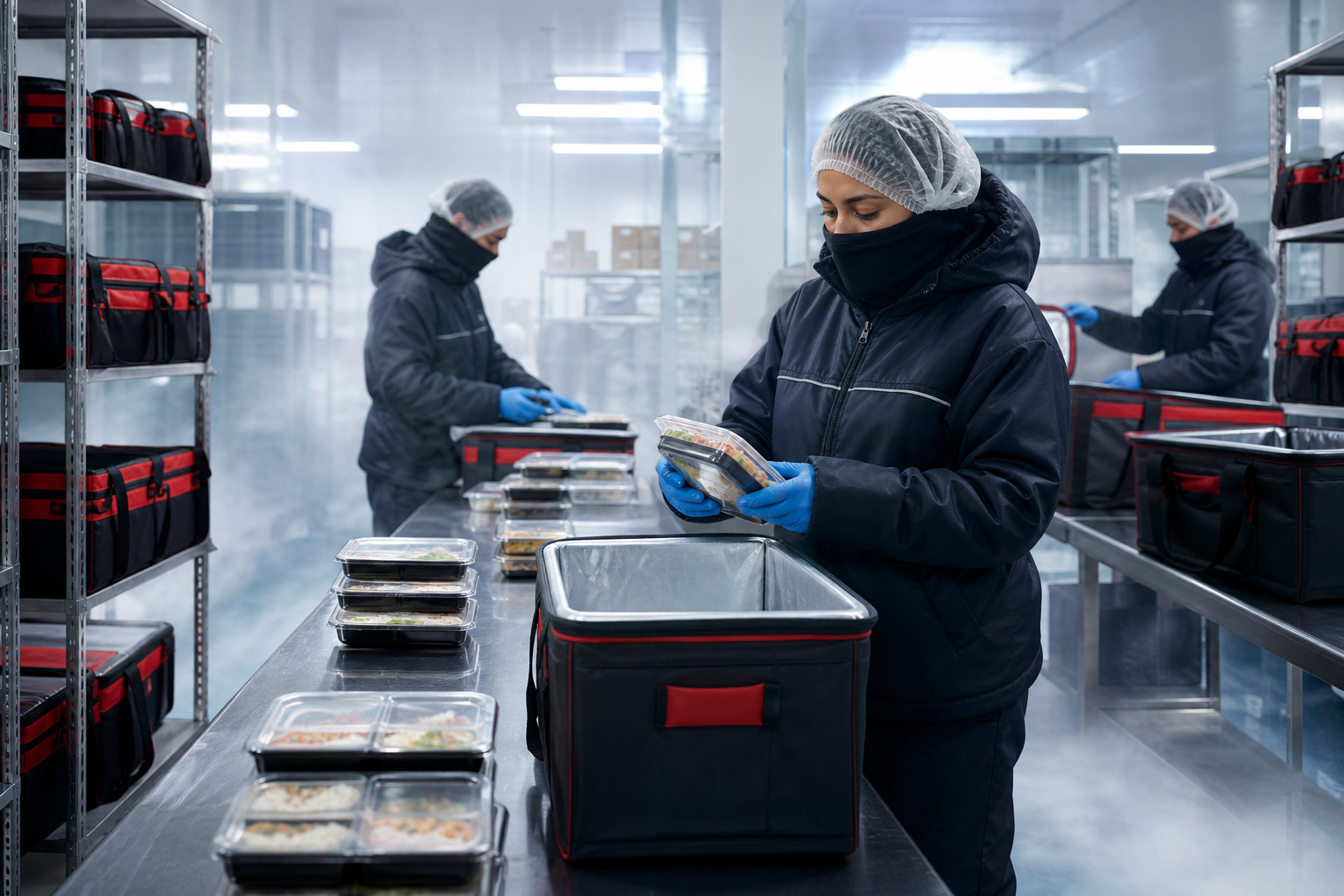
Imagine a direct-to-consumer meat and seafood business operating in a large Indian city. The customer promise is not just “deliver quickly.” It is “deliver fresh, safe, correctly packed and within a narrow time window.” That makes operations harder than standard e-commerce because inventory is perishable and quality failure is visible immediately.
Licious is a useful interview case because its operating challenge combines demand forecasting, supplier coordination, cold-chain discipline, quality control, fulfilment planning and last-mile execution. The primary driver of the model is end-to-end process control over freshness and quality. Supporting drivers include SKU planning, cold storage discipline, processing standards, app-based demand signals, route planning and customer feedback loops.
Now see how the same business maps to the interview loop:
The lesson is simple: operations excellence rarely comes from one heroic fix. It comes from aligning process control, data visibility, frontline discipline and business trade-offs. That is exactly what a strong operations interview answer should demonstrate.
How AI Changes the Operations Interview Loop
AI is changing both the content of operations work and the way candidates are assessed. In 2026, interviewers increasingly expect you to understand where AI improves decisions - and where human judgment still matters.
- AI makes planning questions more data-driven: demand forecasting, inventory optimisation and replenishment decisions are now often supported by machine learning. Revise using AI for inventory optimisation and replenishment if you want a sharper answer on this.
- AI increases the need for exception management: algorithms can flag stockout risk, route delays or supplier slippage, but managers still decide whether to expedite, substitute, ration or renegotiate.
- AI changes interview preparation itself: candidates can simulate role-specific cases faster, but the interviewer will still test whether you can defend assumptions and trade-offs without a script.
Use NotebookLM or ChatGPT like an operations interviewer. Upload your resume, one target company job description and your operations notes. Ask: “Create five operations case questions for this role, then evaluate my answers on structure, metrics, trade-offs and stakeholder realism.”
Interview Relevance
“Walk me through what you think each round in an operations interview is trying to evaluate, and tell me how you would prepare for them.”
In every answer, move from “what I know” to “how I would use it.” Interviewers remember candidates who can turn a concept into an operating decision.
Common Mistake
The mistake that costs candidates is giving tool-first answers: “I will automate,” “I will optimise inventory,” or “I will improve forecasting” before diagnosing the real constraint. It sounds shallow because operations problems are system problems. Fix: first map the process, identify the bottleneck, quantify the gap, then recommend the tool.