
Performance Marketing vs Brand Marketing - The Real Difference
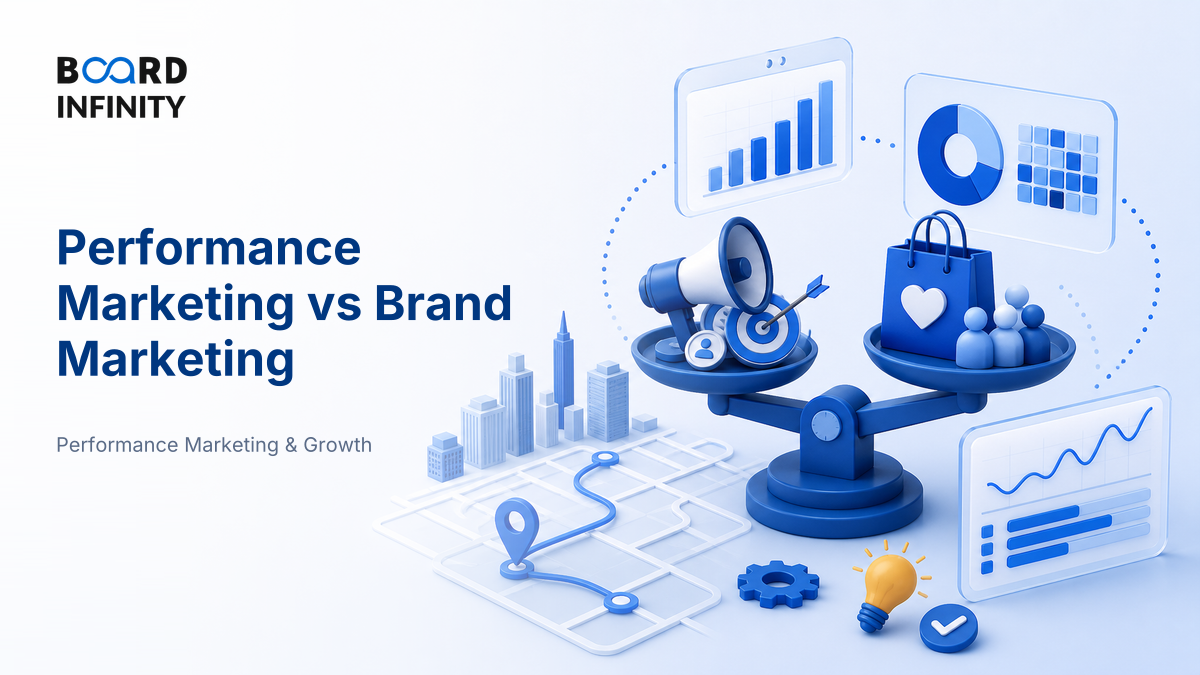
A Google ad may get the credit for a sale, but it often did not create the desire. The buyer may have seen the brand on Instagram, heard a friend mention it, compared reviews, and only then searched for it. That is the misconception: performance marketing is not “real marketing” and brand marketing is not “fluffy marketing” - they are two different jobs in the same growth system.
- Performance marketing is paid or measurable marketing optimized for a specific action - click, lead, install, purchase or subscription.
- Brand marketing builds memory, meaning, trust and preference so future buyers choose you before they compare options.
- The real difference is not “digital vs TV” - it is demand capture vs demand creation.
- Performance is judged by CAC, ROAS, conversion rate, payback period and incrementality; brand is judged by awareness, consideration, preference, share of search and price premium.
- A weak answer says “performance gives sales, brand gives awareness.” A strong answer explains how both feed each other across the funnel.
- Best companies do not choose one forever - they shift the mix by category maturity, purchase frequency, margin, competition and growth stage.
- The biggest trap is optimizing only last-click ROAS, because it can over-credit the final ad and underfund the brand work that created the search.
Big Picture: Two Engines, One Growth System
Think of marketing as a growth loop. Brand marketing creates mental availability - people remember you when a need appears. Performance marketing captures that active demand efficiently. The customer experience then either reinforces the brand or destroys it.
Core Explanation: The Real Difference
The cleanest distinction is this: performance marketing captures existing or near-term demand; brand marketing creates and shapes future demand.
Performance marketing asks: “Can we make this rupee of spend produce a measurable action?” It works best when the customer already has intent - searching “buy running shoes,” comparing credit cards, downloading an app, booking a salon service.
Brand marketing asks: “Will customers remember, trust and prefer us when the category need appears?” It works before the customer is actively buying. It builds associations such as safe, premium, youthful, reliable, Indian, expert, affordable or aspirational.
Notice the important nuance: the same channel can serve either objective. A YouTube campaign can be performance if optimized for app installs; it can be brand if designed to build distinctive memory structures. Instagram can be brand storytelling or conversion-led retargeting. The medium is not the strategy.
The Metrics That Separate the Two
Performance metrics are close to revenue and action. Brand metrics are closer to memory, preference and pricing power. A serious marketer tracks both, because a low CAC today can hide weak future demand, and high awareness without conversion can hide poor commercial discipline.
For interview answers, mention incrementality. Last-click attribution asks “which touchpoint got the final click?” Incrementality asks “what happened because of the marketing that would not have happened otherwise?” That is a much better business question.
Definitions You Can Say in One Breath
Performance marketing: marketing where spend is optimized against measurable actions such as clicks, leads, installs, purchases or subscriptions.
Brand, AMA: “A name, term, design, symbol, or any other feature that identifies one seller’s goods or service as distinct from those of other sellers.”
Customer-based brand equity, Keller: “Differential effect that brand knowledge has on consumer response to the marketing of that brand.”
Brand marketing: marketing that builds distinctive memory, meaning and preference so buyers choose the brand when a category need arises.
How to Decide the Right Mix
The mix depends on business context. A new D2C brand with limited cash may need performance to validate product-market fit. A mature category leader may invest more in brand to defend pricing power, reduce reliance on discounts and keep future demand healthy.
Airbnb has publicly discussed reducing dependence on performance marketing and leaning more on brand and public relations after the pandemic period. The strategic point is not that performance became useless; it is that a strong, trusted brand can reduce over-reliance on paid demand capture. The primary driver was a differentiated global marketplace brand, supported by product experience, host supply, PR visibility and direct traffic.
Case Study: Urban Company Balances Trust and Conversion
Urban Company shows why high-intent performance marketing works better when brand trust has already reduced customer anxiety.
Situation: Home services in India are high-friction. A customer booking a beautician, electrician, cleaner or appliance technician is not just buying convenience - they are allowing a stranger into their home. That makes trust, safety, consistency and service recovery central to the brand.
The move: Urban Company uses performance marketing to capture active demand when people search for services, compare providers or respond to app prompts. But the deeper brand job is to make customers believe the service professional will be trained, reliable and accountable through the platform. That brand promise is reinforced through app design, ratings, standardized service flows, background checks and visible customer support.
Outcome and lesson: The company’s growth cannot be explained by ads alone. The primary driver is a trust-led managed marketplace model, supported by performance acquisition, service standardization, supply-side training and repeat-use convenience. The “so what” for marketers: performance brings the customer to the door; brand trust reduces hesitation; experience earns the next booking.

How AI Changes Performance Marketing vs Brand Marketing
AI does not remove the distinction. It makes both sides faster, more measurable and more dangerous if used lazily.
Student workflow: Before a marketing interview, use Perplexity to collect recent campaigns, funding updates and customer reviews for one company. Then put those notes into ChatGPT or Claude and ask: “Separate this company’s activities into performance marketing, brand marketing and customer experience. Suggest metrics for each and identify the likely trade-off.” This gives you a sharper company-specific answer than memorizing definitions.
Interview Relevance
“What is the real difference between performance marketing and brand marketing? If you were the marketing manager of a new D2C brand, how would you allocate budget between the two?”
Use the phrase “demand creation versus demand capture”. It is crisp, senior-sounding and helps you avoid the shallow “sales versus awareness” answer.
Common Mistake
The costly mistake is saying performance marketing is measurable and brand marketing is not. That makes you sound tactical. Brand can be measured through awareness lift, consideration, share of search, direct traffic, pricing power and long-term incrementality. One-line fix: say that performance and brand use different metrics because they operate on different time horizons.
What to Revise Next
Now connect this distinction to the mechanics of growth. Revise Marketing Funnels and the AARRR Pirate Metrics to understand where brand and performance sit in the customer journey, then revise Paid Acquisition: CAC, ROAS, LTV and Payback Period to handle the numerical follow-up questions confidently.