
The Strategic Procurement Process Explained
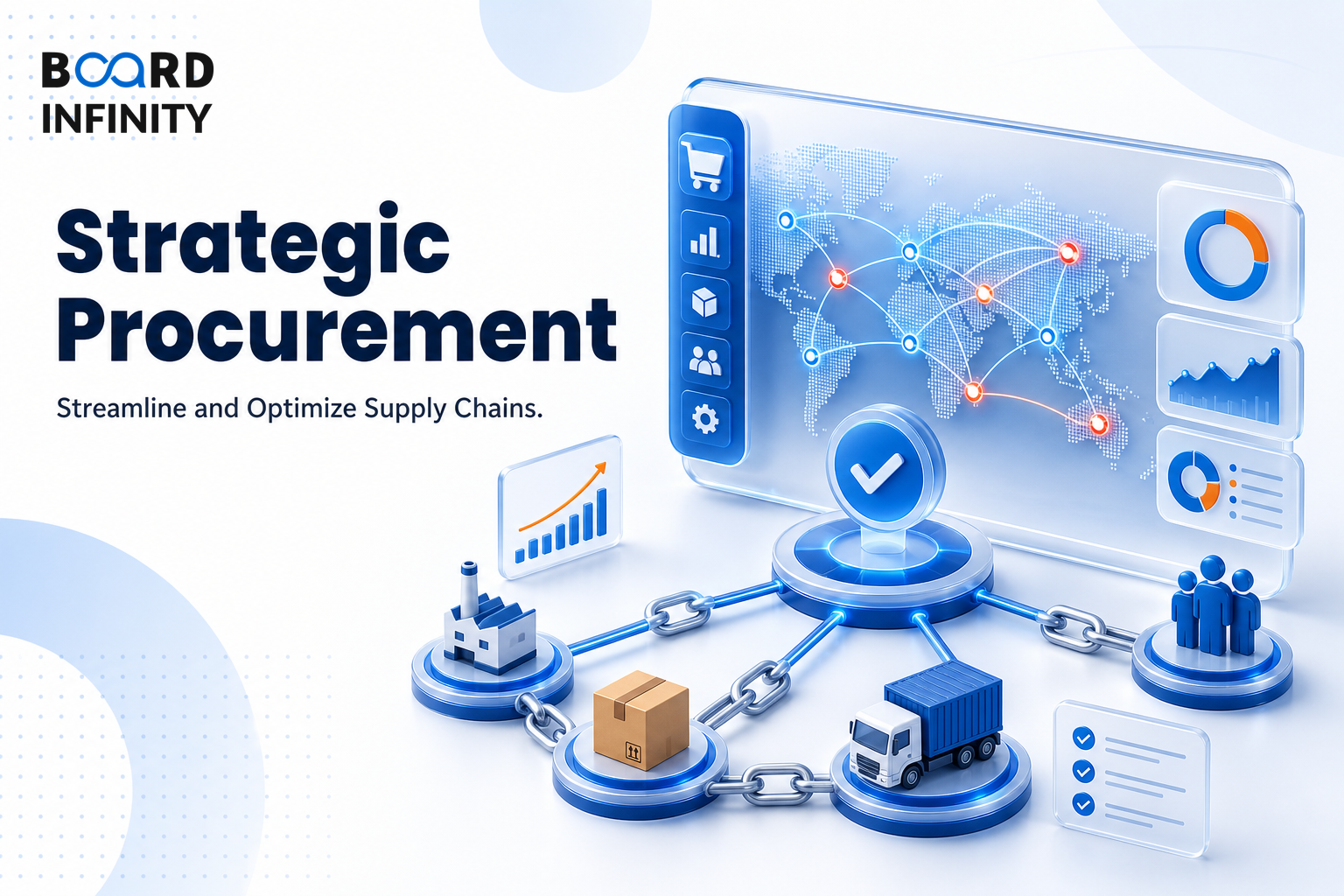
Strategic procurement is the structured end-to-end process that moves purchasing from immediate price chasing to total value creation, supplier relationships, and risk management. It matters in interviews because candidates are often expected to explain not just how buying happens, but why procurement decisions affect cost, continuity, and supplier capability over time.
- The strategic procurement process follows: Need Identification → Specification → Supplier Search → RFQ/RFP → Evaluation Negotiation → Contract → Order & Follow-up → Receipt & Inspection → Payment.
- Strategic Procurement has a time horizon of 1-5 years, while Tactical/Transactional Procurement is Immediate to 3 months.
- The focus of Strategic Procurement is Total value creation, supplier relationships.
- The focus of Tactical/Transactional Procurement is Best price for immediate need.
- Strategic Procurement activities include Category strategy, supplier development, risk management.
- Tactical/Transactional Procurement activities include PO processing, invoice matching, expediting.
- Indian examples include Tata Motors long-term JV with suppliers and Office supplies procurement via GeM.
Big Picture Overview
The strategic procurement process is best understood as a sequence from Need Identification to Payment. The comparison with Tactical/Transactional Procurement shows why the same buying function can either create long-term value or simply process immediate purchases.
Strategic Procurement vs Tactical/Transactional Procurement
The distinction is important because strategic procurement and tactical procurement operate at different time horizons, decision levels, and impact levels. Strategic procurement is linked to category strategy, supplier development, risk management, and long-term cost reduction, while tactical procurement is closer to purchase order processing and immediate buying needs.
Tata Motors long-term JV with suppliers is an Indian example of Strategic Procurement. Office supplies procurement via GeM is an Indian example of Tactical/Transactional Procurement. The strategic so what is that procurement can shift from best price for immediate need to total value creation, supplier relationships, and 5-15% cost reduction over time.
How TCO Fits into Strategic Procurement
TCO = purchase price + logistics + quality cost + lead-time buffer + risk premium + coordination cost. Lowest price never equals lowest TCO.
Why the Process Matters
Strategic Procurement has a time horizon of 1-5 years and is typically owned at CPO / VP Supply Chain level. That is why its impact is not limited to spot savings or quick wins, but can create 5-15% cost reduction over time.
Tactical/Transactional Procurement has a time horizon of Immediate to 3 months and is typically handled at Purchase officer / Buyer level. Its activities include PO processing, invoice matching, expediting, and its tools include ERP purchase module and price comparison.
Structuring a The Strategic Procurement Process Explained Interview Answer
"Walk me through the strategic procurement process and explain how it differs from tactical procurement."
The strongest answers avoid treating procurement as only price comparison. Anchor the answer on total value creation, supplier relationships, risk management, and TCO models.
The most frequent error is explaining strategic procurement as PO processing, invoice matching, expediting, or simple price comparison. That misses the core distinction: Strategic Procurement focuses on total value creation, supplier relationships, category strategy, supplier development, and risk management, with 5-15% cost reduction over time.
Conclusion
The strategic procurement process turns buying into a long-term value creation system, moving from Need Identification to Payment while managing suppliers, risk, and total cost. For interviews, the key is to show the full process, contrast it with Tactical/Transactional Procurement, and use examples like Tata Motors and GeM clearly.