
Training Needs Analysis (TNA) Explained
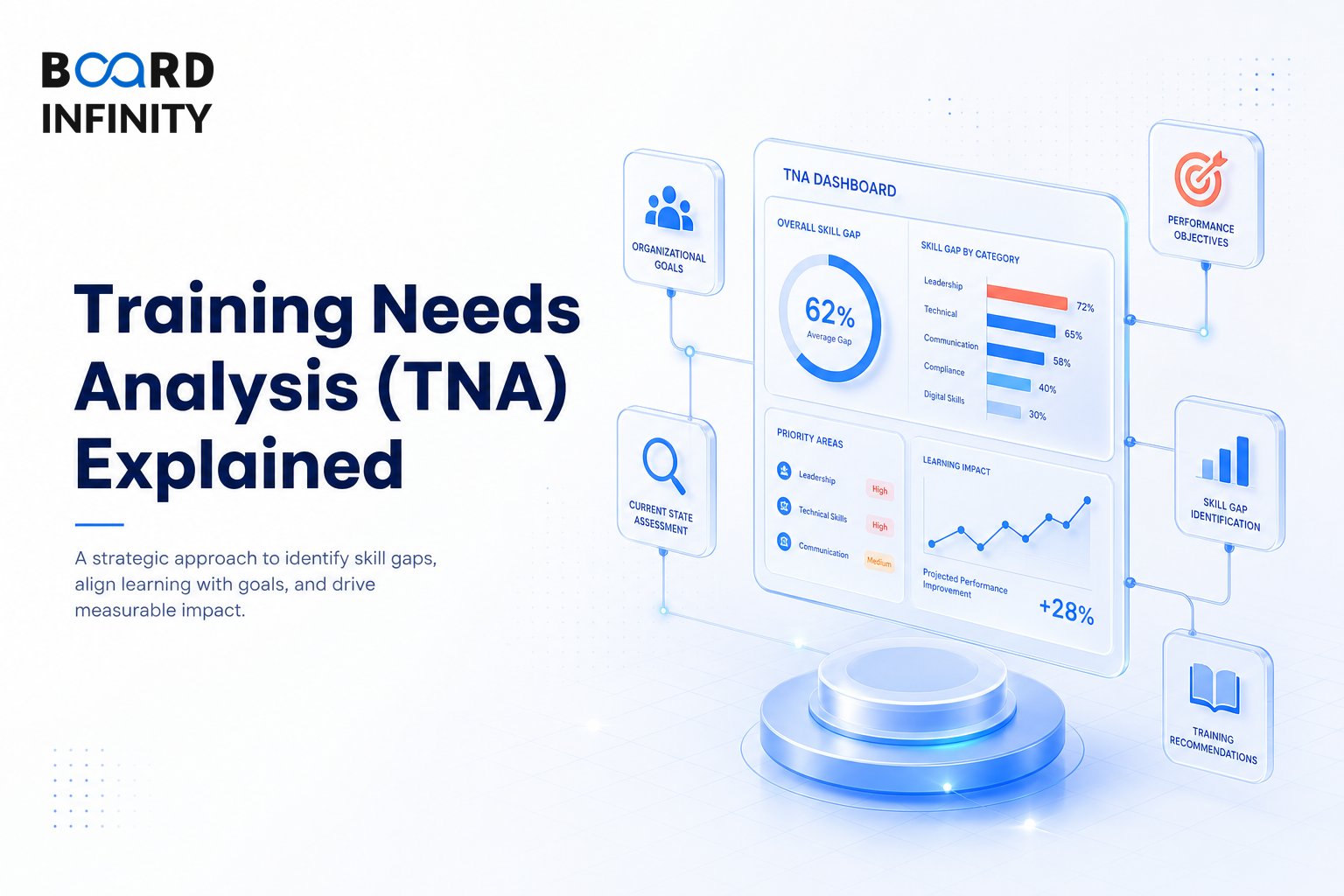
Training Needs Analysis (TNA) is the diagnostic step that prevents Learning & Development (L&D) teams from treating every performance issue as a training issue. It identifies whether the real gap is skills, process, motivation, goals, or tools before any L&D intervention is designed. In interviews, this matters because it shows you can connect learning decisions to real business problems, not just propose programs.
- Training Needs Analysis (TNA) is the systematic process of identifying gaps between current employee capabilities and the capabilities required for organizational success.
- It is the foundational step before designing any L&D intervention - skipping TNA leads to training programs that don't address real business problems.
- TNA works at three levels: Organizational Analysis, Task / Job Analysis, and Person Analysis.
- Organizational Analysis focuses on strategic alignment - what training does the entire org need?
- Task / Job Analysis focuses on role-level KSAs, meaning Knowledge, Skills, Attitudes, required by each job.
- Person Analysis focuses on who needs what training and whether the issue is a training issue or a motivation/process issue.
- Research by Robert Mager shows that up to 70% of performance problems are NOT training problems - they require process redesign, clearer expectations, or better tools, not more training.
Big Picture: TNA as the Diagnostic Step Before L&D
Training Needs Analysis must precede any L&D investment. Without TNA, budgets are spent on the wrong interventions because the organization may be solving a process, motivation, goals, or tools problem with training.
Training Needs Analysis (TNA) is the systematic process of identifying gaps between current employee capabilities and the capabilities required for organizational success.
Why TNA Matters Before Any Intervention
TNA is the foundational step before designing any L&D intervention. Skipping TNA leads to training programs that don't address real business problems.
The practical value of TNA is that it helps L&D teams ask whether the gap is actually a skill gap. If the issue is caused by poor processes, unclear goals, lack of motivation, or missing tools, more training will not solve the real problem.
Organizational Analysis
Organizational Analysis focuses on strategic alignment - what training does the entire org need? It uses business strategy review, environmental scan, and HR data analysis.
The questions answered are: What skills will be critical for our 3-year plan? Where are org-wide gaps?
Task / Job Analysis
Task / Job Analysis works at the role level. It asks what KSAs - Knowledge, Skills, Attitudes - each job requires.
The methods include job descriptions, competency frameworks, SME interviews, and observation. The questions answered are: What tasks does this role perform? What competencies are needed?
Person Analysis
Person Analysis works at the individual level - who needs what training? It uses performance reviews, 360 feedback, manager nominations, and psychometric data.
The key question is not only who has the skill gap, but also whether it is a training issue or a motivation/process issue.
Training Problems vs Non-Training Problems
A critical insight from TNA is distinguishing between training problems - skill gaps - and non-training problems such as poor processes, unclear goals, and lack of motivation.
Research by Robert Mager shows that up to 70% of performance problems are NOT training problems - they require process redesign, clearer expectations, or better tools, not more training.
Structuring a Training Needs Analysis (TNA) Explained Interview Answer
"How would you conduct a Training Needs Analysis before designing an L&D intervention?"
The strongest answer does not jump straight to training design. It first diagnoses whether the issue is a training problem or a non-training problem.
The most frequent error is assuming every performance gap needs training. This costs points because TNA is specifically meant to distinguish skill gaps from poor processes, unclear goals, lack of motivation, or missing tools.
Conclusion
Training Needs Analysis is the foundational diagnostic step before any L&D intervention. Its core value is identifying the right gap at the organizational, role, and individual levels so that learning budgets solve real business problems instead of funding the wrong interventions.