
Where AI Is Landing in Aviation & Logistics
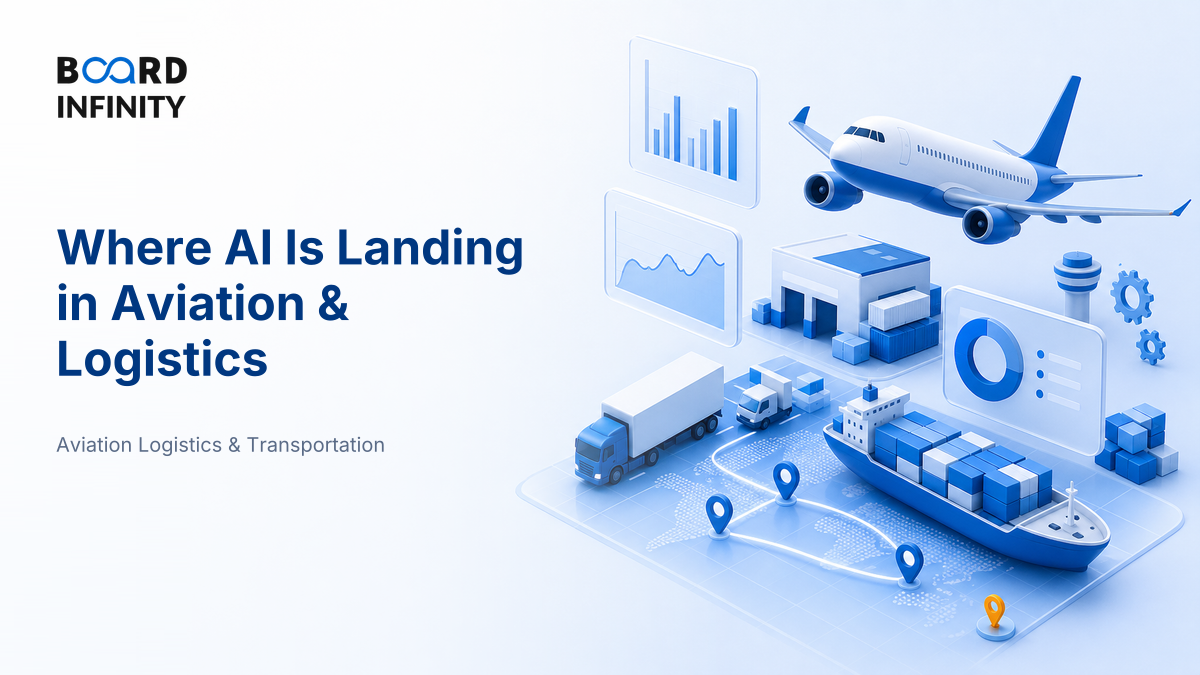
At a cargo hub just before midnight, thousands of parcels, pallets and bags are moving faster than a human supervisor can track. AI is already working in the background - predicting which shipment will miss its connection, which aircraft part may fail, and which route will protect the delivery promise at the lowest cost.
- AI in aviation and logistics is not one technology - it is a decision layer across forecasting, routing, maintenance, pricing, safety and customer visibility.
- The core mental model is: sense data - predict risk - decide action - execute - learn.
- High-value use cases sit where three things meet: large data volume, repeated decisions and measurable cost or service impact.
- In aviation, AI is strongest in predictive maintenance, crew and network planning, disruption recovery, revenue management, airport flow and safety analytics.
- In logistics, AI is strongest in demand forecasting, ETA prediction, route optimization, warehouse automation, exception management and last-mile planning.
- The biggest interview trap is saying “AI improves efficiency” without naming the decision, data, metric and risk control.
- A strong answer always links AI to business KPIs: on-time performance, asset utilization, cost per shipment, load factor, exception resolution time and customer promise accuracy.
Big Picture: AI Lands Where Decisions Repeat at Scale
Aviation and logistics are perfect AI environments because they run on millions of small, time-sensitive decisions: assign this aircraft, route this parcel, load this truck, forecast this demand, recover from this delay. If you already understand the industry map, revise how the aviation and logistics value chain works first - AI only makes sense when you know where the operational handoffs are.
Core Explanation: The Six Places AI Is Actually Landing
The best way to revise this topic is not by memorising AI buzzwords. Think in six operating zones where AI changes the quality, speed or cost of decisions.
Notice the common pattern: AI is useful where the company has enough operational data, enough repeated decisions and a clear KPI to improve. Without all three, AI becomes a dashboard, not a business advantage.
The Interview-Worthy Use Case Map
Use this matrix to avoid sounding generic. Low-risk, high-automation use cases can run with minimal human intervention. High-stakes decisions - especially safety, compliance and customer-critical disruptions - need human-in-the-loop control.
For example, an AI model can automatically send a delivery-delay alert if ETA risk crosses a threshold. But an aircraft maintenance decision should involve certified engineers, safety procedures and regulatory compliance. That distinction makes your answer sound mature.
India’s DigiYatra programme uses facial-biometric identity verification to enable paperless passenger processing at airports, as described by the DigiYatra Foundation. The strategic lesson is not “AI replaces airport staff”; it is that digital identity can reduce friction in a high-volume passenger flow when supported by airport integration, consent architecture and operational process redesign.
Definitions You Can Say in One Breath
- AI in aviation and logistics: Models that predict, recommend or automate operational decisions using live and historical movement data.
- Predictive ETA: A forecast of arrival time using route, traffic, weather, scan, flight or vehicle data.
- Predictive maintenance: Using equipment data to detect failure risk before breakdown or unscheduled downtime.
- Digital twin: A virtual model of a physical asset, route, hub or network used for simulation and decisions.
- Human-in-the-loop: An AI workflow where a person reviews, approves or overrides high-impact recommendations.
What to Measure: AI KPIs That Prove Business Value
If you mention an AI use case, immediately attach a KPI. That is what separates a placement-ready answer from a tech-heavy answer.
Quick worked example: Suppose a logistics player made 10,000 deliveries last week. Its old ETA model predicted 7,800 deliveries within the promised 30-minute window, so ETA accuracy was 78%. A new model predicts 8,900 correctly, so accuracy becomes 89%. The improvement is 11 percentage points - but the business answer is complete only if you also say whether complaints, reattempts or control-tower workload fell.
Case Study: Lufthansa Technik AVIATAR and Predictive Maintenance
Lufthansa Technik’s AVIATAR platform shows how AI creates value when aircraft data, engineering expertise and maintenance workflows are connected into one predictive operating system.
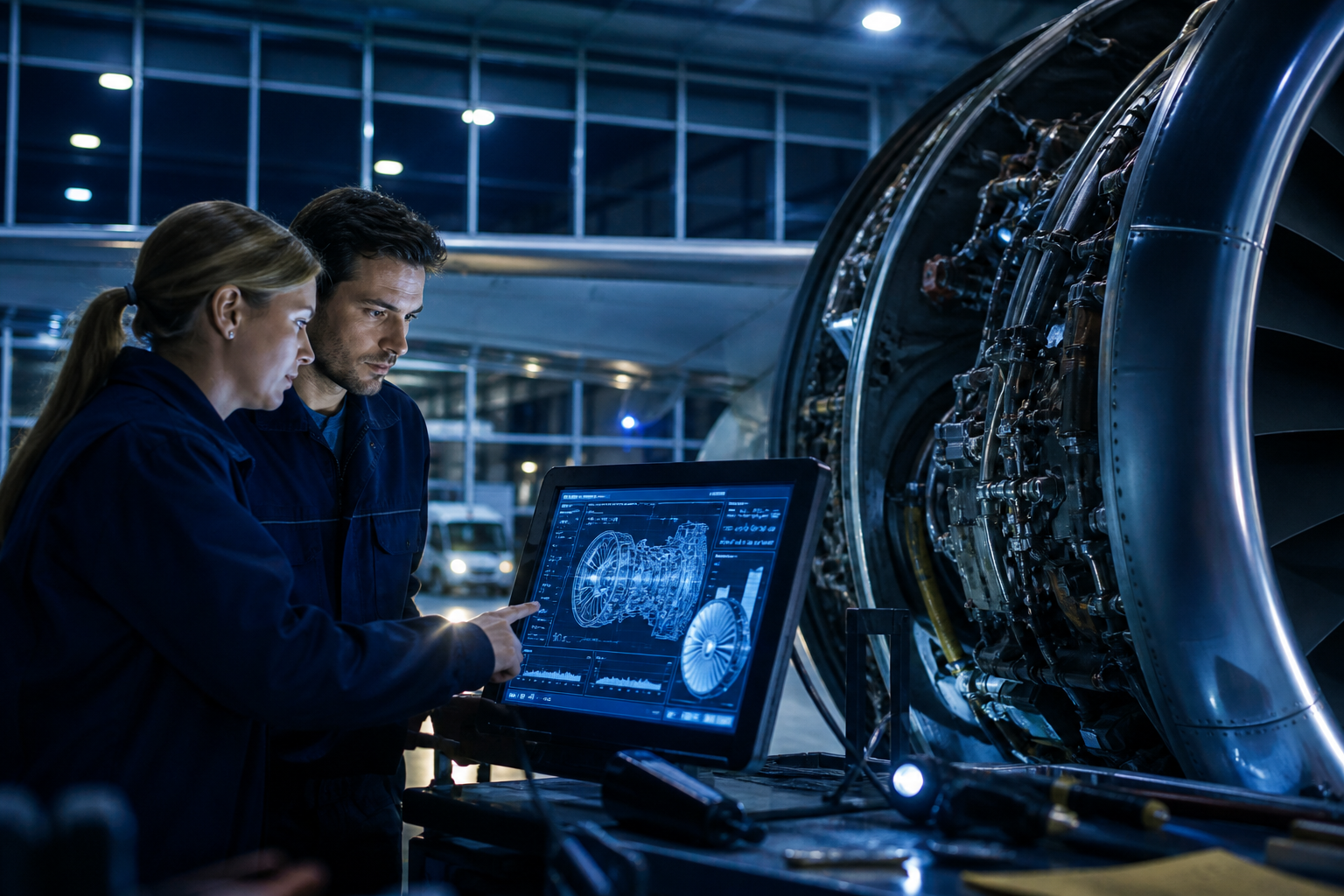
Situation: Airlines and maintenance, repair and overhaul players face a hard problem: aircraft assets are expensive, schedules are tightly connected, and unscheduled technical issues can cascade into delays, cancellations and customer dissatisfaction.
The move: Lufthansa Technik built AVIATAR as a digital platform for aircraft health analytics, predictive maintenance and fleet operations. The primary driver is predictive use of aircraft and maintenance data. Supporting drivers include Lufthansa Technik’s MRO engineering depth, integration into airline workflows, reliability analytics and the ability to turn alerts into maintenance actions rather than passive dashboards.
Outcome or lesson: The strategic lesson is clear: AI does not win because it “has data.” It wins when the company owns the operating context, has trusted engineering judgement and embeds predictions into the maintenance decision cycle.
The interview takeaway: predictive maintenance is not just a technology story. It is an asset-utilization, safety, schedule-reliability and customer-experience story.
How AI Changes Aviation & Logistics
AI is not landing evenly across the industry. In 2026, it is reshaping three concrete areas most visibly.
The IATA ONE Record initiative matters because AI models perform better when shipment data is structured, shareable and traceable across parties. The supporting business shift is just as important: partners must agree on data quality, ownership, security and process accountability.
Use ChatGPT or Claude like an interview simulator: paste a company’s aviation or logistics business description, ask it to identify five AI use cases, then force it to map each use case to data required, decision owner, KPI and risk control. That last step is where your answer becomes management-grade.
Interview Relevance
“Where do you see AI creating the most value in aviation and logistics, and how would you evaluate whether it is working?”
If the interviewer asks about profitability, connect AI to the revenue model too. Airlines and logistics firms make money through capacity, yield and utilization, so revise how aviation and logistics players make money before connecting AI to margins.
Common Mistake
The mistake: Saying “AI improves efficiency” and stopping there. It costs candidates because it sounds like a generic technology answer, not an aviation or logistics answer. One-line fix: always say the use case, data input, decision improved, KPI changed and risk control.