
Aviation & Logistics at a Glance: Size, Growth & Structure
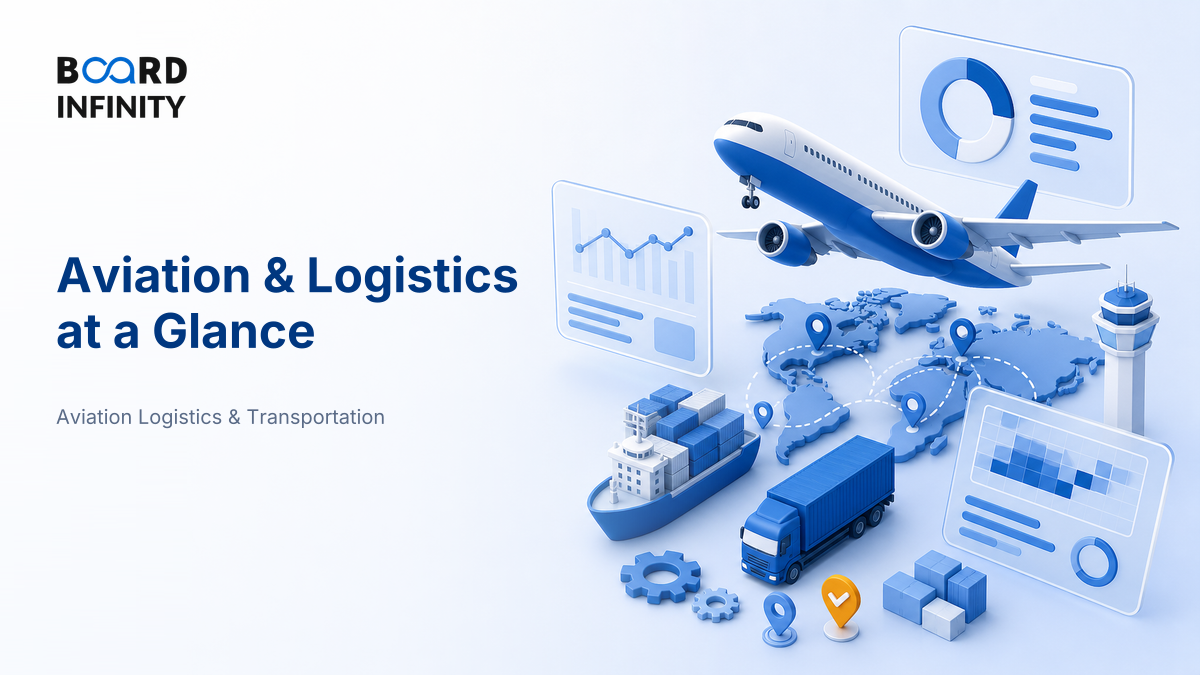
Yesterday’s logistics was a truck waiting at a warehouse gate and an aircraft carrying mostly passengers. Today, the same sector moves a business traveller, a vaccine box, a spare aircraft part, a D2C order and a high-value export shipment through one connected network.
That is the first thing to understand: aviation and logistics are not “transport” in a simple sense. They are time-compression businesses where airports, fleets, warehouses, data systems and regulations decide how fast goods and people can move.
- Aviation moves passengers and cargo by air; logistics plans and executes the movement, storage and visibility of goods.
- The sector has two linked demand pools: people movement and goods movement.
- Growth comes from rising incomes, e-commerce, manufacturing, global trade, airport capacity, express delivery and supply-chain digitisation.
- Structure matters: airlines, airports, cargo terminals, 3PLs, express players, freight forwarders, warehousing firms and tech platforms play different roles.
- Airlines are typically asset-heavy and yield-sensitive; logistics firms are often network-heavy and service-level-sensitive.
- Track the sector through load factor, yield, RASK-CASK spread, OTIF, cost per shipment and inventory turnover.
- The interview trap is quoting one large market number and missing the operating model behind it.
Big Picture: Two Industries Joined by Speed
Think of aviation and logistics as two sides of the same speed economy. Aviation supplies the fastest long-distance physical movement. Logistics decides what must move, where it is stored, how it is tracked, who handles it, and whether it arrives on time.
For sector sizing, do not hunt for one magical number. Break the industry into revenue pools: passenger air travel, air cargo, express parcels, freight forwarding, warehousing, contract logistics, cold chain and last-mile delivery. If a data point is unavailable, use a transparent bottom-up method - the same logic explained in sizing a sector when no number exists.
Core Explanation: Size, Growth and Structure
The cleanest way to understand this sector is through three questions:
The Sector Structure: Who Does What?
A strong answer separates the ecosystem into players, not just modes of transport.
This is why a candidate who says “aviation and logistics are growing because e-commerce is growing” sounds shallow. E-commerce helps parcel volume, but passenger aviation may depend more on income growth, tourism, business travel, airport capacity and airline pricing discipline.
Two Demand Pools: People Flow vs Goods Flow
The same airport runway can support two very different businesses. A passenger airline worries about fares, seat occupancy, aircraft utilisation and customer experience. A cargo or express logistics player worries about pickup cut-off time, hub sorting, customs clearance, cold-chain integrity and last-mile delivery.
Growth Drivers: Why the Sector Expands
Use a multi-driver view. Aviation and logistics grow when demand, infrastructure, policy and operating efficiency reinforce each other.
For interview comparison, aviation and logistics can also be benchmarked against adjacent infrastructure-heavy sectors using the logic in comparing two sectors on the same framework: demand cyclicality, asset intensity, regulation, pricing power and margin structure.
The Useful 2x2: Asset Intensity vs Customer Type
This matrix helps you classify business models quickly. It also prevents a common error: comparing an airline and a tech-enabled 3PL as if both have the same economics.
KPIs to Track: The Interview Dashboard
If you mention performance, name the measure. Vague phrases like “efficiency is important” do not earn marks. Use these KPIs as your dashboard.
Notice the pattern: aviation metrics are capacity-and-yield heavy; logistics metrics are service-and-cost heavy. A polished interview answer should use the right metric for the right business.
Definitions You Can Say in One Breath
- Aviation: commercial air transport of passengers, cargo and mail using aircraft and airport infrastructure.
- Logistics: the planning and execution of goods movement, storage and information flow from origin to consumption.
- ASCM definition of logistics: “the art and science of obtaining, producing, and distributing material and product in the proper place and in proper quantities” (ASCM).
- 3PL: a third-party logistics provider that manages transport, warehousing or fulfilment for another company.
- Freight forwarding: arranging shipment movement across carriers, routes, documents and customs without necessarily owning all transport assets.
Case Study: Blue Dart and the Express Logistics Logic
Blue Dart shows how an Indian express logistics player competes by combining air capacity, ground distribution, shipment visibility and time-definite service.
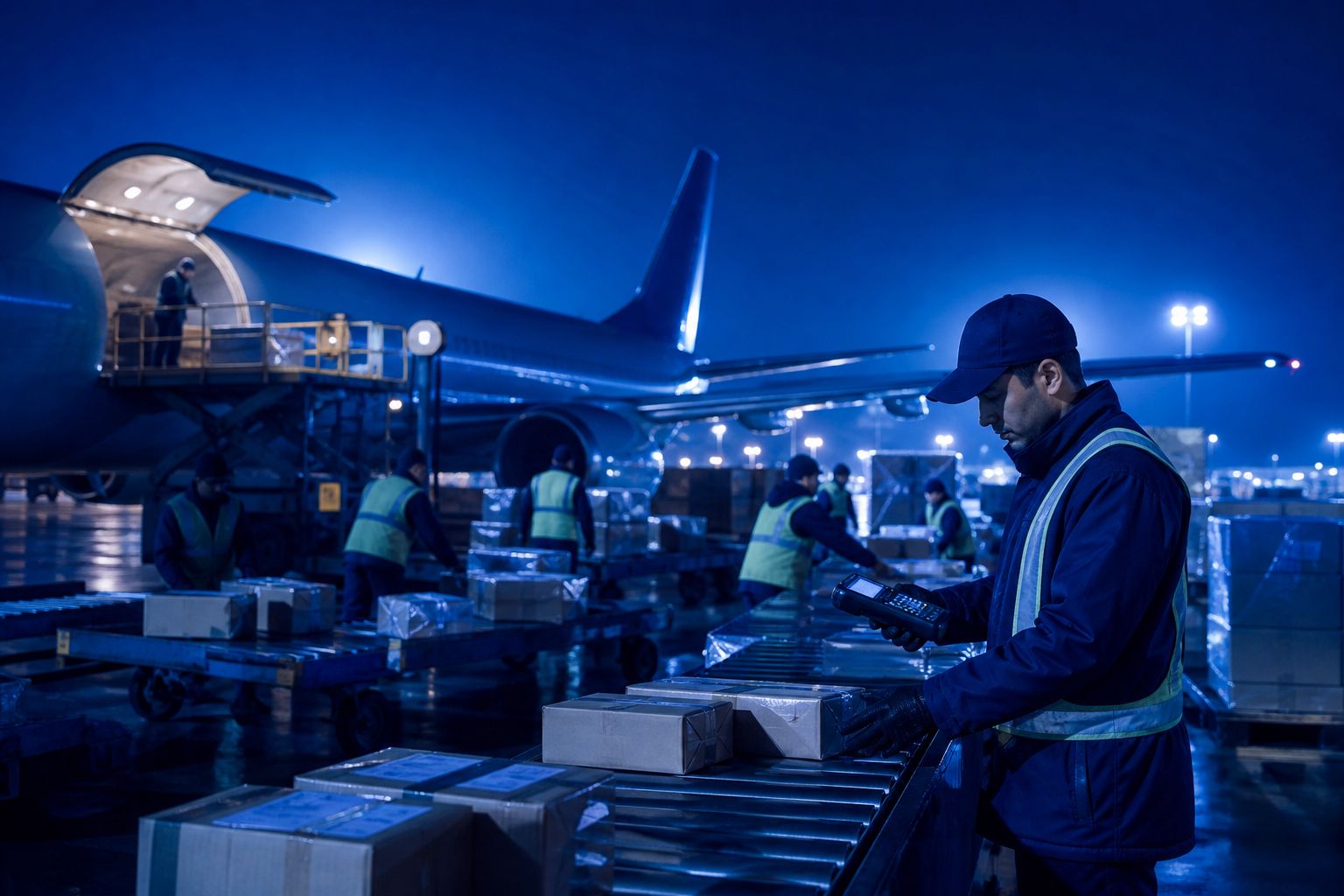
Blue Dart is a useful case because it sits at the intersection of aviation and logistics. It is not just a courier company, and it is not just an airline. Its advantage comes from integrating air express movement with ground pickup, sorting, tracking and delivery across Indian demand centres.
Situation: India’s premium express market needs reliability across long distances, high-value shipments, business documents, healthcare movement and e-commerce-linked parcels. Pure road movement can be economical, but it may struggle when delivery windows are tight across distant cities.
The move: Blue Dart built an express model around network control: scheduled air capacity, hub-and-spoke sorting, ground distribution, shipment tracking and customer-facing service commitments. Its primary driver is integrated network reliability. Supporting drivers include brand trust in premium express, enterprise relationships, technology-enabled tracking, trained handling processes and access to dense commercial lanes.
Outcome and lesson: The strategic lesson is not “air cargo wins because it is fast.” The sharper lesson is that speed becomes valuable only when the full chain is reliable: pickup, cut-off, air movement, sorting, compliance and final delivery must work together.
How AI Changes Aviation & Logistics
AI is not a decorative layer here. It directly changes forecasting, routing, pricing and exception management.
Student workflow: before an interview, load a company annual report, recent news releases and this lesson into NotebookLM. Ask: “Map this company’s aviation and logistics revenue pools, growth drivers, KPIs and risks. Then generate five interview questions with model answers.” This turns sector knowledge into company-specific talking points.
Interview Relevance
“Give me a quick overview of the aviation and logistics sector in India. Where is the growth coming from, and how would you analyse the structure?”
Use the phrase “time sensitivity determines the mode.” It instantly shows that you understand why some shipments move by air, some by road, and some through multimodal networks.
Common Mistake
The biggest mistake is treating aviation and logistics as one homogeneous sector and giving a generic “it is growing due to e-commerce” answer. That costs candidates because it ignores passenger aviation economics, cargo flows, infrastructure nodes and service-level KPIs. Fix: split the sector into demand pools, map the players, then attach the right KPI to each business model.