
Regulation and the Bodies That Govern Aviation & Logistics
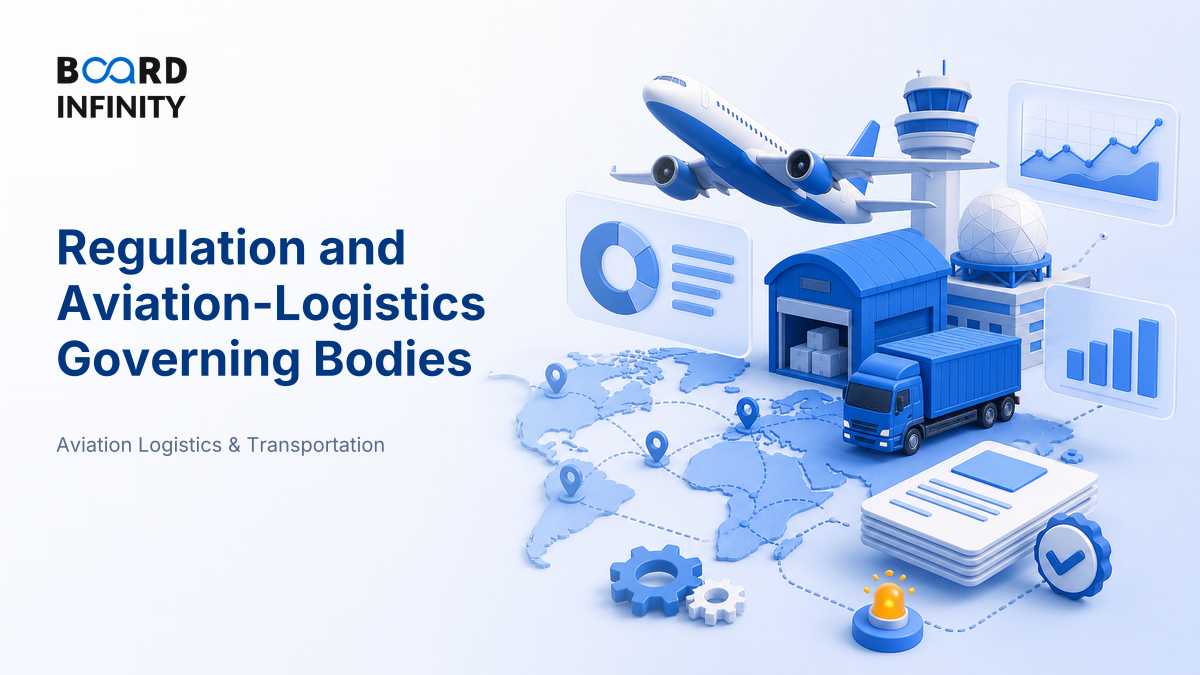
A cargo aircraft can be fuelled, crewed and ready, yet still sit on the apron because one dangerous-goods declaration, security clearance or airport slot is not right. In aviation and logistics, regulation is not paperwork after the business decision - it is often the condition that decides whether the business can operate at all.
- Aviation is heavily regulated because safety, security, airspace, consumer rights and airport economics affect public risk.
- Logistics regulation is multi-modal: road, rail, ports, air cargo, customs, warehousing, GST and data rules can all touch one shipment.
- Do not confuse regulator types: policy makers set direction, regulators enforce rules, operators run assets, and industry bodies create standards.
- In India, aviation answers usually start with MoCA, DGCA, BCAS, AAI, AERA and airport operators.
- In logistics, add CBIC/customs, MoRTH, Indian Railways, ports and shipping authorities, state transport bodies and warehouse/local authorities.
- The best interview answer maps the shipment or flight journey, then attaches the relevant body to each risk point.
- Common trap: treating IATA like a government regulator. It is an industry association, not a sovereign regulator.
Big Picture: Regulation Is a Layered Control System
Think of aviation and logistics regulation as a stack. The top layers create international and national rules; the bottom layers decide whether a specific aircraft, airport, truck, warehouse, cargo document or customs filing is compliant today.
Core Explanation: Who Governs What?
The cleanest way to understand this topic is to separate four regulatory questions: who sets policy, who checks safety, who secures the system, and who clears the movement of goods.
At the global level, the International Civil Aviation Organization sets civil aviation standards and recommended practices for member states. The International Air Transport Association is different: it is an airline industry body that creates commercial and operational standards, including widely used guidance for cargo and dangerous goods, but it is not a government regulator.
In India, aviation policy sits with the Ministry of Civil Aviation. The Directorate General of Civil Aviation handles safety regulation, licensing and airworthiness oversight. The Bureau of Civil Aviation Security handles aviation security. The Airports Authority of India manages air navigation services and many airports, while AERA regulates tariffs for major airports.
For logistics, the map widens. Customs and trade clearance connect to the Central Board of Indirect Taxes and Customs. Road transport connects to MoRTH and state transport authorities. Rail freight connects to Indian Railways. Ports and shipping connect to the Ministry of Ports, Shipping and Waterways, port authorities and maritime regulators.
The Four Buckets You Must Be Able to Explain
Interviewers rarely expect you to recite every notification. They expect you to know the regulatory architecture and the business impact. Use these four buckets.
Aviation vs Logistics Regulation: The Key Difference
Aviation regulation is deeper per asset because the risk of one failure is high. Logistics regulation is wider across interfaces because one shipment may pass through truck, warehouse, airport, customs, line-haul, last-mile and customer return flows.
How to Track Regulatory Readiness
For a manager, regulation becomes operational when it can be measured. These are practical compliance KPIs an aviation, cargo, 3PL or logistics operations team can track without turning the answer into legal detail.
Definitions You Can Say in One Breath
- Aviation regulation: Rules and oversight that make air transport safe, secure, economically orderly and internationally interoperable.
- Logistics regulation: Rules governing how goods are moved, stored, cleared, tracked, taxed and delivered across modes.
- Safety: Prevention of accidental harm through design, training, maintenance, procedures and investigation.
- Security: Prevention of unlawful interference, theft, sabotage or misuse of transport assets and cargo.
- Regulatory compliance: Proving that operations meet required rules before, during and after movement.
Mini Case Study: Blue Dart Aviation and the Compliance Moat in Express Logistics
Blue Dart Aviation shows how an express logistics player can turn regulated air cargo capability into a service advantage.
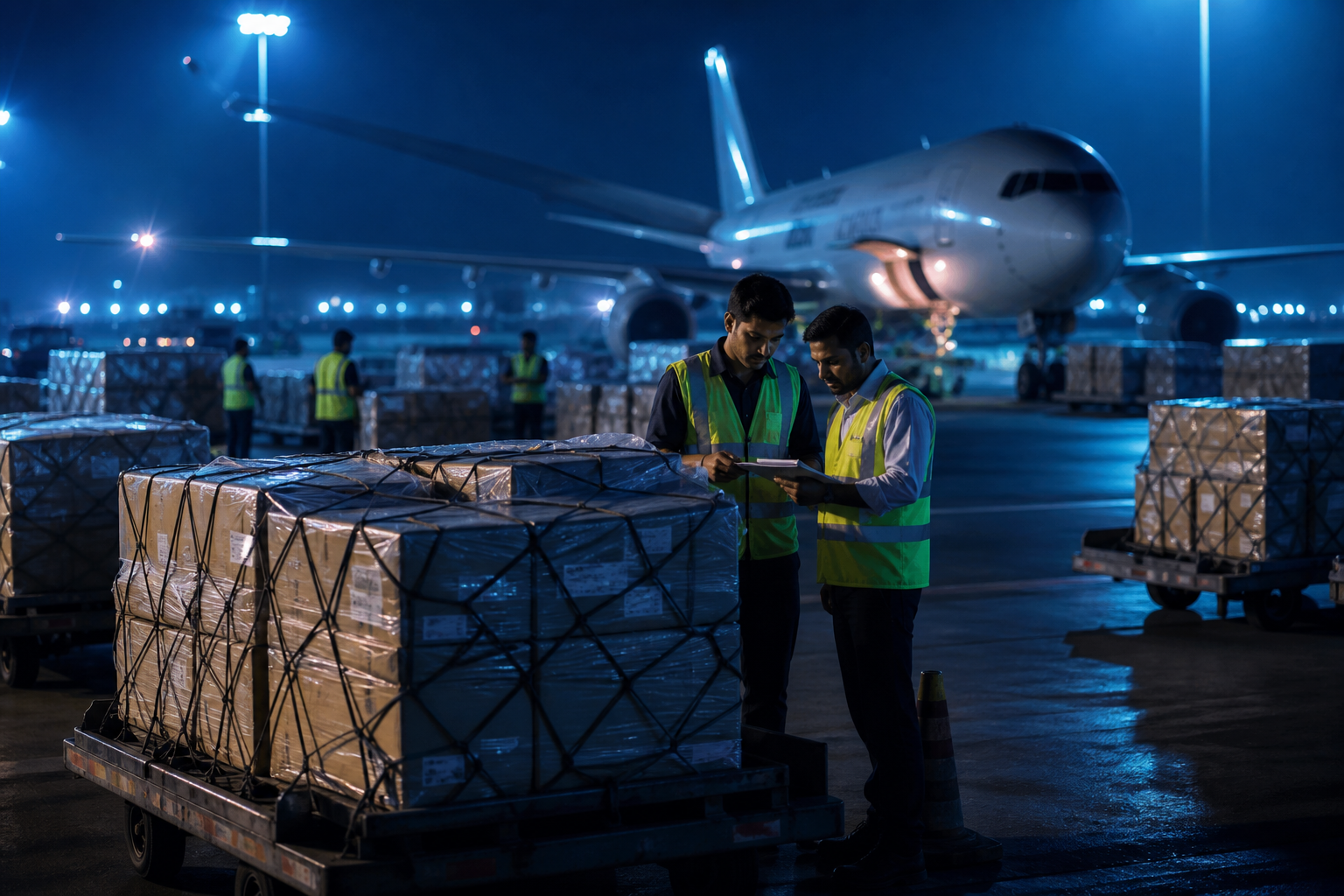
Situation: Time-definite express delivery is not just a courier promise. It depends on aircraft permissions, trained crews, cargo screening, dangerous-goods handling, airport access, customs-ready documentation and tight handoffs between ground and air operations.
The move: Blue Dart built an air-cargo-led express network rather than relying only on third-party passenger belly capacity. The primary driver was control over a regulated air operations backbone. Supporting drivers included secure cargo processes, airport coordination, shipment-level documentation discipline and integrated ground-air scheduling.
The result and lesson: The strategic lesson is not simply “own aircraft to move faster.” It is that in regulated logistics, speed comes from permission plus process. A competitor may buy trucks or lease capacity, but replicating safety approvals, security routines, trained people, airport operating relationships and exception handling takes time.
How AI Changes Regulation and the Bodies That Govern Aviation & Logistics
1. Regulatory intelligence becomes faster. Aviation and logistics teams can use AI to track circulars, civil aviation requirements, customs notifications, airport tariff orders and state transport rules. The risk is hallucination, so AI should summarize and compare documents, not replace official interpretation.
2. Documentation errors can fall. AI-assisted document checking can flag mismatches in airway bills, invoices, packing lists, HS codes, permits and dangerous-goods declarations before a shipment reaches the airport or customs desk. This matters because many delays are not physical capacity problems; they are compliance-friction problems.
3. Risk-based oversight gets sharper. Regulators and operators can use machine learning to identify unusual cargo patterns, maintenance risk signals, training gaps, route-level disruption risks and repeated non-compliance clusters. The caveat is governance: models must be auditable, explainable and protected from biased or incomplete data.
Load this lesson, the company annual report and the relevant regulator pages into NotebookLM. Ask: “Create 10 interview questions on how regulation affects this company’s aviation or logistics business model, with model answer bullets.” Then verify every factual claim against the original source.
Interview Relevance
“If you were advising an air cargo or logistics company entering India, which regulatory bodies would matter most, and how would regulation affect the business model?”
If the interviewer asks you to compare air cargo with another sector, use the same dimensions from comparing two sectors on the same framework: demand, margins, regulation, capex, competitive intensity and execution risk. If they push you to estimate an addressable market despite incomplete data, revise sizing a sector when no number exists and state your assumptions clearly.
The strongest answers do not list regulators randomly. They walk through the operating journey and show where each body has decision rights.
Common Mistake
Mistake: saying “DGCA regulates everything” or treating IATA as a government regulator. Why it hurts: it shows you cannot separate safety, security, tariffs, customs and industry standards. Fix: use the four-bucket map - policy, safety, security, and economic/trade compliance.