
Where AI Is Landing in Defence, Aerospace & Space
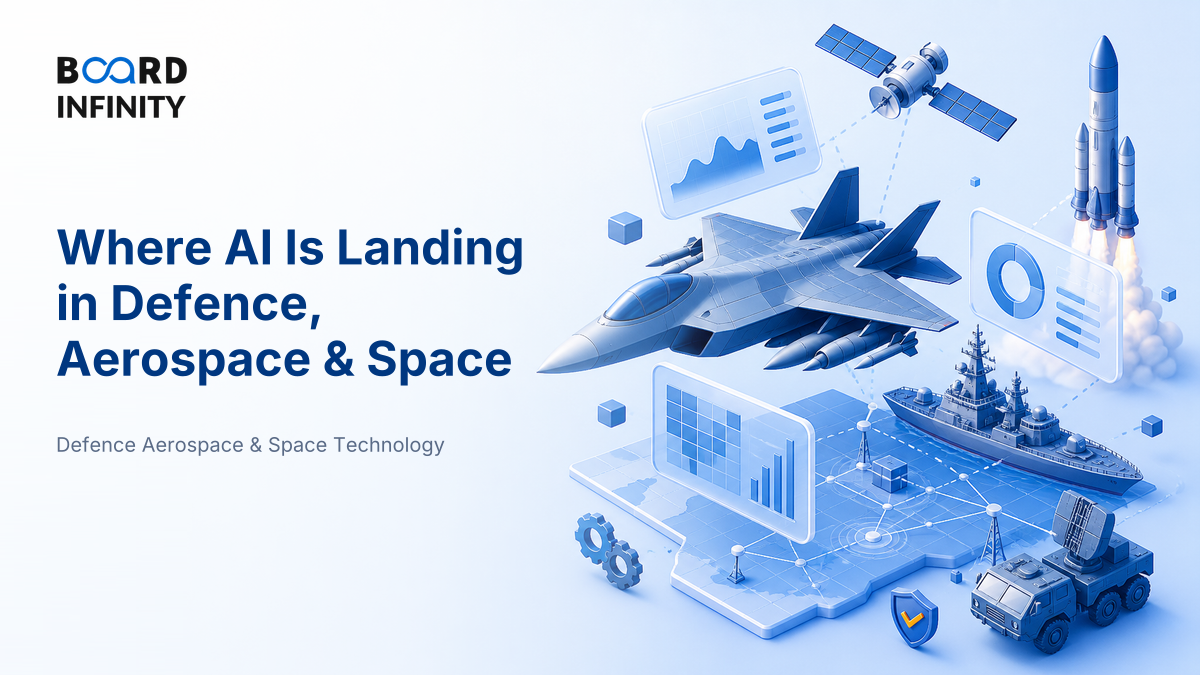
A satellite image lands at a command centre before sunrise. The first “analyst” to notice a suspicious change may not be a person - it may be a model scanning pixels, comparing patterns and pushing an alert into the mission workflow.
That is the real story of AI in defence, aerospace and space: not one dramatic robot replacing humans, but intelligence quietly entering the mission loop wherever speed, uncertainty, scale or danger are high.
- AI is landing in the mission loop: sense, interpret, decide, act and learn - especially where humans face too much data or too little time.
- Defence use cases: intelligence analysis, target recognition, autonomous drones, electronic warfare, cyber defence, logistics and decision support.
- Aerospace use cases: aircraft design, simulation, quality inspection, predictive maintenance, crew support, route optimisation and digital twins.
- Space use cases: satellite image analytics, autonomous navigation, onboard data processing, constellation operations and space situational awareness.
- The constraint is not only model accuracy: adoption depends on data security, latency, certification, explainability, human oversight and reliability.
- India angle: drones, defence electronics, private space, aerospace GCCs and dual-use startups are where MBA roles increasingly connect business with AI.
- Interview lens: explain the use case, the decision it improves, the operational constraint and the measurable business or mission outcome.
Big Picture: AI Is Moving Into the Mission Loop
The easiest way to understand this sector is to stop thinking of AI as a standalone software product. In defence, aerospace and space, AI becomes valuable when it shortens or improves the loop from raw sensor data to a safe, useful action.
This is why the sector is different from consumer AI. A wrong movie recommendation is annoying; a wrong aircraft-maintenance prediction, satellite manoeuvre or battlefield alert can be dangerous. So AI adoption is slower, more governed and more engineering-heavy - but also much more strategic.
The Five Landing Zones You Must Be Able to Explain
For interviews, do not say “AI will transform defence and space” and stop. Break the sector into five landing zones. Each has a different buyer, risk level, data type and business model.
If you want to connect the aerospace side to aircraft operations, airports, routes and maintenance flows, revise How the Aviation & Logistics Value Chain Works before going deeper into AI use cases.
The Core Framework: Value Versus Autonomy Risk
The cleanest interview framework is a 2x2: how valuable is the use case, and how much autonomous action does it require? High-value, low-autonomy use cases are adopted fastest. High-autonomy, safety-critical use cases need heavier testing, regulation and human oversight.
Use this matrix to sound practical. A satellite-image triage model may be easier to deploy because it recommends what analysts should inspect. A fully autonomous armed platform is far harder because the system directly acts in a lethal, uncertain environment.
Anduril describes Lattice as software that connects sensors, effectors and operators into a common operating picture. The strategic point is not “AI replaces soldiers”; it is that defence value shifts toward software-defined sensing, decision support and networked operations.
How to Evaluate an AI Use Case in This Sector
In normal analytics projects, accuracy often dominates the discussion. In defence, aerospace and space, the better question is: does the AI improve the mission without creating unacceptable safety, security or governance risk?
Notice the pattern: a “good number” is not universal. The strong benchmark is improvement against the mission baseline under the required safety envelope.
Definitions You Can Say in One Breath
- AI system: software that infers from data to generate predictions, recommendations or decisions for a defined objective, adapted from the OECD AI principles.
- Mission AI: AI embedded in sensing, planning or action where failure affects safety, security or national capability.
- Autonomy: a system’s ability to perform a task without continuous human control, within a defined operating envelope.
- C4ISR: command, control, communications, computers, intelligence, surveillance and reconnaissance - the data backbone of defence decisions.
- Digital twin: a virtual model of a physical asset or system used to simulate, monitor and improve performance.
Case Study: ideaForge and the Shift From Drone Hardware to Mission Intelligence
ideaForge, an Indian unmanned aircraft systems company, shows how AI can move a drone business beyond airframes toward surveillance, analytics and operational intelligence.
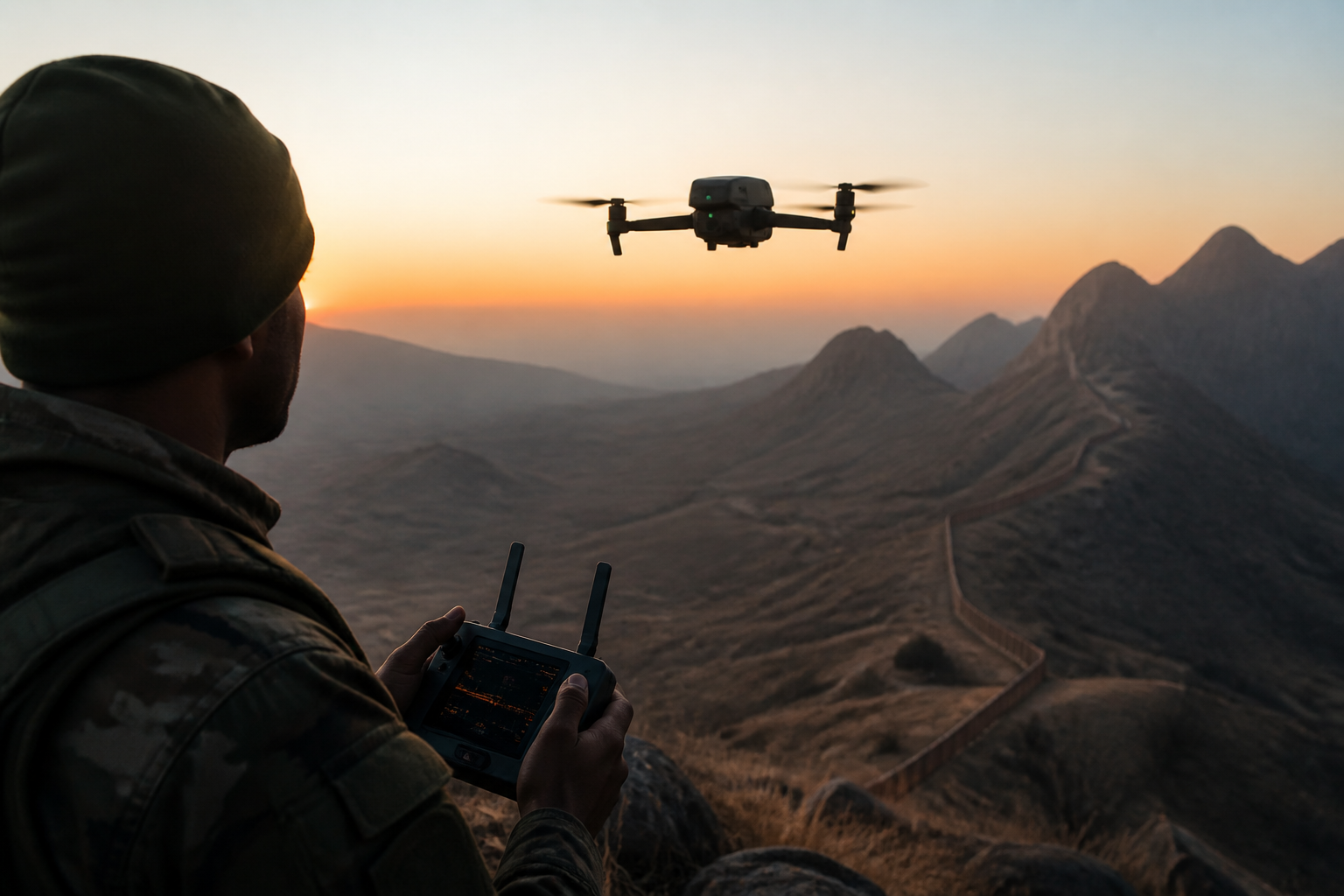
Situation: Defence and security users do not buy drones only to admire flight performance. They need answers: What changed in this area? Is there movement near a boundary? Which asset needs inspection? A drone produces huge amounts of video, images and telemetry, but humans still face the bottleneck of interpreting that data quickly.
The move: For a company like ideaForge, the strategic AI opportunity is to combine rugged unmanned aircraft with payloads, analytics workflows, mission planning, fleet monitoring and maintenance intelligence. In other words, the product shifts from “drone as hardware” to “drone as a mission-data system.”
Outcome and lesson: The winning position is not explained by one factor. The primary driver is solving a mission problem in Indian operating conditions. Supporting drivers include reliable hardware, secure data handling, trained operators, analytics, service support and alignment with defence procurement requirements. The lesson for interviews: in this sector, AI monetisation usually rides on a full system - platform, sensors, software, services and trust.
A shallow answer says, “AI helps drones fly automatically.” A strong answer says, “AI helps convert drone data into faster, safer, mission-relevant decisions, but only when integrated with hardware reliability, operator workflows and governance.”
How AI Changes Defence, Aerospace & Space
1. Defence moves from platform-centric to sensor-network-centric competition. The aircraft, drone, radar or satellite remains important, but the advantage increasingly comes from connecting sensors, fusing data and pushing decision support to the edge. AI helps identify patterns faster, but human command authority and rules of engagement remain central.
2. Aerospace engineering becomes more simulation-led. AI supports design exploration, quality inspection, predictive maintenance and digital twins. The constraint is certification: aviation-grade AI must be explainable, tested and reliable enough for safety-critical environments. This is why AI in aerospace often starts in maintenance, inspection and engineering support before moving into direct flight-critical control.
3. Space businesses become data and autonomy businesses. Satellites generate imagery, telemetry and signals at scale. AI helps process data onboard, manage constellations, detect anomalies and convert earth-observation data into insights for agriculture, insurance, climate, infrastructure and security. India’s private space ecosystem is also shaped by institutions such as IN-SPACe, which supports non-government participation in space activities.
Use NotebookLM like an interview simulator: upload a company annual report, a product page and one sector note, then ask, “Map this company’s AI use cases into defence, aerospace and space; identify revenue impact, operational risk and likely interview questions.”
For roles in analytics, product, strategy or operations, remember that much of this work may sit inside engineering centres and capability hubs. If you are targeting such employers, Key Players and the Competitive Map in Global Capability Centres is a useful next lens.
Interview Relevance
“Where do you think AI will create the most value in defence, aerospace and space, and what risks would you watch before recommending deployment?”
One crisp line impresses interviewers: “In this sector, AI is not adopted because it is smart; it is adopted when it is useful, secure, certifiable and trusted by operators.”
Common Mistake
The biggest mistake is giving a sci-fi answer - “AI will create autonomous weapons and replace pilots” - without explaining the operating workflow, certification risk, data constraints or human oversight. The fix: always anchor your answer to one real use case, the decision it improves, the risk it creates and the metric that proves value.