
Defence, Aerospace & Space Interview Questions With Model Answers
Why can a rocket launch look like a tech product demo, while a fighter-aircraft deal behaves like a 30-year infrastructure project? Defence, aerospace and space sit at the strange intersection of national security, deep engineering, public procurement and private-sector ambition.
- Defence is mission-critical equipment and services for armed forces; aerospace is aircraft and spacecraft systems; space is launch, satellites, data and downstream applications.
- The best answers connect four lenses: mission need, technology maturity, procurement route and lifecycle economics.
- Defence buying is not normal B2B sales. It is long-cycle, compliance-heavy, trial-driven and often linked to localisation, security and lifecycle support.
- Good MBA answers discuss the full value chain: R&D, design, manufacturing, certification, procurement, integration, MRO and upgrades.
- Track metrics like order book coverage, book-to-bill, bid win rate, on-time delivery, program margin and R&D intensity.
- The safest model-answer structure is: define the segment, map stakeholders, explain economics, mention risks, then give one concrete company example.
Big Picture: What Interviewers Are Really Testing
They are not checking whether you know aircraft names or missile ranges. They are checking whether you can think like a manager in a high-stakes, regulated, engineering-led market where one contract decision affects cash flows, supply chains and national capability for years.
Definitions You Should Say Cleanly
- Defence: Equipment, systems, services and support used by armed forces and national-security agencies.
- Aerospace: Design, manufacturing, operation and maintenance of aircraft, spacecraft and related systems.
- Space sector: Launch, satellites, ground systems, space data and applications enabled by space infrastructure.
- MRO: Maintenance, repair and overhaul activities that keep aircraft or systems airworthy and mission-ready.
- Offset: A contractual obligation requiring foreign suppliers to invest, source or transfer capability locally.
Core Explanation: The Answer Bank You Actually Need
Use this sector map before answering any question. Defence, aerospace and space overlap, but they do not have the same customers, sales cycles or risk profile.
For adjacent value-chain thinking, especially MRO, airports and logistics interfaces, revise how the aviation and logistics value chain works. For aerospace engineering centres, analytics and digital operations roles, the operating model is close to the capability-centre logic explained in the GCC competitive map.
Model Answers to Common Defence, Aerospace & Space Questions
Question 1: How is defence different from a normal industrial business?
Model answer: Defence differs on four dimensions: buyer concentration, procurement complexity, security sensitivity and lifecycle obligation. The customer is usually the government or armed forces, the sale often involves trials and technical evaluation, and the supplier remains responsible for spares, upgrades, training and maintenance over many years. So the business is not just about making equipment; it is about proving reliability, compliance and long-term support.
Question 2: Explain the defence procurement cycle in simple terms.
Model answer: The cycle starts with a capability gap, becomes a formal requirement, moves into vendor evaluation and trials, then contract negotiation, delivery and lifecycle support. In India, procurement is shaped by the Ministry of Defence's Defence Acquisition Procedure, which emphasises acquisition categories, indigenous content and structured buying routes. A good manager must understand both the technical product and the buying process.
Question 3: Where do MBA roles fit in such a technical sector?
Model answer: MBA roles sit at the interface between technology, customer and economics. Product managers translate user requirements into features; strategy teams choose segments and partnerships; supply-chain managers localise vendors; finance teams model program profitability; sales and capture teams manage bids. The technical depth is essential, but the commercial model is what converts engineering into sustainable business.
Question 4: How do aerospace companies make money?
Model answer: Aerospace companies earn through original equipment manufacturing, components, avionics, engineering services, MRO, leasing support and aftermarket spares. The attractive part is often the long tail after the initial sale because maintenance, upgrades and spare parts continue over the asset's life. That is why installed base, reliability and certification matter as much as the first contract.
Question 5: What is changing in India's space sector?
Model answer: India's space ecosystem is moving from a government-only execution model toward a mixed ecosystem where public institutions, private startups, component suppliers and downstream analytics players coexist. IN-SPACe was created to enable and authorise non-government participation in space activities (IN-SPACe). For MBAs, this opens roles in business development, partnerships, regulatory coordination, satellite data products and go-to-market strategy.
Question 6: How would you evaluate a defence or space startup?
Model answer: I would not evaluate it like a consumer startup. I would check technology readiness, certification path, customer validation, order pipeline, dependence on government procurement, working-capital needs, IP ownership, supply-chain depth and the credibility of the founding team. A startup can have impressive technology and still fail commercially if trials, approvals or cash conversion take too long.
Question 7: What are the main risks in this sector?
Model answer: The major risks are long sales cycles, tender cancellation, technology obsolescence, export-control restrictions, supply-chain dependency, certification delays and execution risk on large programs. The mitigation is portfolio discipline: balance government and commercial customers, build modular technology, localise critical suppliers, and price contracts with realistic delivery and warranty assumptions.
Metrics Interviewers Like in This Sector
When a question asks whether a company is healthy, move from storytelling to measurable judgment. Use these metrics carefully because benchmarks vary by segment, contract and accounting policy.
Mini Case Study: ideaForge and the Indian Defence Drone Opportunity
ideaForge shows how an Indian deep-tech company can convert unmanned aircraft technology into defence, homeland-security and enterprise use cases.
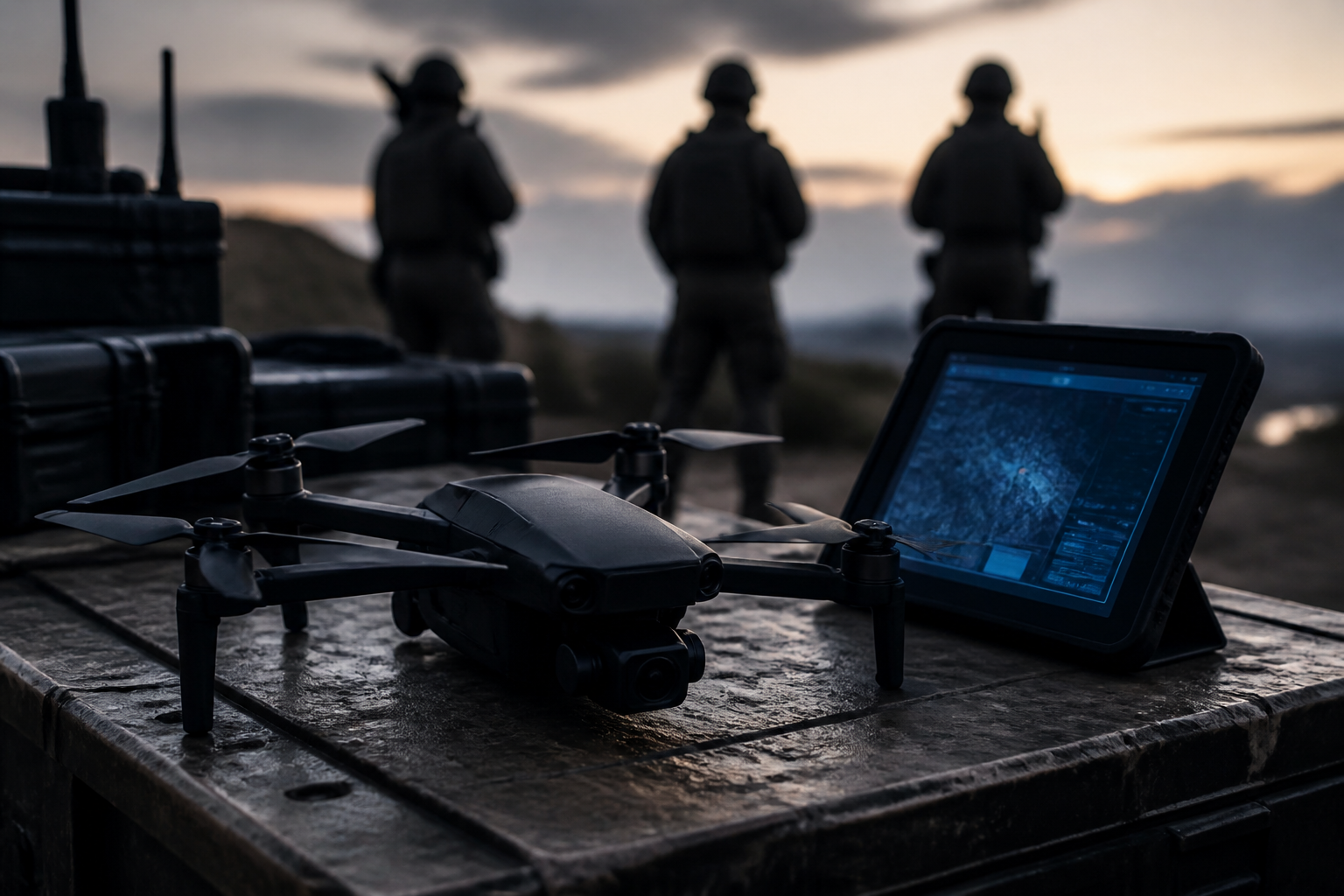
ideaForge is useful for interviews because it is not just a “cool drone” story. It sits at the overlap of indigenous technology, field use cases, public-sector procurement and enterprise applications. The company describes itself as a vertically integrated unmanned aircraft systems player through its investor communications (ideaForge investor relations).
Situation: India's defence, police, disaster-response and infrastructure sectors increasingly need aerial intelligence without always deploying manned aircraft. The buyer does not only ask, “Can it fly?” The real questions are endurance, payload, ruggedness, data security, training, maintenance and support.
The move: ideaForge built around unmanned aircraft systems rather than a one-off hardware product. The primary driver was mission-fit technology for surveillance and mapping use cases. Supporting drivers included local engineering capability, public-sector and enterprise customer access, after-sales support, and the ability to operate in regulated environments.
Outcome or lesson: The strategic lesson is that defence-tech companies win when they combine product reliability with institutional selling capability. In this sector, the best technology still needs procurement literacy, field support and patient capital.
How AI Changes Defence, Aerospace & Space Interview Questions
AI is not a generic buzzword here. It changes both what companies build and what candidates must be ready to discuss.
A sharp answer also mentions the caveat: AI in defence and aerospace faces stricter requirements for explainability, cyber security, safety, validation and accountability than ordinary consumer AI.
Interview Relevance
“Pick one company in defence, aerospace or space. Explain its business model, key risks and where an MBA can create value.”
If you do not know the weapon system or aircraft in detail, do not bluff. Move up one level and discuss mission need, procurement, economics and execution risk. That sounds managerial, not shallow.
Common Mistake
The biggest mistake is answering like a defence enthusiast instead of a business candidate - too many platform names, too little business logic. The fix: for every product you mention, add customer, revenue model, procurement risk and lifecycle support.