
AI in Learning & Development Explained
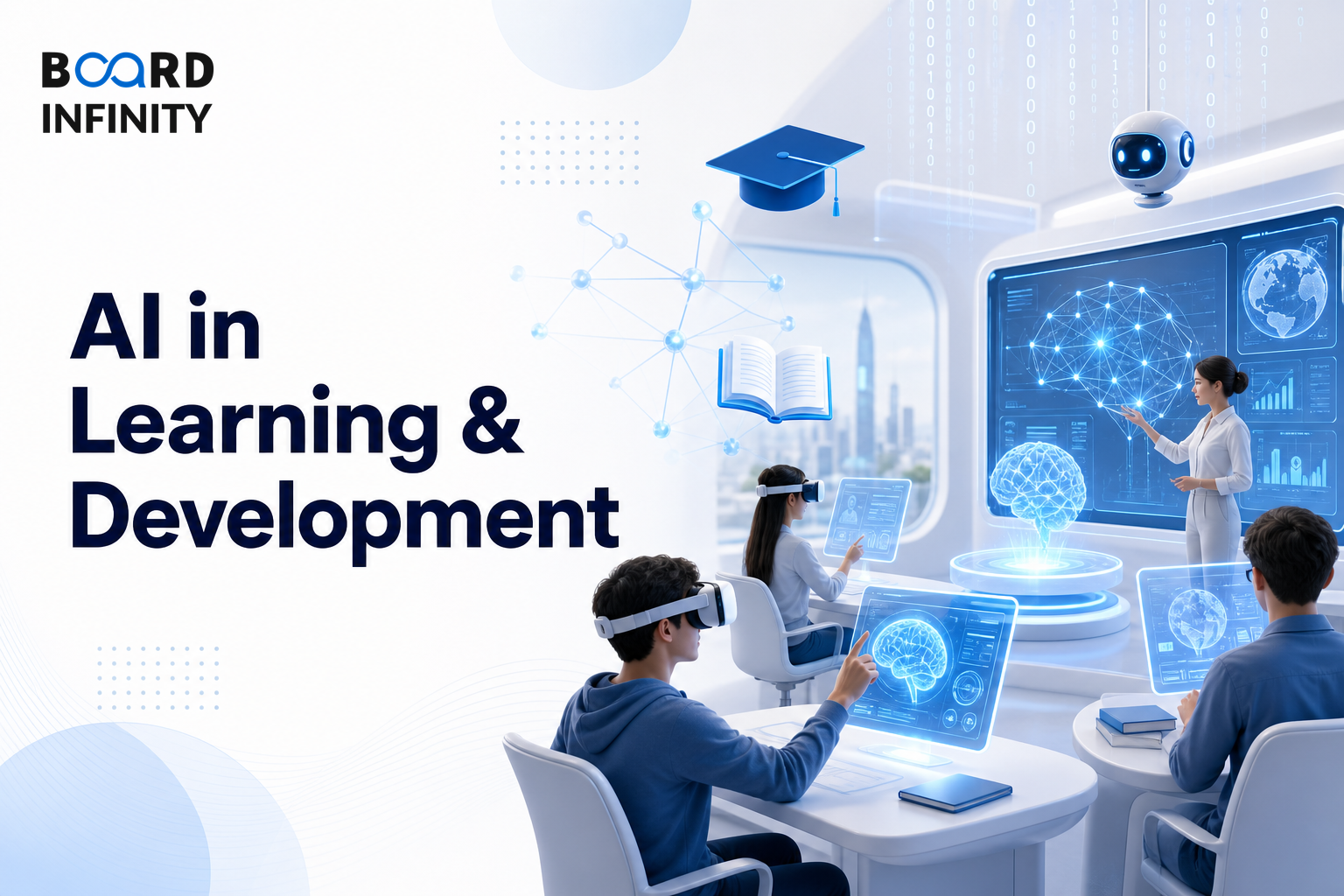
In AI in Employee Engagement, the focus was continuous, intelligent listening; in Learning & Development, the question becomes how AI changes the learning journey itself. For interviews, the key is to frame AI as a shift from a one-size-fits-all classroom approach to personalised, adaptive learning journeys that maximise learning ROI.
- AI transforms L&D from a one-size-fits-all classroom approach to personalised, adaptive learning journeys.
- Modern AI-powered learning platforms use skill gap detection, content recommendation engines, and completion prediction to maximise learning ROI.
- The shift is from 'training push' to 'learning pull.'
- Coursera for Business uses skill gap analysis and personalised path recommendations with 140K+ courses.
- Degreed uses a skills intelligence engine and aggregates all learning into a skills profile.
- AI platforms map employee current skills against target skills for their role and career aspiration.
- Advanced systems track informal learning too - articles read, videos watched, conferences attended - building a holistic skills profile.
AI in Learning & Development: The Big Picture
Artificial intelligence (AI) in Learning & Development (L&D) changes training from a generic classroom approach into personalised, adaptive learning journeys. Modern AI-powered learning platforms use skill gap detection, content recommendation engines, and completion prediction to maximise learning ROI.
The core shift is from 'training push' to 'learning pull.' Instead of pushing the same programme to everyone, AI platforms identify gaps and create a personalised learning agenda.
AI transforms L&D from a one-size-fits-all classroom approach to personalised, adaptive learning journeys.
How Skill Gap Detection Works
Skill gap detection methodology: AI platforms map employee current skills from resume data, assessments, and learning history against target skills for their role and career aspiration. The gap becomes a personalised learning agenda.
Advanced systems, like Degreed, track informal learning too - articles read, videos watched, conferences attended - building a holistic skills profile.
How Platforms Differ
Coursera for Business focuses on skill gap analysis and personalised path recommendations. Its key differentiator is 140K+ courses and integration with LinkedIn Learning for skills benchmarking.
Degreed uses a skills intelligence engine. It aggregates all learning - courses, books, videos, projects - into a skills profile and is described as an LXP leader.
EdCast, now associated with Cornerstone, focuses on AI content curation. It curates internal + external content and provides microlearning recommendations based on role and gaps.
Percipio from Skillsoft provides adaptive learning paths. Its differentiator is CAISY AI role-plays for leadership development and skill benchmark comparisons vs peers.
Darwinbox Learning is integrated with HRIS. Its learning recommendations are based on performance review outcomes and career goals.
Why This Matters for Learning ROI
Modern AI-powered learning platforms use skill gap detection, content recommendation engines, and completion prediction to maximise learning ROI. The interview-relevant idea is that AI links learning activity to the employee's role, gaps, learning history, performance review outcomes, and career goals where the platform supports it.
This is why the shift from 'training push' to 'learning pull' matters. The learning agenda is not just a catalogue of courses; it is shaped by the employee's current skills, target skills, and career aspiration.
Structuring an AI in Learning & Development Explained Interview Answer
"How does AI transform Learning & Development from a one-size-fits-all classroom approach to personalised, adaptive learning journeys?"
The strongest answers do not describe AI in L&D as just online courses. Anchor the answer in skill gap detection, personalised recommendations, and the shift from 'training push' to 'learning pull.'
The most frequent error is treating AI in L&D as a content library or generic training automation tool. That misses the core point: AI platforms map current skills against target skills and turn the gap into a personalised learning agenda.
Conclusion
AI in Learning & Development matters because it moves organisations from one-size-fits-all training delivery to personalised, adaptive learning journeys. For interviews, remember the central frame: skill gap detection plus recommendations turns 'training push' into 'learning pull' and helps maximise learning ROI.