
Ethical Considerations and Responsible AI in HR
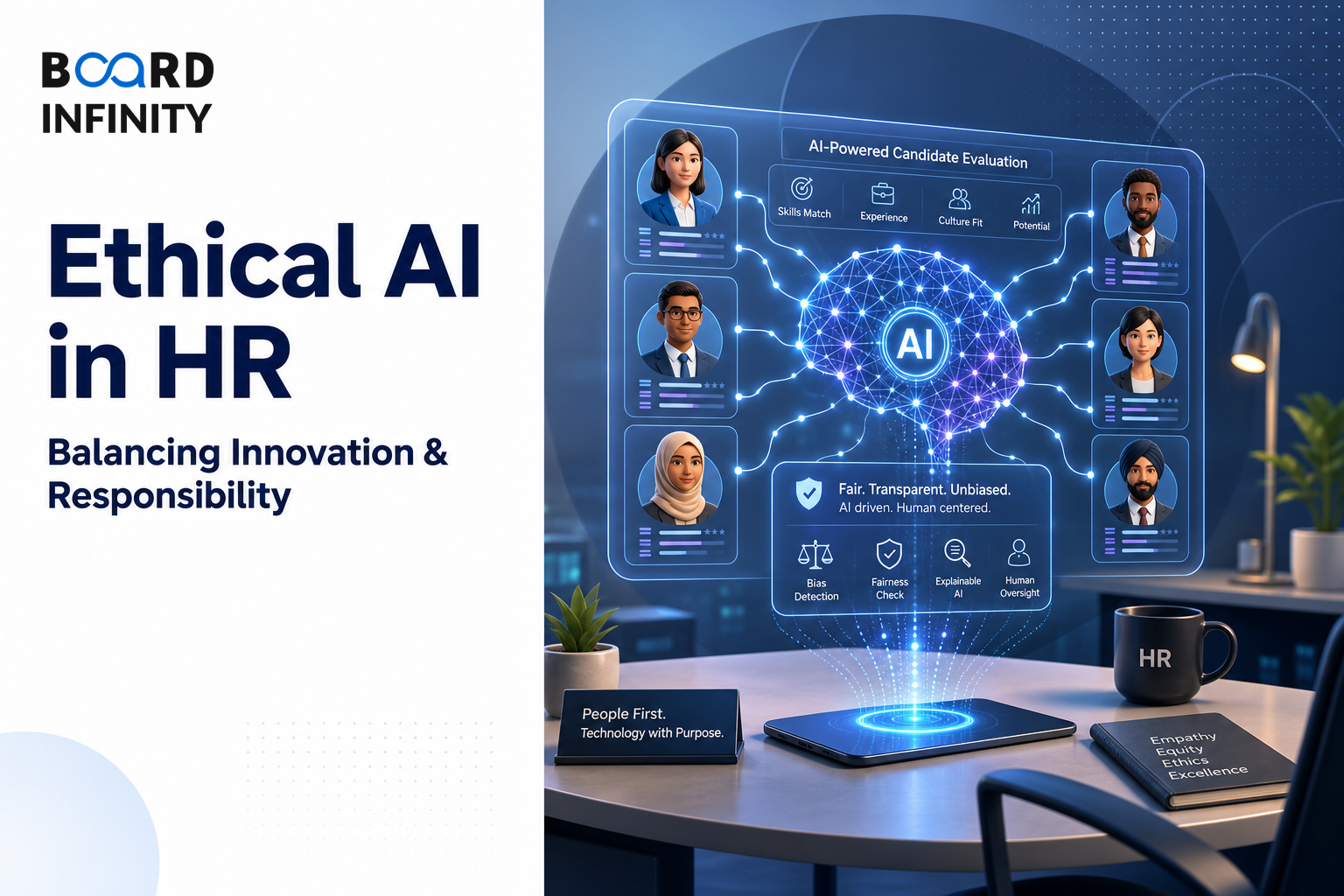
After AI in People Analytics Explained, the next question is how organisations should govern AI when it affects people decisions. The deployment of AI in HR decisions - who gets hired, who gets promoted, who gets fired - raises profound ethical questions. India's Digital Personal Data Protection (DPDP) Act 2023 adds a regulatory dimension, and this matters in interviews because HR professionals must be AI-literate enough to interrogate these systems critically.
- The deployment of AI in HR decisions - who gets hired, who gets promoted, who gets fired - raises profound ethical questions.
- India's Digital Personal Data Protection (DPDP) Act 2023 adds a regulatory dimension because employee data is personal data.
- Algorithmic bias occurs when AI trained on historical data perpetuates past discrimination around gender, caste, and age.
- Transparency matters because employees do not know why AI rejected them, and lack of explainability undermines trust.
- Productivity monitoring AI can create surveillance creep when keystroke logging or camera monitoring erodes psychological safety.
- The Human Resource Business Partner (HRBP) role is to be the human check on automated decisions so speed gains do not come at the cost of equitable opportunity.
The Responsible AI Governance Challenge
Responsible AI in HR is a practical governance challenge: HR leaders must balance efficiency gains from automation with fairness, transparency, DPDP compliance, and human accountability. The big picture is to identify the ethical issue, understand the risk it creates, and apply a mitigation strategy before automated decisions affect employees or candidates.
Always ask: 'Has this AI been audited for disparate impact on protected groups?'
AI Tool Use Case Matrix - 10 Key Tools
Different HR AI tools create different risk levels depending on their domain, primary use case, and bias risk area. A recruitment scoring tool, a continuous listening chatbot, and an HR helpdesk automation system should not be governed as if they carry the same ethical exposure.
HRBP Trade-off: Efficiency vs Fairness
AI screening dramatically reduces time-to-hire and cost-per-hire, but introduces fairness risks that can lead to regulatory penalties, reputational damage, and discrimination lawsuits.
The HRBP's role is to be the human check on automated decisions - ensuring that speed gains don't come at the cost of equitable opportunity.
Structuring an Ethical Considerations & Responsible AI in HR Interview Answer
"How should HR leaders balance efficiency gains from AI screening with fairness, transparency, DPDP compliance, and human accountability?"
Do not make the answer only about speed or cost savings. The strongest answer shows that the HRBP must ensure speed gains do not come at the cost of equitable opportunity.
The most frequent error is treating efficiency gains as the whole business case. It costs points because AI screening dramatically reduces time-to-hire and cost-per-hire, but also introduces fairness risks that can lead to regulatory penalties, reputational damage, and discrimination lawsuits.
Conclusion
Responsible AI in HR means using automation without losing fairness, transparency, DPDP compliance, or human accountability. The final takeaway is simple: HR professionals must be AI-literate enough to interrogate these systems critically before automated decisions shape employee and candidate outcomes.