
AI in People Analytics Explained
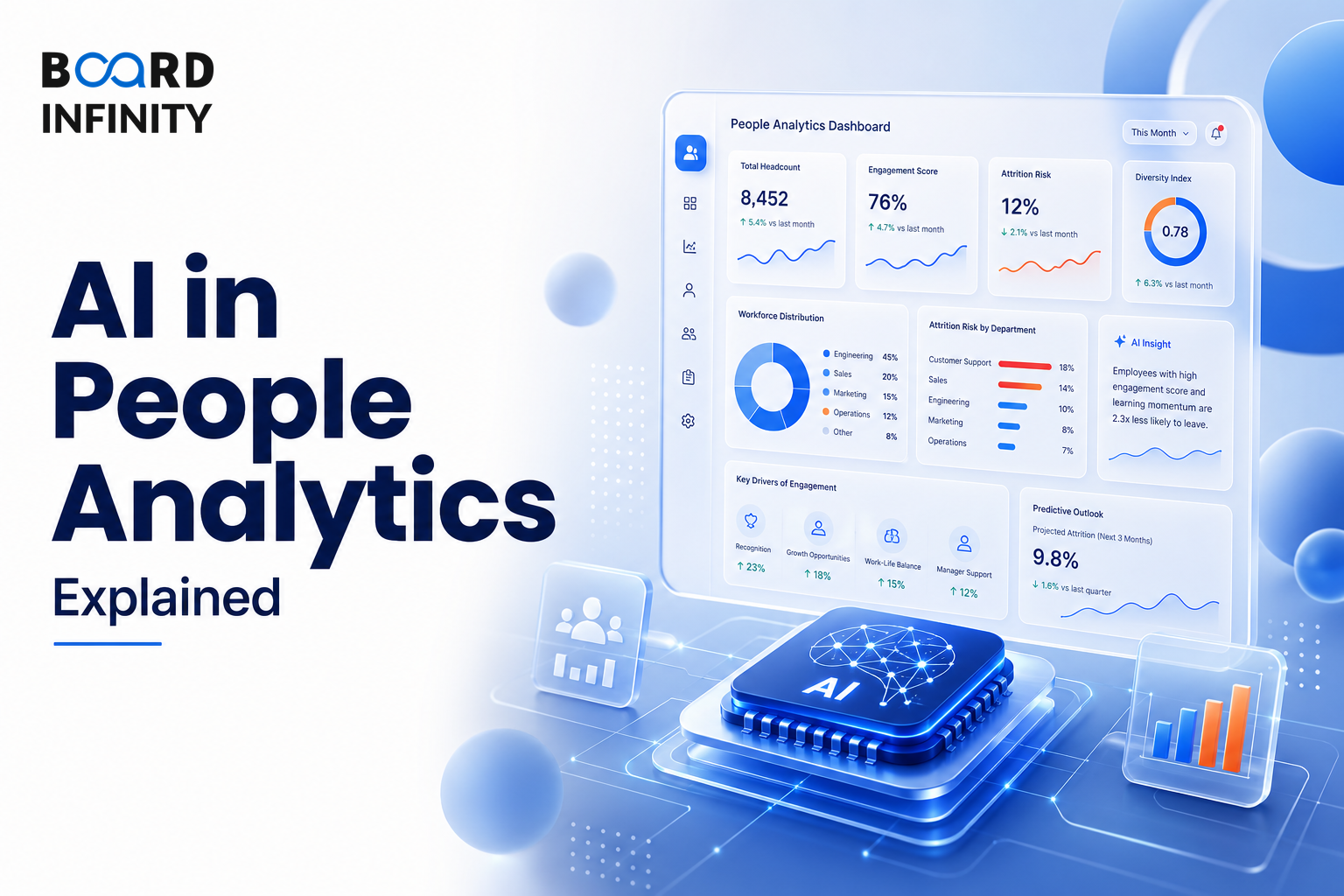
After AI in HR Operations Explained, the next question is how HR moves beyond task automation into workforce decisions. People analytics is where data science starts shaping decisions on attrition, performance, workforce planning and pay equity. In interviews, this matters because the strongest answers show the shift from descriptive reporting to predictive and prescriptive decision-making.
- People analytics is the application of data science to workforce decisions.
- AI elevates analytics from descriptive - what happened - to predictive - what will happen - and prescriptive - what should we do.
- The most commercially valuable use cases are attrition prediction and performance forecasting.
- Attrition prediction can identify flight risks 6-9 months before resignation and support targeted retention.
- Performance forecasting can predict high performers for succession and flag underperformers early.
- Leading platforms include Visier, Workday People Analytics, Oracle Analytics Cloud, SAP SuccessFactors Workforce Analytics, Darwinbox and Keka.
From HR Reporting to Workforce Decisions
People analytics is the application of data science to workforce decisions. AI elevates analytics from descriptive - what happened - to predictive - what will happen - and prescriptive - what should we do.
The big picture is simple: the value of people analytics rises when HR stops only reporting past metrics and starts forecasting workforce risks and recommending action.
People analytics is the application of data science to workforce decisions.
Highest-Value Use Cases
The most commercially valuable use cases are attrition prediction and performance forecasting.
Attrition prediction uses gradient boosting and survival analysis to identify flight risks 6-9 months before resignation and enable targeted retention. The data required includes tenure, engagement scores, manager rating, salary band and promotion history.
Performance forecasting uses regression models and NLP on 360 feedback to predict high performers for succession and flag underperformers early. The data required includes goals attainment, 360 ratings, learning activity and attendance patterns.
Other People Analytics Use Cases
Sentiment analysis uses BERT/NLP on survey open text and Glassdoor reviews to detect emerging dissatisfaction trends before they escalate. The data required includes survey responses, exit interview text and social media posts.
Workforce planning uses time-series forecasting and Monte Carlo simulation to predict headcount needs 12-24 months ahead and optimize hiring plans. The data required includes business revenue forecasts, historical hiring data and productivity metrics.
Pay equity analysis uses regression analysis and causal inference to identify unexplained pay gaps by gender/caste/age after controlling for variables. The data required includes compensation data, role levels, performance ratings and demographics.
Leading People Analytics Platforms
Visier is the market leader in standalone people analytics, used by 700+ large enterprises. Workday People Analytics offers embedded analytics for Workday customers.
Oracle Analytics Cloud (HR module) and SAP SuccessFactors Workforce Analytics serve large enterprise ERP customers. Indian platforms like Darwinbox and Keka are building native analytics capabilities for mid-market.
Structuring a AI in People Analytics Explained Interview Answer
"How does AI in people analytics move HR from reporting to predictive and prescriptive workforce decisions?"
The strongest answer does not stop at tool names. It connects each use case to the AI technique, the business value and the data required.
The most frequent error is treating people analytics as only descriptive reporting. That misses the central point: AI elevates analytics to predictive and prescriptive workforce decisions, especially in attrition prediction and performance forecasting.
Conclusion
AI in people analytics turns workforce data into decisions about flight risk, performance, sentiment, headcount and pay equity. For interviews, the final takeaway is to frame the topic as a move from what happened to what will happen and what HR should do next.