
AI in Recruitment Explained: Tools, Benefits and Risks
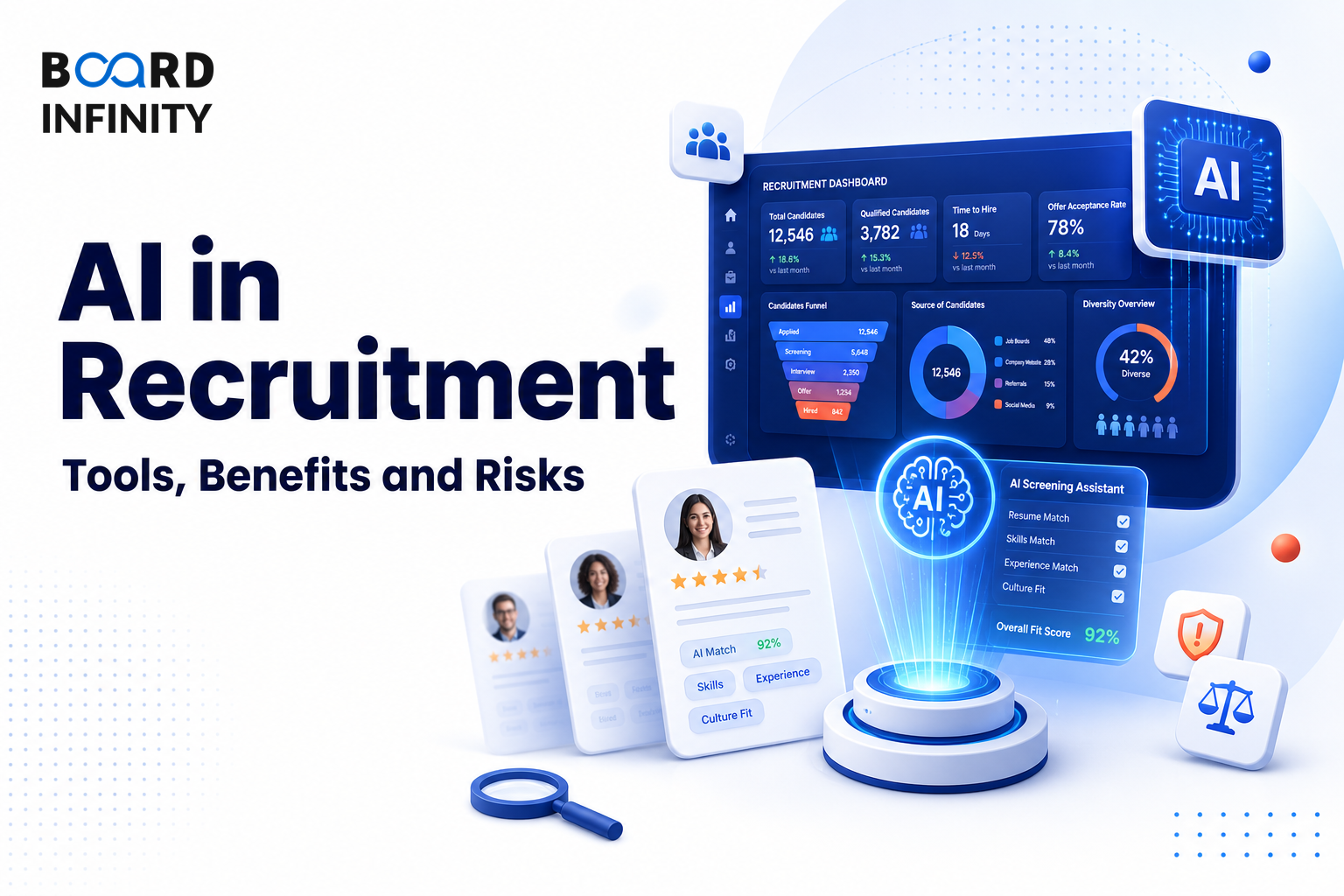
Recruitment is the highest-leverage application of AI in HR because it directly tackles hiring volume, speed expectations, and quality risk. In interviews, this topic matters because strong answers must balance automation benefits with fairness, bias, and transparency risks.
- Recruitment is the highest-leverage application of AI in HR.
- Modern hiring processes are plagued by volume, bias, speed expectations, and quality risk.
- AI addresses volume and speed while introducing new risks around fairness and transparency.
- AI can screen 1,000 resumes in seconds, but bias in training data is a real risk.
- Amazon scrapped its AI recruiting tool in 2018 after discovering it penalised resumes with words like "women's" and downgraded graduates of all-women colleges.
- Lesson: always audit AI tools for disparate impact before deployment.
Where AI Fits in Recruitment
Modern hiring processes are plagued by volume - thousands of applications per role, bias - unconscious assessor bias, speed expectations - candidates expect responses within 48 hours, and quality risk - bad hires cost 50-200% of annual salary. AI addresses volume and speed while introducing new risks around fairness and transparency.
Recruitment is the highest-leverage application of AI in HR. AI addresses volume and speed while introducing new risks around fairness and transparency.
Amazon scrapped its AI recruiting tool in 2018 after discovering it penalised resumes with words like "women's" and downgraded graduates of all-women colleges. The model had been trained on 10 years of resumes submitted predominantly by men. Lesson: always audit AI tools for disparate impact before deployment.
Why AI Recruitment Is a High-ROI HR Use Case
AI in recruitment is a high-leverage HR use case because hiring teams face thousands of applications per role while candidates expect responses within 48 hours. It helps address volume and speed, especially in screening, sourcing, scheduling, and technical assessments.
The business case is also linked to quality risk. Bad hires cost 50-200% of annual salary, so recruitment AI must be assessed not only for speed, but also for whether it improves hiring quality without creating unfair outcomes.
How the Main AI Recruitment Tools Work
HireVue is used for video interview screening. It scores facial expressions, speech patterns, and word choice against benchmark profiles.
Textio supports job description optimization. NLP flags biased language such as gendered wording and jargon, and predicts candidate pool diversity.
Paradox/Olivia is a recruiting chatbot. Conversational AI screens candidates, schedules interviews, and answers FAQs 24/7.
Eightfold.ai is a talent intelligence platform. ML maps skills across resume data, predicts role fit and flight risk.
Pymetrics uses gamified assessments. Neuroscience games + AI assess cognitive and emotional traits, and reduce bias vs resumes.
LinkedIn Recruiter AI supports candidate sourcing. It recommends candidates based on job requirements and supports InMail response rate optimization.
HackerRank supports technical screening. It uses auto-graded coding challenges, plagiarism detection, and skill benchmarking.
Key Statistic: AI in Recruitment
AI can screen 1,000 resumes in seconds - but bias in training data is a real risk. This is the central trade-off in AI recruitment: speed and scale improve, but the hiring team must still govern fairness and transparency carefully.
Worked Example: Amazon and Bias in Training Data
Amazon scrapped its AI recruiting tool in 2018 after discovering it penalised resumes with words like "women's" and downgraded graduates of all-women colleges. The model had been trained on 10 years of resumes submitted predominantly by men.
The learning is direct: AI recruitment tools can inherit patterns from historical data. Always audit AI tools for disparate impact before deployment.
Efficiency vs Fairness
AI screening dramatically reduces time-to-hire and cost-per-hire, but introduces fairness risks that can lead to regulatory penalties, reputational damage, and discrimination lawsuits. The HRBP's role is to be the human check on automated decisions - ensuring that speed gains don't come at the cost of equitable opportunity.
Always ask: "Has this AI been audited for disparate impact on protected groups?"
Structuring a AI in Recruitment Explained Interview Answer
"How would you evaluate AI in recruitment as a high-ROI HR use case, and what risks would you watch for?"
The strongest answers do not present AI recruitment as pure automation. They show the HRBP as the human check on automated decisions, ensuring that speed gains don't come at the cost of equitable opportunity.
The most frequent error is focusing only on speed, screening volume, and cost savings while ignoring fairness and transparency. That costs points because AI addresses volume and speed while introducing new risks around fairness and transparency.
Conclusion
AI in recruitment is powerful because it solves high-volume and speed problems in hiring, but it must be governed carefully. The final takeaway is simple: use AI for leverage, but always audit for disparate impact before deployment.