
Automotive & Mobility at a Glance: Size, Growth & Structure
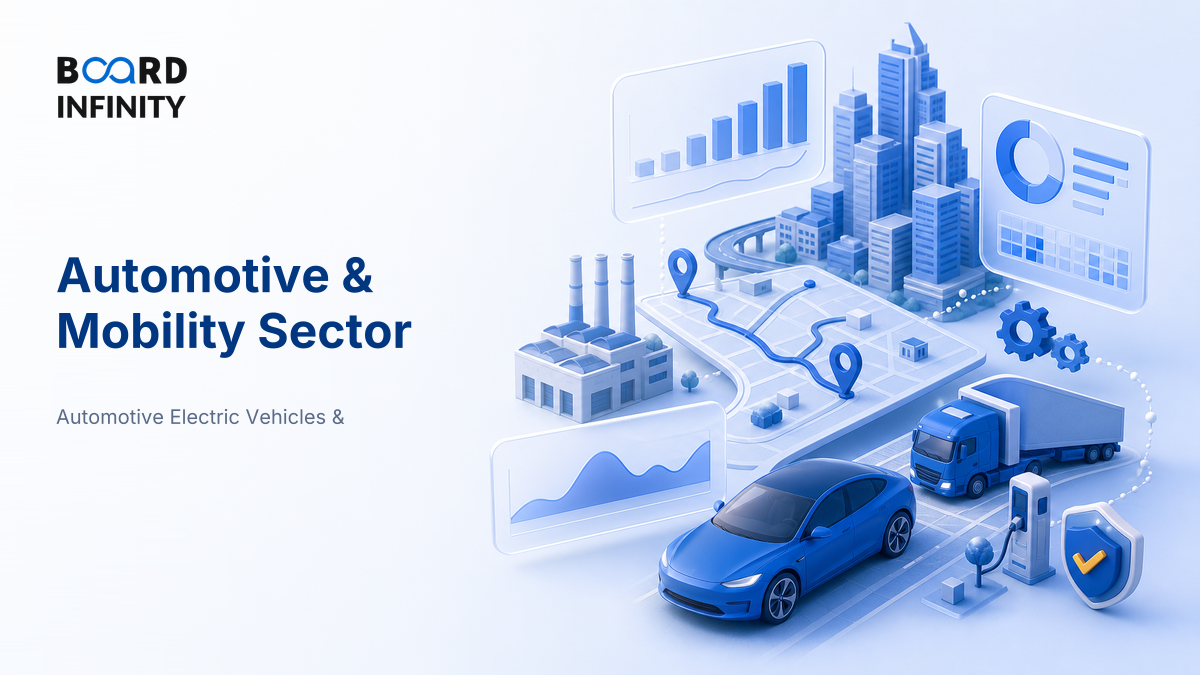
A scooter bought in Bengaluru today is not just a vehicle sale. It quietly pulls in a battery supplier, chip designer, app layer, lender, insurer, charging network, dealer or D2C channel, service partner and resale market - all from one customer decision.
- Automotive & mobility is bigger than vehicle manufacturing: it includes OEMs, components, dealers, finance, insurance, fuel or charging, service, fleet operators, software and shared mobility.
- Size the sector using units x average selling price, then add recurring pools like service, spares, finance, insurance, energy and mobility platforms.
- India is structurally different from many car-heavy markets because two-wheelers dominate unit volumes, while passenger vehicles, commercial vehicles and premium segments often drive higher value pools.
- Growth is driven by income, urbanisation, replacement demand, credit availability, infrastructure, logistics activity, electrification and software-defined vehicle features.
- Industry structure is shifting from an ICE-heavy value chain to a battery, electronics, software and data ecosystem.
- The best interview answers separate market size, segment mix, value chain, growth drivers, profit pools and risks - not just “EVs are growing”.
Big Picture: Think of Automotive as a Stack, Not a Factory
The automotive and mobility sector begins with vehicle manufacturing, but the real economics spread across a stack. A car, scooter, truck or bus creates one-time revenue at purchase and recurring revenue through financing, insurance, service, spares, fuel or charging, software and resale.
Core Explanation: Size, Growth and Structure in One Mental Model
Automotive & mobility sector means the ecosystem that designs, manufactures, sells, finances, powers, services and digitally enables personal and commercial movement.
The cleanest way to understand the sector is to break it into three questions:
If you are revising sector sizing as a skill, pair this with sizing a sector when no number exists. For live automotive data, use official sources such as SIAM's vehicle statistics page for India's production, domestic sales and exports (SIAM statistics), Vahan for Indian vehicle registrations (MoRTH Vahan dashboard) and OICA for global production statistics (OICA production statistics).
The Sector Map: Who Sits Where?
Do not describe the industry as “car companies”. That is too narrow. A complete sector map has seven blocks.
How to Read Market Size Without Memorising a Stale Number
Automotive numbers move with cycles, policy, supply constraints and model launches. In an interview, it is safer to show a sizing logic and name the current sources than to quote a number you half-remember.
Use this formula:
Sector size = New vehicle revenue + used vehicle revenue + financing + insurance + fuel or charging + service and spares + software and mobility services
For a simple top-down estimate:
Worked Example: A Simple Automotive Sizing Estimate
This is a hypothetical interview calculation, not a claim about the current market.
The lesson is not the exact number. The lesson is to state the boundary: are you sizing new vehicle sales, the total mobility economy, or the lifetime revenue pool created by vehicles sold that year?
Growth Drivers: What Actually Moves the Sector?
Automotive growth is rarely caused by one factor. It is a combination of affordability, infrastructure, policy, technology and use-case intensity.
Key Metrics: What to Track Before an Automotive Interview
Use these metrics to sound structured. Treat the “good” ranges below as interview heuristics, not universal benchmarks; the right value differs by segment and cycle.
Definitions You Should Be Able to Say in One Breath
- OEM: An original equipment manufacturer that designs, brands and assembles vehicles sold to end customers or fleets.
- Aftermarket: The post-sale market for service, spares, accessories, tyres, repairs, refurbishment and resale.
- Mobility-as-a-service: Access to transport through rides, rentals, subscriptions or fleets instead of full vehicle ownership.
- Industry structure: The competitive architecture that determines who has power, who captures profit and where entry barriers exist.
For competitive structure, use Porter's Five Forces: rivalry, buyer power, supplier power, threat of entrants and threat of substitutes. In automotive, this helps explain why profit may shift from vehicle assembly to batteries, software, finance or aftermarket.
Case Study: Ather Energy and the EV Two-Wheeler Stack
Ather shows how an automotive player in India is no longer only selling a scooter; it is building a product, software, charging and service ecosystem.
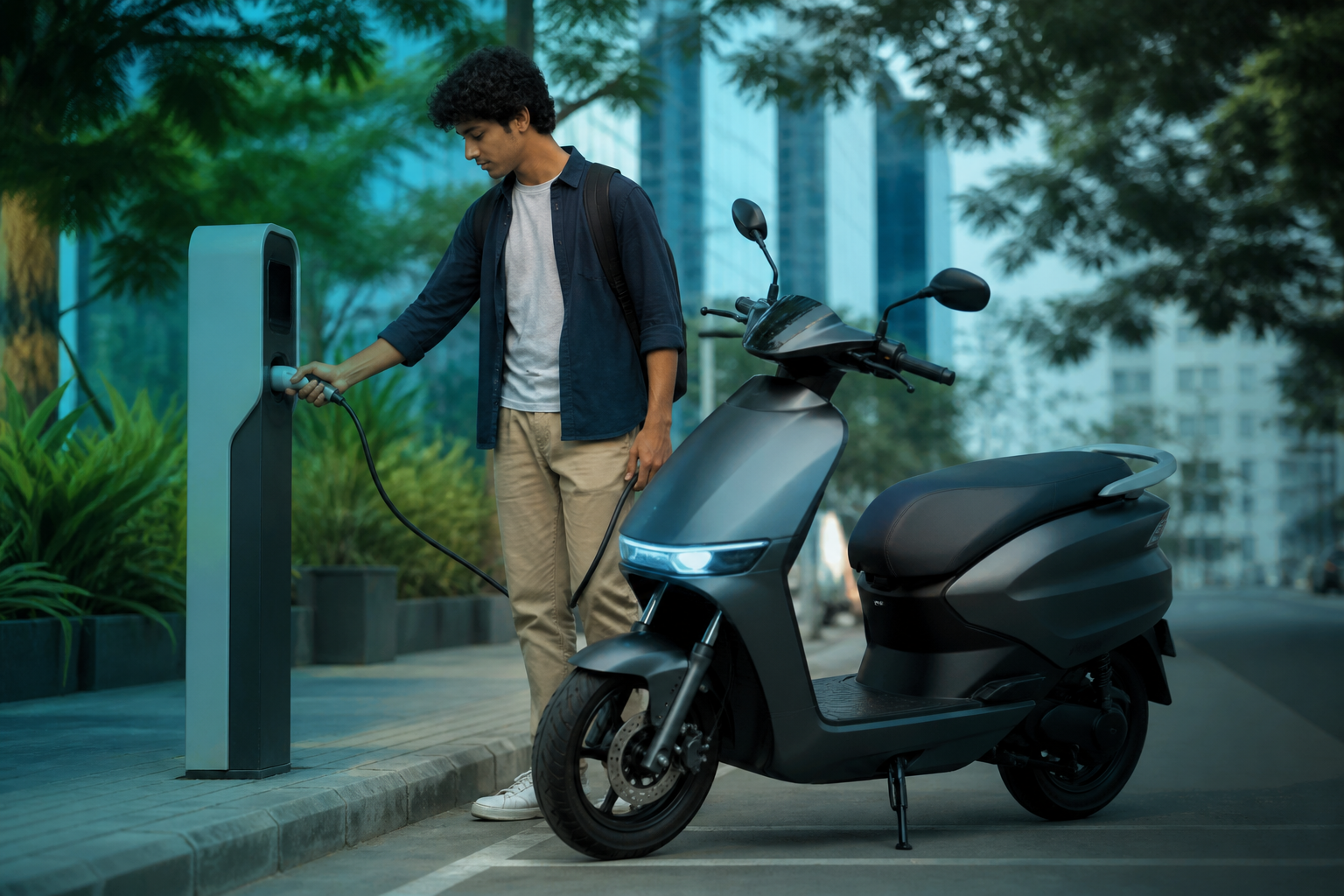
Situation: India's two-wheeler market is huge in usage terms, but historically it has been dominated by internal combustion engine economics: engine platforms, dealer networks, fuel dependence, spare parts and service workshops. EV two-wheelers changed the architecture. The battery, motor controller, software interface, charging access and ownership experience became central.
The move: Ather positioned itself around a more integrated EV experience: electric scooters, a digital dashboard and app-led ownership layer, experience-led retail, servicing and public charging through Ather Grid, which the company describes on its own charging page (Ather charging network). The primary driver was ecosystem control around the EV ownership experience. Supporting drivers included product design, software integration, charging visibility, urban early adopters and aftersales experience.
The lesson: EV competition is not just “who makes the scooter cheapest”. It is about who controls the full stack: battery sourcing, thermal management, software, charging confidence, service reliability, financing and brand trust.
So what: Ather is a strong interview example because it proves the structure shift. In new mobility, value moves from the engine and dealer alone to a broader system of battery, electronics, software, charging and customer data.
How AI Changes Automotive & Mobility
AI is changing this sector in three practical ways that matter for 2026 interviews.
The risk is also real: AI models can import biased demand assumptions, overfit to past fuel-price or subsidy patterns, or hallucinate sector facts. Use AI for synthesis, not as the source of truth.
Use Perplexity or ChatGPT to draft a two-page automotive sector brief, but verify every number against SIAM, Vahan, OICA or company annual reports. A safe workflow is: ask the tool for a sector map, force it to list sources, then cross-check the data using current sector data sources you can trust and the method in using AI to research a sector without importing its errors.
Interview Relevance
“Give me a quick overview of the automotive and mobility sector in India. How would you size it, what are the major segments, and where is growth coming from?”
A strong answer sounds like a consultant's sector note: “Here is the boundary, here is the segment mix, here is the value chain, here is what is growing, and here is where profit may migrate.”
Common Mistake
The mistake that costs candidates is treating automotive as only “car sales” and then jumping straight to EVs. That misses two-wheelers, commercial vehicles, components, finance, insurance, service, spares, fuel, charging and mobility platforms. Fix: always start with the sector map before discussing trends.