
Build a Credible Inclusion Roadmap for HR Interviews
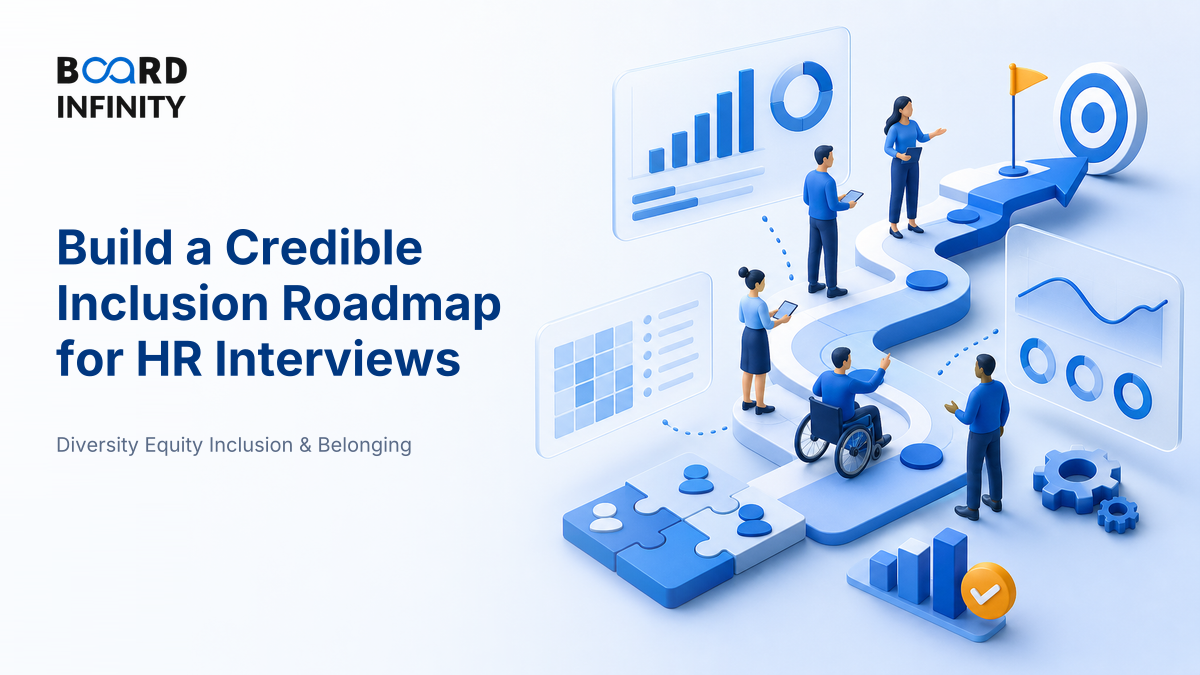
If a company hires women, queer employees, people with disabilities and first-generation graduates - but they stay silent in meetings, miss promotions and quietly leave - has it really become inclusive? A credible inclusion roadmap is the difference between a colourful careers page and a workplace where different people can actually succeed.
- Diversity is representation; inclusion is lived experience; equity is fairness of access. A roadmap must cover all three.
- A credible inclusion roadmap follows five steps: diagnose, prioritize, design, execute and measure.
- The strongest roadmaps are evidence-led: they use data on hiring, promotion, pay, attrition and employee sentiment.
- Do not start with events or campaigns. Start with where people face barriers in the employee lifecycle.
- Ownership matters: HR can enable inclusion, but business leaders and managers must be accountable for it.
- Good inclusion metrics look for parity - for example, similar promotion, pay and attrition outcomes across groups.
- The biggest interview trap is giving a moral answer without an operating plan.
Big Picture: Inclusion Is a Business System, Not a Calendar Event
A credible inclusion roadmap converts a broad intent - “we want an inclusive workplace” - into sequenced actions, accountable owners and measurable outcomes. Think of it as an HR transformation plan applied to belonging, fairness and participation.
Core Explanation: What Makes an Inclusion Roadmap Credible?
An inclusion roadmap is a time-bound plan that identifies exclusion barriers, prioritizes interventions and tracks whether different employee groups experience fair outcomes.
Credibility comes from four things: data, focus, ownership and measurement. Without data, the roadmap becomes opinion. Without focus, it becomes a wish list. Without ownership, it remains an HR presentation. Without measurement, nobody knows whether inclusion has improved.
Diversity, Equity and Inclusion Are Related - Not the Same
A neat way to remember the difference:
- Diversity asks: who is in the room?
- Equity asks: who gets fair access to opportunity?
- Inclusion asks: who can speak, contribute and grow once they are there?
The 2x2 Diagnostic: Where Most Roadmaps Fail
Before proposing actions, classify the organization honestly. This 2x2 is powerful in interviews because it separates good intentions from credible execution.
The Five-Step Roadmap
What to Measure: Inclusion KPIs That Interviewers Respect
Inclusion cannot be reduced to one score. Use a balanced set of leading and lagging measures. A strong answer says: “I would track both experience and outcomes.”
For India, the roadmap should also respect the legal and social context: POSH compliance for workplace safety, the Rights of Persons with Disabilities Act, 2016 for accessibility and reasonable accommodation, the Transgender Persons Act, 2019, and privacy obligations when collecting sensitive employee data.
Microsoft’s inclusive design approach treats disability not as a niche issue but as a source of better product thinking. The primary driver is designing for people who face real constraints, supported by accessibility research, product standards and leadership commitment. The strategic lesson: inclusion becomes credible when it changes the core product or operating system, not just communication.
Definitions You Can Say Clearly
- Diversity: the mix of identities, backgrounds, experiences and perspectives represented in a workforce.
- Equity: fair access to opportunity by removing barriers that create unequal outcomes.
- Inclusion: the extent to which people feel respected, heard, safe and able to contribute fully.
- Psychological safety - Amy Edmondson: “a shared belief that the team is safe for interpersonal risk taking.”
Case Study: The Lalit’s Queer-Inclusive Hospitality Roadmap
The Lalit, an Indian hospitality group, built a visible LGBTQIA+ inclusion agenda by connecting policy, hiring, culture and public advocacy.

Situation. Hospitality depends heavily on service quality, employee confidence and guest comfort. In India, LGBTQIA+ inclusion also sits inside a complex social context shaped by the 2018 Supreme Court judgment decriminalising consensual same-sex relations, continuing social stigma and uneven workplace awareness.
The move. The Lalit did not treat inclusion only as a Pride-month communication exercise. Its approach combined visible leadership advocacy, queer-friendly workplace practices, hiring and sensitisation, and community-linked work through the Keshav Suri Foundation. The primary driver was leadership-backed cultural commitment; supporting drivers included policy signalling, manager sensitisation, external advocacy and alignment with a hospitality brand promise of welcoming people.
The result and lesson. The strongest lesson is not a single metric. It is the credibility of integration. Inclusion worked because it touched employer brand, employee experience and customer-facing culture together. For an interview answer, The Lalit shows that inclusion roadmaps are strongest when they link values to operating practices.
How AI Changes Building a Credible Inclusion Roadmap
AI does not replace inclusion judgment; it makes hidden patterns easier to detect and act on. In 2026, three changes matter for HR students:
- Bias detection in talent processes: AI tools can scan hiring, promotion and performance data for adverse impact patterns, but HR must check whether the model itself creates new bias.
- Skills intelligence: AI can map employees’ skills to internal opportunities, helping reduce network-based favoritism in staffing and promotions.
- Employee listening at scale: Natural-language analysis can summarize open-text survey comments on belonging, manager behaviour and psychological safety, while respecting privacy and consent.
Load a company’s annual report, ESG or Business Responsibility and Sustainability Report, careers page and recent news into NotebookLM. Ask: “Identify evidence of inclusion strategy, missing metrics, legal risks in India and five interview questions on the company’s inclusion roadmap.” Then convert the answer into the five-step roadmap above.
Interview Relevance
“Suppose you join as an HR manager in a fast-growing Indian company. Leadership wants to improve inclusion, but employees feel current DEI efforts are tokenistic. How would you build a credible inclusion roadmap?”
Use the phrase “from intent to infrastructure.” It signals that you understand inclusion as a system of policies, behaviours, data and accountability.
Common Mistake
The biggest mistake is proposing symbolic activities - celebrations, posters, talks - without diagnosing barriers or naming metrics. It costs candidates because it sounds well-meaning but operationally weak. One-line fix: start with lifecycle data, choose two priority gaps, assign owners and measure parity over time.
What to Revise Next
This is a natural capstone topic for the course. Before you close your revision, review your full HR toolkit as one connected story: workforce planning, recruitment, performance management, learning, rewards, employee relations, HR analytics and inclusion. The best final preparation is to take one company you admire and build a one-page people strategy using these lenses.