
Careers in Fintech & Payments: Roles, Employers & Pay
A payment failure at a kirana store is not just a small tech glitch - the customer leaves, the merchant loses the sale, the bank sees a complaint, and the payments company burns trust in seconds. That is why fintech and payments careers are not only about “apps” or “UPI”; they sit at the intersection of money movement, regulation, risk, merchant economics and product speed.
- Fintech means technology-led innovation in financial services; payments is the movement of value from payer to payee through instruments, rails, rules and settlement.
- The best MBA roles cluster into five buckets: product, growth, partnerships, risk/compliance, and strategy/business finance.
- Employers are not all the same: banks, payment aggregators, card networks, NPCI ecosystem players, merchant platforms, lending fintechs and SaaS-fintech firms hire for different skills.
- Pay depends less on the word “fintech” and more on role economics: revenue ownership, regulatory complexity, technical depth, variable pay, and equity/ESOP risk.
- In payments interviews, speak the value chain: customer - merchant - payment app/PSP - rail/network - bank - settlement/reconciliation.
- The strongest candidates know the metrics: TPV, success rate, MDR/take rate, CAC payback, fraud loss rate and contribution margin.
- Common trap: naming hot companies without explaining how they make money, where risk sits, and what role you would actually perform.
Big Picture: Fintech Careers Sit on a Stack, Not a Buzzword
Do not revise fintech as a list of companies. Revise it as a stack of work: money must move safely, a product must be adopted, merchants or users must be acquired, risks must be controlled, and the business must make unit economics work.
The practical career question is: which layer of the stack do you want to be paid for? A product manager is paid for solving friction. A partnerships manager is paid for distribution. A risk manager is paid for protecting the franchise. A strategy or business finance manager is paid for choosing where the company should allocate capital and leadership attention.
Core Explanation: Roles, Employers and Pay Logic
The Payments Value Chain You Must Be Able to Explain
Every fintech and payments role becomes clearer when you can trace a transaction from intent to settlement. In India, candidates should know that UPI is operated by the National Payments Corporation of India, and NPCI describes UPI as a system that powers multiple bank accounts into a single mobile application for payments (NPCI UPI product overview).
This chain also tells you where roles sit. Product teams reduce checkout friction. Operations teams handle failures and reconciliation. Risk teams watch fraud and disputes. Partnerships teams onboard banks, merchants, networks and platforms. Finance teams evaluate transaction economics.
Major Role Families in Fintech and Payments
If you want to sound mature, connect each role to the company’s economics. A growth role is not “doing campaigns”; it is improving profitable transaction volume. A product role is not “building features”; it is reducing friction without increasing risk. For practice, use the habit of reading a business model as a set of economics before every fintech interview.
Employer Map: Who Hires MBA Talent?
Fintech and payments employers differ because their revenue model, regulation and risk are different. A bank-led payments role is not the same as a merchant-acquiring platform role. A card network role is not the same as a consumer wallet role.
Regulation is career-relevant because it decides who can hold money, onboard merchants, process payments, lend, store data and report risk. Use locating the regulator and what it controls as a quick pre-interview discipline, especially for RBI-regulated or NPCI-linked businesses.
How Pay Really Works in Fintech and Payments
Do not memorise random salary numbers from the internet. They age quickly and often mix fixed pay, bonus, ESOPs and joining benefits. Instead, understand the compensation logic.
A strong offer is not always the highest headline CTC. For an MBA candidate, judge pay through four lenses: cash certainty, learning density, brand signal, and future role mobility. Early-career fintech pay rises fastest when you build a scarce combination: payments domain + metrics fluency + stakeholder management + comfort with regulation.
Metrics That Decide Whether a Payments Role Is Valuable
If a job description says “payments growth,” “merchant success,” “product ops” or “business analyst,” these are the numbers behind the work. Benchmarks vary sharply by product, merchant category, ticket size and risk profile, so quote employer-specific benchmarks rather than invented universal ranges.
For more practice, learn to identify the sector metrics a business is actually judged on before you enter any fintech process.
Definitions You Can Say in One Breath
- Fintech: technology-enabled innovation that changes financial products, processes, channels or business models. The Financial Stability Board uses this framing for fintech innovation FSB fintech workstream.
- Payment system: instruments, procedures and rules used to transfer funds between participants. This follows the BIS payments glossary framing (BIS CPMI glossary).
- Payment aggregator: an entity that enables merchants to accept customer payments without each merchant building direct bank integrations.
- Settlement: the final transfer of funds between parties after transaction authorisation, clearing and reconciliation.
Case Study: Pine Labs and the Merchant-Side Payments Career Map
Pine Labs shows why payments careers are not only consumer-app roles; merchant commerce, POS infrastructure and platform partnerships can create equally rich MBA career paths.
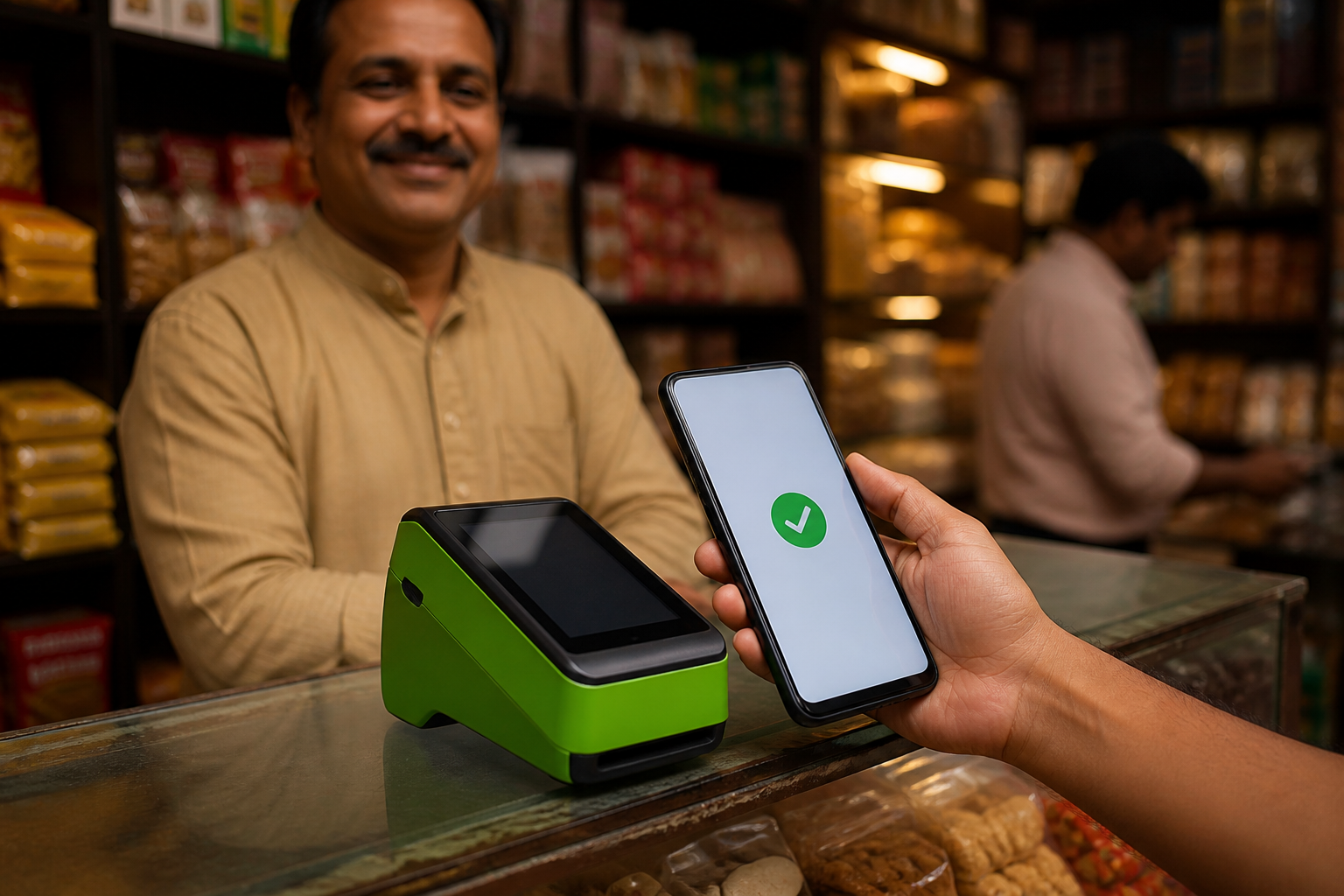
Situation: Many Indian merchants need more than a way to collect money. They need reliable acceptance, fast confirmation, reconciliation, customer offers, loyalty, working-capital linkages and support across physical and digital channels.
The move: Pine Labs built its relevance around the merchant side of commerce: payment acceptance, point-of-sale solutions and merchant commerce tools, as described in its own product positioning (Pine Labs merchant commerce platform). The primary driver is its merchant-facing platform position. Supporting drivers include bank and brand partnerships, device/software presence at the point of sale, and the ability to layer value-added services around payment acceptance.
The lesson: A fintech career is not automatically “consumer growth.” In a merchant platform, MBA roles can sit in enterprise sales, bank partnerships, product adoption, merchant analytics, risk operations, pricing and category strategy.
So what: The best answer in an interview is not “Pine Labs is in payments.” It is: “Pine Labs demonstrates the merchant-commerce layer of fintech, where the moat comes from merchant relationships, acceptance infrastructure, partner integrations and value-added services layered on payment flows.”
How AI Changes Careers in Fintech & Payments
AI is not replacing fintech careers; it is changing what entry-level managers are expected to diagnose faster.
Practical student workflow: Before an interview, load the company website, latest annual report or investor presentation, and regulator notes into NotebookLM. Ask it to generate: “What are this company’s likely revenue drivers, risk drivers, regulator dependencies and interview questions for an MBA candidate?” Then verify every factual claim from the original documents. For AI research discipline, revisit using AI to research a sector without importing its errors.
Interview Relevance
“You say you are interested in fintech and payments. Which roles are you targeting, what employers make sense for you, and how would you compare two offers?”
Have one company teardown ready. Pick a payments company, explain its role in the value chain, revenue model, regulator dependency, core metrics and one risk. This is where sector knowledge starts deciding interview performance; use sector knowledge for interviews and early performance as your broader preparation lens.
Common Mistake
The mistake: saying “I want fintech because it is growing” and then listing famous apps. It costs candidates because it shows excitement without role clarity, business-model understanding or risk awareness. One-line fix: always answer with role + employer type + value chain position + metric you would improve.