
Fintech & Payments at a Glance: Size, Growth & Structure
A few years ago, a small shop sale ended with change, card swipes, and a paper slip. Now the same transaction may start with a QR scan, move through UPI rails, trigger risk checks, update merchant records, and become data for credit, loyalty, or reconciliation.
That is the real shift in fintech and payments: money movement has become software, and software has become the entry point into financial services.
- Fintech is the technology-led delivery of financial services; payments is the movement of money between payer and beneficiary.
- Do not size payments by revenue alone. Track transaction volume, transaction value, active users, active merchants, success rate, and take rate.
- India’s payment growth is driven by UPI, smartphone adoption, QR acceptance, merchant digitisation, and regulatory support.
- The sector has three layers: regulated trust layer, payment rails, and customer-facing fintech apps.
- Payments is often a low-margin wedge; the profit pool may sit in lending, SaaS, wealth, insurance, loyalty, or merchant services.
- The strongest interview answer separates TPV from revenue and explains why high volume does not automatically mean high profit.
Big Picture: Payments Is the Front Door to Fintech
Fintech is the broader sector. Payments is its most frequent use case because every customer, merchant, platform, and bank needs money to move reliably. Once payments data exists, companies can build adjacent products such as credit, fraud scoring, subscriptions, reconciliation, loyalty, and financial management.
Core Explanation: How to Read the Sector in 3 Lenses
Use three lenses whenever you describe fintech and payments: size, growth, and structure. This keeps your answer sharp and prevents the common mistake of throwing UPI, wallets, BNPL, cards, and gateways into one unstructured list.
1. Size: Payments Has Big Volume, but Not Always Big Revenue
In payments, transaction value means the money moved. Revenue means what the payment company keeps. These are not the same thing. A platform may process huge gross transaction value but earn only a small take rate, especially where pricing is regulated, competitive, or subsidised.
For India, the cleanest way to track current UPI size is the monthly NPCI UPI product statistics, which reports transaction count and transaction value. For sector-level context, a student should learn to triangulate official sources rather than rely on one headline; this is exactly the skill covered in where to find current sector data and which sources to trust.
The interview insight: payment volume is evidence of adoption; payment revenue is evidence of monetisation; payment profit is evidence of economics.
2. Growth: Why Digital Payments Keep Compounding
Payments growth compounds because both sides of the market reinforce each other. More consumers using digital payments make QR and app acceptance more valuable for merchants. More merchants accepting digital payments make the habit more useful for consumers.
India’s growth story is not only about one app or one rail. The primary driver is the rise of interoperable digital payment infrastructure such as UPI, supported by affordable smartphones, low-cost merchant QR acceptance, bank participation, consumer familiarity, and regulatory oversight. NPCI describes UPI as a system that powers multiple bank accounts into a single mobile application and supports merchant payments, peer-to-peer transfers, and other use cases through the NPCI UPI product overview.
UPI is not just a payment app. It is an interoperable rail on which banks and third-party apps can build customer experiences. The strategic lesson is that infrastructure can expand the total market, while competition shifts to user interface, reliability, merchant acquisition, rewards, risk control, and adjacent monetisation.
3. Structure: The Ecosystem Has Trust Layers and Experience Layers
The fintech and payments sector looks confusing because many companies sit between the customer and the bank. Separate them by role.
At the base is the regulatory trust layer. In India, the Reserve Bank of India regulates payment systems under the Payment and Settlement Systems Act, 2007, which defines a payment system as “a system that enables payment to be effected between a payer and a beneficiary” (RBI, Payment and Settlement Systems Act, 2007).
Above that are the payment rails - the networks and systems through which money actually moves. In India, these include UPI, IMPS, cards, wallets, net banking, and bill payment systems. On top of the rails sit banks, payment service providers, payment aggregators, gateways, merchant platforms, and consumer apps.
If you want to go deeper after this overview, the natural next step is mapping a value chain and finding the profit pool, because the highest-margin layer is not always the layer with the most visible customer activity.
RBI’s framework for payment aggregators and payment gateways defines how such intermediaries are expected to operate, including authorisation and governance requirements (RBI, Guidelines on Regulation of Payment Aggregators and Payment Gateways, 2020). This matters because fintech growth is not only a product story; it is also a licensing, compliance, and trust story.
Definitions You Should Be Able to Say Cleanly
- Fintech: Technology-enabled financial innovation affecting financial services, business models, applications, processes, or products. The longer original wording is from the Financial Stability Board’s 2017 fintech report.
- Payment system: “A system that enables payment to be effected between a payer and a beneficiary RBI, Payment and Settlement Systems Act, 2007).
- Payment aggregator: A merchant-facing intermediary that enables acceptance of multiple payment instruments and passes funds to merchants after processing.
- Payment gateway: A technology layer that routes and authenticates payment information between merchants, banks, networks, and processors.
- Take rate: Net revenue retained by the platform as a percentage of transaction value processed.
Case Study: Pine Labs and the Merchant Payments Wedge
Pine Labs shows how a payments company can start at merchant acceptance and expand into broader commerce infrastructure.
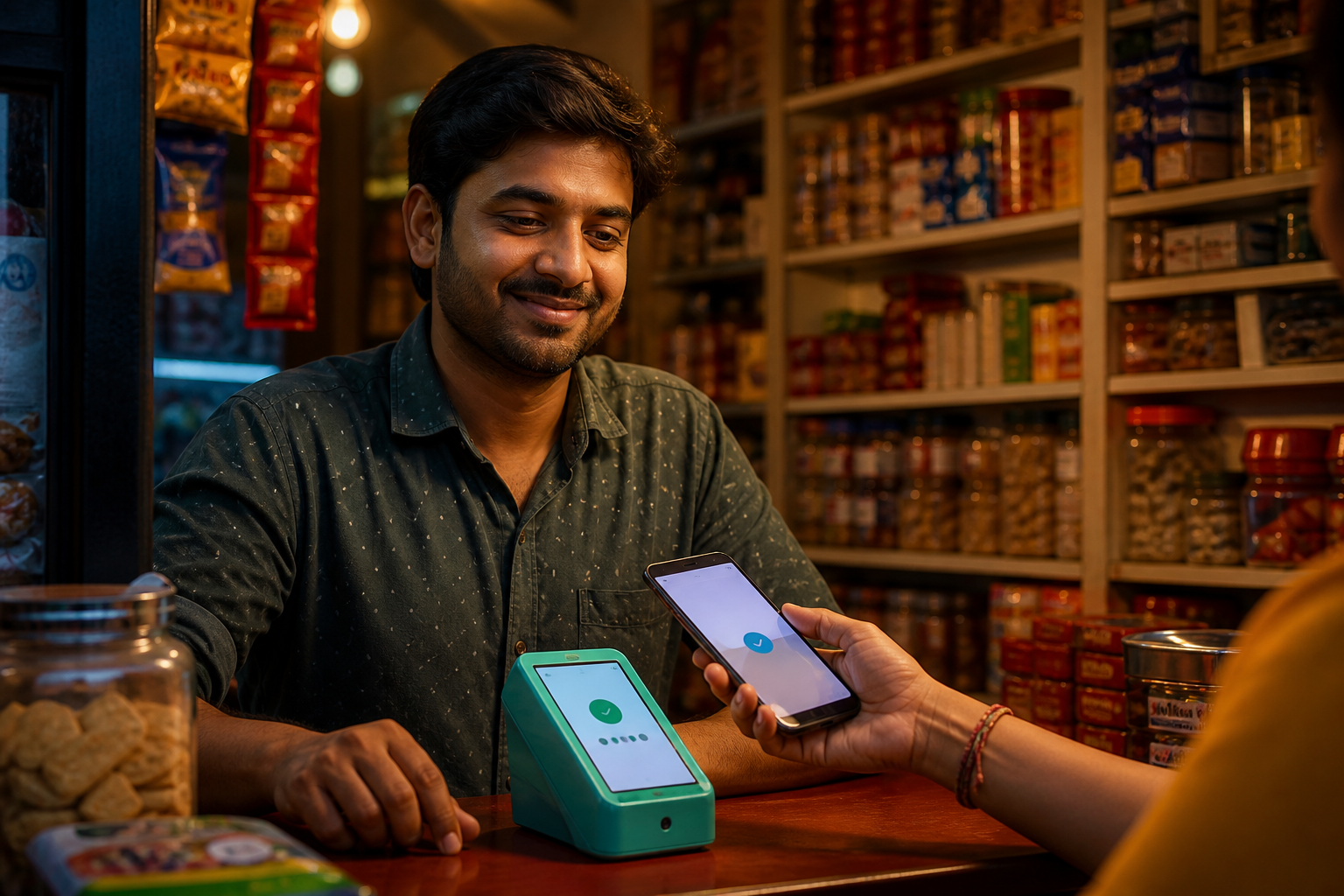
Situation: Indian merchants needed to accept digital payments across cards, wallets, UPI, and bank-led instruments, but the real pain was broader than collection. Merchants also needed reconciliation, affordability offers, checkout reliability, and tools that fit daily store operations.
The move: Pine Labs positioned itself around merchant commerce infrastructure rather than only a payment terminal. Its public-facing business focuses on payment acceptance, point-of-sale solutions, online payments, and merchant services (Pine Labs). The primary driver was control of the merchant acceptance point. Supporting drivers included bank and network partnerships, offline merchant relationships, software-led services, and the ability to add value around checkout rather than treating payment as a one-time transaction.
The lesson: In payments, the first transaction is often the wedge. The deeper business is created by owning the merchant workflow, improving reliability, reducing operational friction, and layering adjacent revenue pools.
This is the strategic “so what”: a payments player wins not merely because it processes transactions, but because it embeds itself where transaction data, merchant dependence, and adjacent services meet.
How AI Changes Fintech & Payments
AI is changing payments less visibly than a new app launch, but more deeply inside risk, operations, and monetisation.
- Real-time fraud and risk scoring: Payment companies use machine learning to detect unusual device, location, velocity, merchant, and transaction patterns. The hard part is reducing fraud without increasing false declines for genuine customers.
- Smarter merchant onboarding and compliance: AI can read documents, flag mismatches, summarise risk signals, and speed up KYB workflows. The caution is explainability - regulated firms must still justify decisions and maintain audit trails.
- Payments data to embedded finance: Transaction behaviour can improve credit underwriting, cash-flow prediction, collections prioritisation, and merchant segmentation. The constraint is consent, privacy, data minimisation, and regulatory compliance.
Load the NPCI UPI product statistics page, RBI payment aggregator guidelines, and one fintech company page into NotebookLM or Perplexity. Ask: “Build a two-page sector brief covering size, growth drivers, structure, regulations, revenue pools, and interview questions.” Then verify every number against the original source. For safe research habits, revise using AI to research a sector without importing its errors.
Interview Relevance
“Give me a quick overview of India’s fintech and payments sector. How big is it, why is it growing, and where do companies make money?”
If the interviewer asks for size, give the latest official number only if you have checked it. Otherwise say: “I would use NPCI for UPI monthly volume and value, RBI for payment-system regulation, and company filings for revenue and margins.” That sounds more credible than guessing.
Common Mistake
The mistake that costs candidates is treating transaction value as if it were company revenue or profit. A fintech may process massive TPV but retain only a thin take rate, especially in competitive or regulated rails. The one-line fix: always separate volume, value, revenue, and profit pool before judging attractiveness.