
The Cash Flow Statement Explained
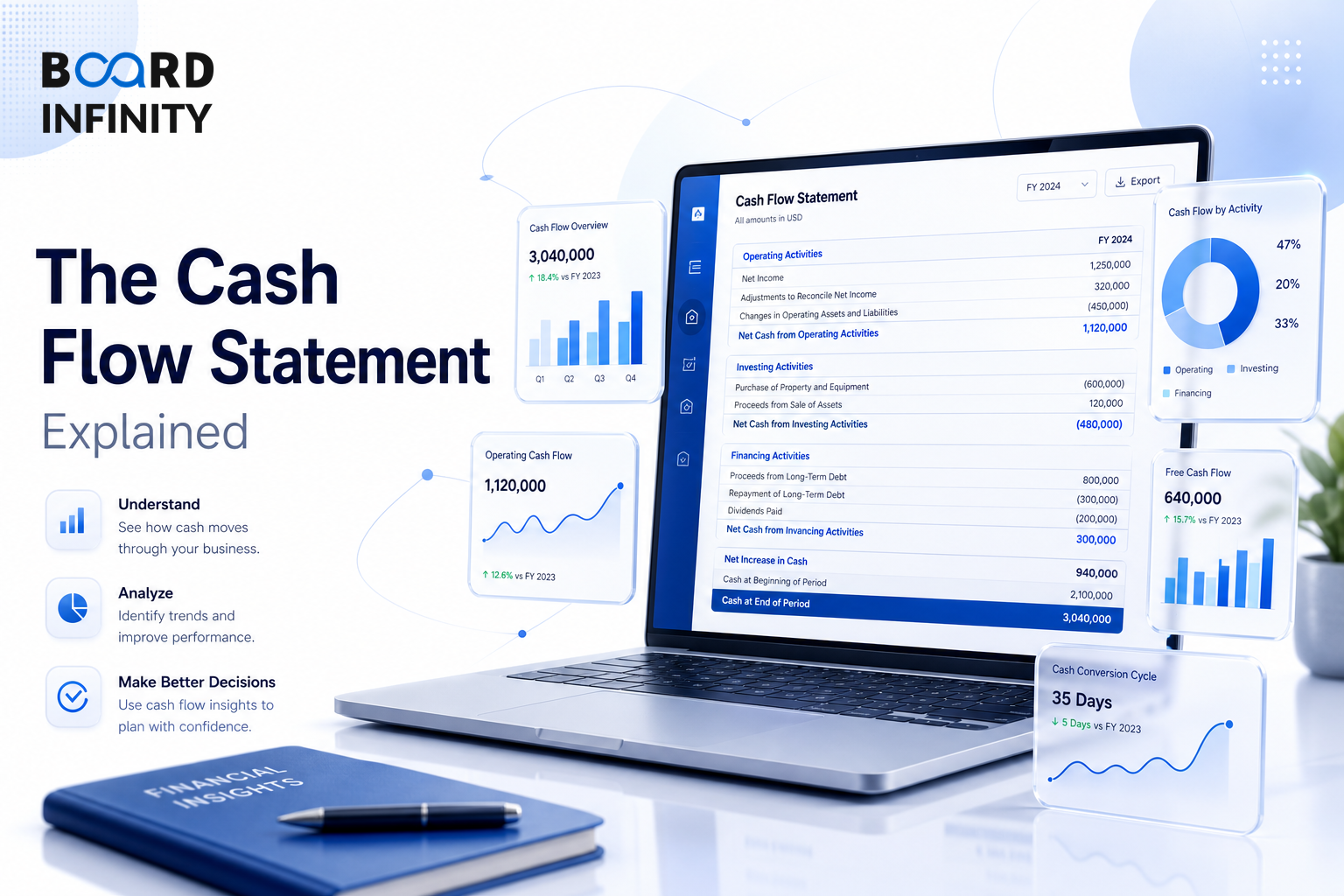
After learning how to read a Balance Sheet, the next interview question is whether reported profit is actually turning into cash. The Cash Flow Statement (CFS) reconciles accounting profit, which is accrual-based, with actual cash movements. In interviews, this matters because cash connects the Income Statement and Balance Sheet, and Operating Cash Flow is often treated as the acid test of earnings quality.
- The Cash Flow Statement (CFS) reconciles accounting profit, which is accrual-based, with actual cash movements.
- Operating CF (OCF / CFO) includes Net Profit + D&A - Working Capital Changes and is the most important section because it measures cash generation quality.
- CFO > Net Profit is a good sign.
- Investing CF (CFI) includes capex, acquisitions, asset sales, and investment purchases; negative CFI is fine for growth phase.
- Financing CF (CFF) includes debt raised or repaid, equity issued, dividends paid, and buybacks.
- OCF + CFI + CFF = Change in Cash Balance, and Beginning Cash + Net Change = Ending Cash on Balance Sheet.
- A company can manipulate accruals such as revenue recognition and expense deferral, but cash is harder to fake.
How the Cash Flow Statement Fits Together
The Cash Flow Statement is divided into Operating CF, Investing CF, Financing CF, and Net Cash Change. The big picture is simple: it starts from business cash generation, then shows investment activity, then financing decisions, and finally reconciles the change in cash balance with the Balance Sheet.
How Financial Statements Link
The classic interview linkage is that Net Income from the Income Statement flows to Retained Earnings in the Balance Sheet, while cash changes reconcile through the Cash Flow Statement. All three are interconnected - a change in one ripples through the others.
OCF + CFI + CFF = Change in Cash Balance. Always cross-check: Beginning Cash + Net Change = Ending Cash on Balance Sheet.
Operating Cash Flow Quality
Operating CF (OCF / CFO) is the most important section because it measures cash generation quality. It starts with Net Profit, adds back D&A, which means Depreciation & Amortization, and adjusts for Working Capital Changes.
Net Working Capital (NWC) = Current Assets - Current Liabilities. Positive NWC means the company can meet short-term obligations, while a negative NWC, common in retail like DMart, can be a sign of operational efficiency - collecting cash before paying suppliers.
For analysis, CFO > Net Profit is a good sign. If asked which statement tells you most, the Cash Flow Statement is a strong answer because a company can manipulate accruals such as revenue recognition and expense deferral, but cash is harder to fake. CFO is the acid test of earnings quality.
Investing and Financing Cash Flows
Investing CF (CFI) captures capex, acquisitions, asset sales, and investment purchases. It is usually negative because growth requires investment, so negative CFI is fine for growth phase. The analyst insight is to watch capex intensity - high capex = asset-heavy business.
Financing CF (CFF) captures debt raised or repaid, equity issued, dividends paid, and buybacks. Its sign varies by capital structure strategy. Positive CFF may mean new debt or equity raised, while negative CFF means paying down debt or rewarding shareholders.
Worked Example: Capex in the Cash Flow Statement
Question: "PP&E increases by ₹50 Cr - walk through all 3 statements."
No IS impact at purchase because capex is not expense. BS: PP&E +₹50, Cash -₹50. CFS: Capex in CFI section = -₹50. Then each future year: depreciation hits IS and adds back in CFO.
Structuring a The Cash Flow Statement Explained Interview Answer
"Walk me through the three financial statements."
Do not just describe the statements separately. The single most common IB technical interview question tests whether you can show the linkage: Net Income flows to Retained Earnings, and the ending cash balance on CFS equals Cash on the Balance Sheet.
The most frequent error is treating accounting profit as actual cash and skipping the non-cash D&A add-back and working capital adjustment. It costs points because the CFS exists specifically to reconcile accrual-based profit with actual cash movements, and CFO is the acid test of earnings quality.