
Red Flags in Financial Statements to Watch For
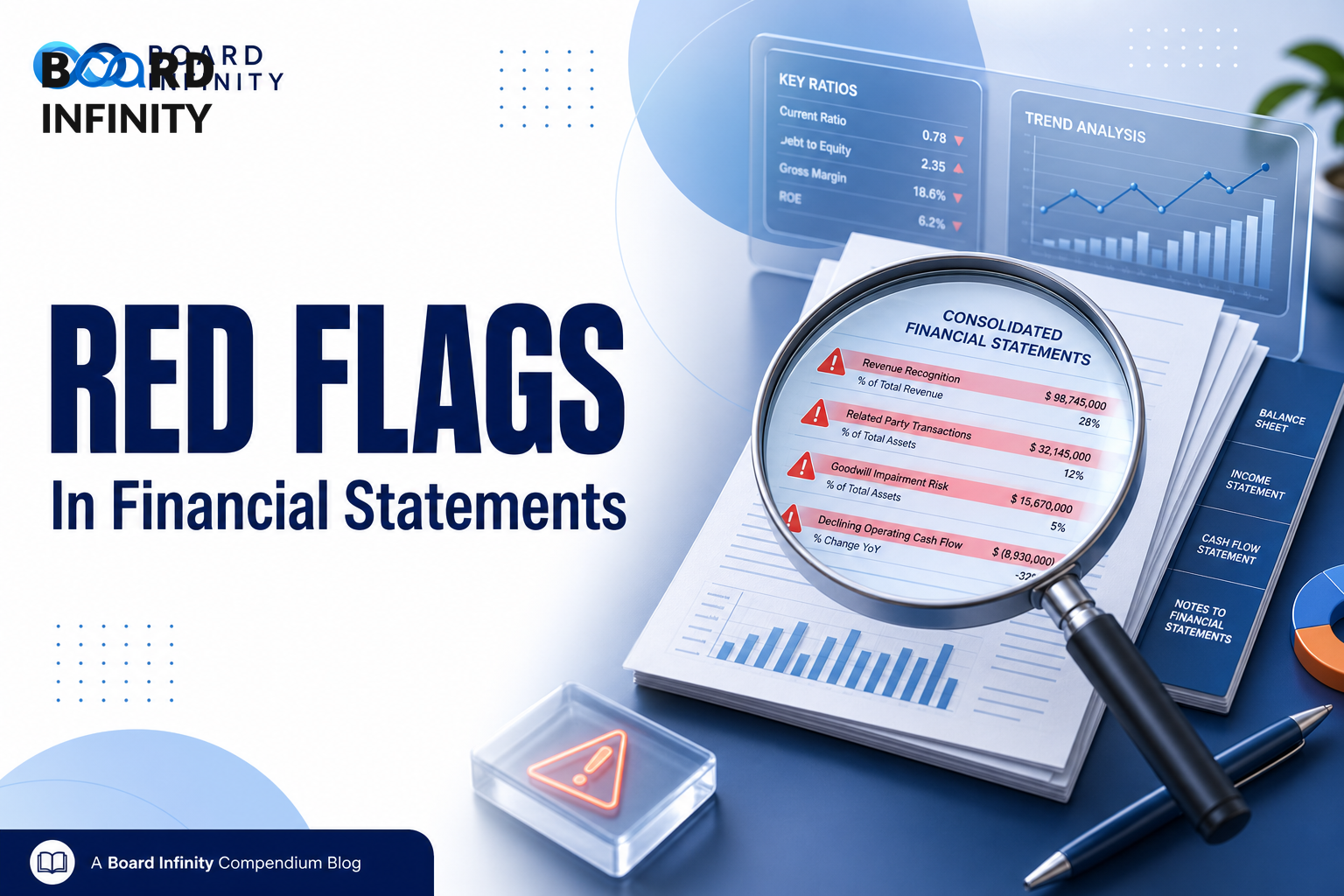
After Common-Size & Trend Analysis Explained, the next question is not just whether numbers are growing, but whether the growth is reliable. Detecting accounting irregularities and financial stress signals is a critical skill for equity researchers, credit analysts, and risk managers. In interviews, this topic tests whether you can connect reported profits, auditor comfort, and balance-sheet strength with cash-flow stress or governance risk.
- Revenue growing rapidly but CFO flat or negative is a red flag; many startups show GMV-based revenue without cash realization, and Café Coffee Day had revenue but negative FCF for years.
- DSO increasing Y-o-Y without reason can indicate revenue inflation, channel stuffing, or book orders without real sales.
- Large unexplained transactions with promoter entities are serious governance warnings; DHFL had ₹30,000+ Cr related party loans, and Karvy Stock Broking misused client funds.
- Auditor red flags include qualified opinion, auditor resignation, and key audit matters; Satyam and IL&FS are real Indian examples.
- High promoter shareholding pledged as collateral signals distress risk, with Zee Entertainment and Adani Group (pre-2023) linked to >60% pledge risk.
- Companies reporting profits but burning cash every quarter show cash vs profit divergence; Byju's reported profits while burning hundreds of crores monthly and eventually could not service debt.
From Trend Analysis to Forensic Accounting
The whole checklist starts with one question: are reported profits, revenue growth, and balance-sheet assets backed by cash and clean governance? The strongest warning signs appear when revenue, receivables, inventory, auditor signals, promoter pledges, goodwill, restatements, distress scores, and contingent liabilities move in ways that do not match cash generation.
The Cash Flow Statement (CFS) reconciles accounting profit (accrual-based) with actual cash movements. Operating CF (OCF / CFO) is the most important section; measures cash generation quality. CFO > Net Profit is a good sign.
Cash vs Profit Divergence
The Cash Flow Statement is critical because cash does not lie. Revenue can be recognised early, profits can be inflated by accounting choices, but cash flows are harder to manipulate.
Companies reporting profits but burning cash every quarter should be treated as red flags. Byju's reported profits while burning hundreds of crores monthly and eventually became unable to service debt.
Most Indian forensic accounting red flags are caught by comparing P&L profits to OCF. Profit without cash is likely manipulation.
Revenue, Receivables, and Inventory Signals
Revenue Growth ≠ Cash Growth means revenue is growing rapidly but CFO is flat or negative. Many startups show GMV-based revenue without cash realization; Café Coffee Day had revenue but negative FCF for years.
Rising receivables are another warning sign when DSO is increasing Y-o-Y without reason. The concern is revenue inflation - channel stuffing, or book orders without real sales.
Inventory buildup matters when inventory is growing faster than sales. Sintex Industries showed accumulation before default, and real estate inventory-as-assets is also an issue.
Governance and Promoter Risk Signals
Related party transactions become a red flag when there are large unexplained transactions with promoter entities. DHFL had ₹30,000+ Cr related party loans, while Karvy Stock Broking is cited for misuse of client funds.
Promoter pledge % is another governance-linked stress signal. High promoter shareholding pledged as collateral is a warning, and Zee Entertainment and Adani Group (pre-2023) are cited with >60% pledge = distress risk.
Auditor and Reliability Signals
Auditor red flags include qualified opinion, auditor resignation, and key audit matters. PwC qualified Satyam audit, IL&FS had auditor issues, and auditor changed repeatedly is itself a warning signal.
Frequent restatements mean the company is restating past results repeatedly. This questions reliability of all reported numbers and acts as an early fraud signal.
The Satyam scandal (2009) involved ₹ 7,800 Cr of fictitious cash on the balance sheet - certified by a Big 4 auditor for years. It remains the strongest Indian argument for cash-flow-first analysis.
Balance-Sheet Stress Signals
Rising goodwill without acquisitions means goodwill impairments or unexplained increase. ADAG companies wrote down ₹10,000+ Cr goodwill post-Lehman.
Z-Score < 1.81 means Altman Z-Score below 1.81 = distress zone. IL&FS, Yes Bank, and CG Power all showed deteriorating Z-scores before events.
Contingent liabilities matter when there are large off-balance-sheet obligations in notes. Stressed NBFCs often hide real NPAs in restructured accounts, so check footnotes.
Structuring a Red Flags in Financial Statements to Watch For Interview Answer
"You are analyzing a company's financials - what would concern you most?"
Do not answer with only one red flag. Walk through CFO vs Net Profit divergence, DSO trend, auditor changes or qualifications, promoter pledge levels, and related-party transactions, then cite Satyam or IL&FS as real examples.
The most frequent error is treating rising profit or revenue as proof of strength without checking CFO, DSO, auditor changes, pledge levels, and related-party transactions. That costs points because forensic accounting questions reward cash-flow-first analysis and real examples, not comfort with reported profits.
Conclusion
The core idea is simple: do not stop at reported growth, reported profits, or auditor comfort. Compare profits to CFO, test working-capital signals like DSO and inventory, read auditor and promoter-risk signals, and use real examples like Satyam, IL&FS, DHFL, Café Coffee Day, and Byju's to show cash-flow-first judgment.