
How to Read a Balance Sheet: Assets, Liabilities, Equity and Working Capital
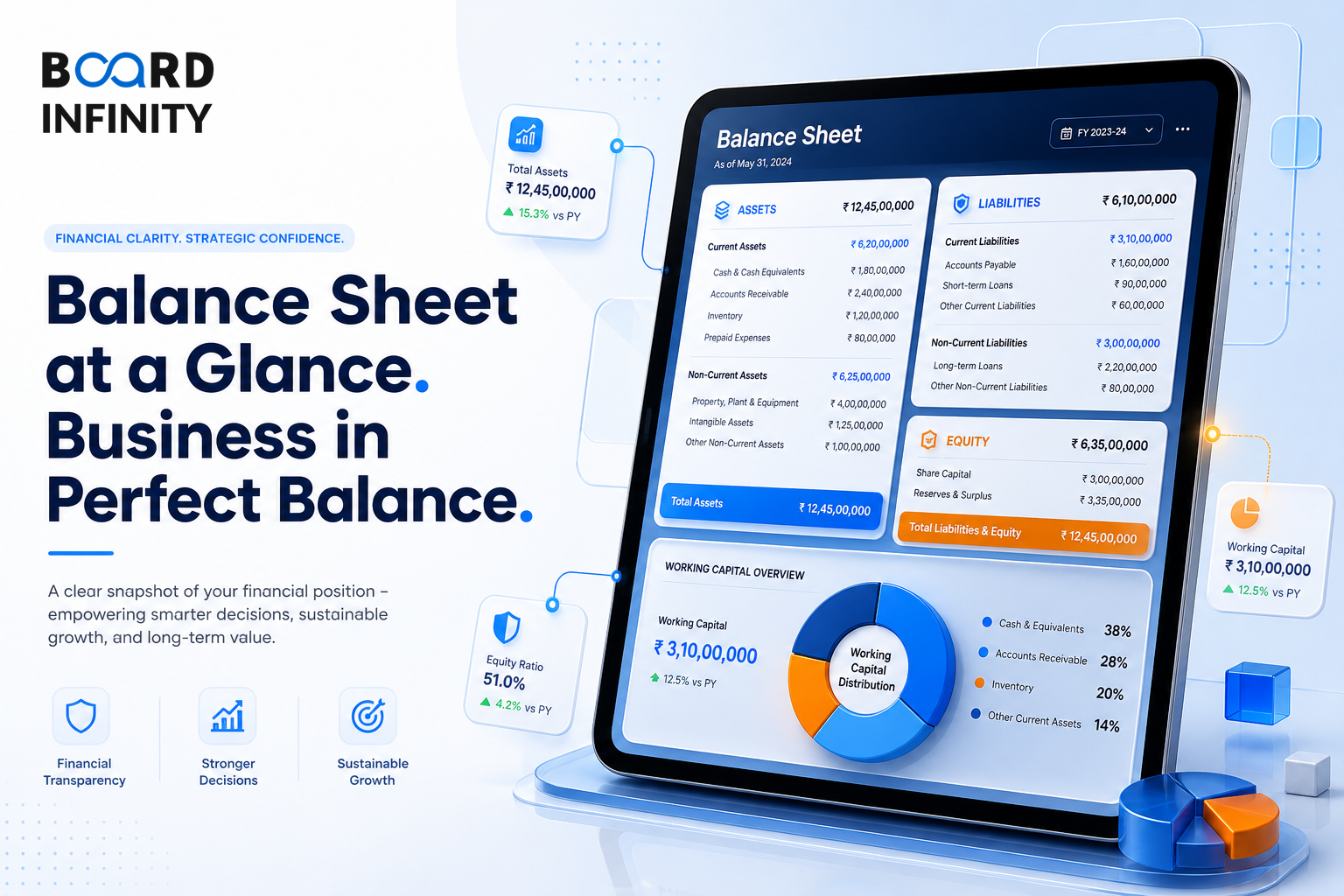
After the Profit and Loss (P&L) statement shows profitability, the Balance Sheet answers a different question: what does the company own, what does it owe, and what is the net worth at a point in time? In interviews, this matters because the Balance Sheet must reconcile through the Accounting Equation, and working capital helps interpret short-term liquidity.
- Accounting Equation: Total Assets = Total Liabilities + Shareholders' Equity.
- The Balance Sheet is a snapshot of a company's financial position at a point in time.
- Assets show what the company OWNS; Liabilities show what it OWES; Equity shows the net worth.
- In Reliance FY24, TOTAL ASSETS are ~₹8,05,000 Cr and TOTAL LIABILITIES + EQUITY are ~₹8,05,000 Cr.
- Net Working Capital (NWC) = Current Assets - Current Liabilities.
- Positive NWC means the company can meet short-term obligations.
- A negative NWC, common in retail like DMart, can be a sign of operational efficiency - collecting cash before paying suppliers.
The Balance Sheet Big Picture
The Balance Sheet is a snapshot of a company's financial position at a point in time. Assets show what the company OWNS; Liabilities show what it OWES; Equity shows the net worth.
Accounting Equation: Total Assets = Total Liabilities + Shareholders' Equity.
Reliance FY24 Balance Sheet Snapshot
The table below shows the Balance Sheet structure using Reliance FY24 figures, rounded for illustration. The key reading discipline is to separate current and non-current items, then check that total assets reconcile with total liabilities plus equity.
Source: Reliance Industries Annual Report FY2024 (rounded for illustration).
Reliance FY24 shows Total Current Assets of ₹1,13,555 Cr and Total Current Liabilities of ₹86,100 Cr. It also shows TOTAL ASSETS of ~₹8,05,000 Cr and TOTAL LIABILITIES + EQUITY of ~₹8,05,000 Cr. The strategic so what is simple: the Balance Sheet must first reconcile, and then the reader can interpret short-term liquidity through working capital.
Working Capital Concept
Net Working Capital (NWC) is used to read short-term liquidity from the Balance Sheet. Positive NWC means the company can meet short-term obligations.
Net Working Capital (NWC) = Current Assets - Current Liabilities.
Working Capital Requirement (WCR) = Inventory Days + Receivable Days - Payable Days.
Using the Reliance FY24 figures above, Net Working Capital = ₹1,13,555 Cr - ₹86,100 Cr = ₹27,455 Cr. This is a positive NWC, which means the company can meet short-term obligations.
A negative NWC, common in retail like DMart, can be a sign of operational efficiency - collecting cash before paying suppliers. This nuance is important because negative working capital is not automatically weak; in some business models, it can reflect cash collection before supplier payment.
Structuring a How to Read a Balance Sheet Interview Answer
"Walk me through how you would read a Balance Sheet and assess short-term liquidity using working capital."
Do not stop at identifying assets, liabilities, and equity. In interviews, link the Balance Sheet back to the Accounting Equation and then use current assets versus current liabilities to comment on short-term obligations.
The single most frequent error is reading the Balance Sheet like a period statement instead of a snapshot of a company's financial position at a point in time. It costs points because the core check is that Total Assets = Total Liabilities + Shareholders' Equity, and working capital is a current-assets-versus-current-liabilities liquidity concept.
Conclusion
A Balance Sheet is read by anchoring on the Accounting Equation, separating what the company owns from what it owes, and using equity as the net worth. The final takeaway is to reconcile the snapshot first, then interpret financial strength and short-term liquidity through working capital.