
Trade-off: Centralisation versus Responsiveness
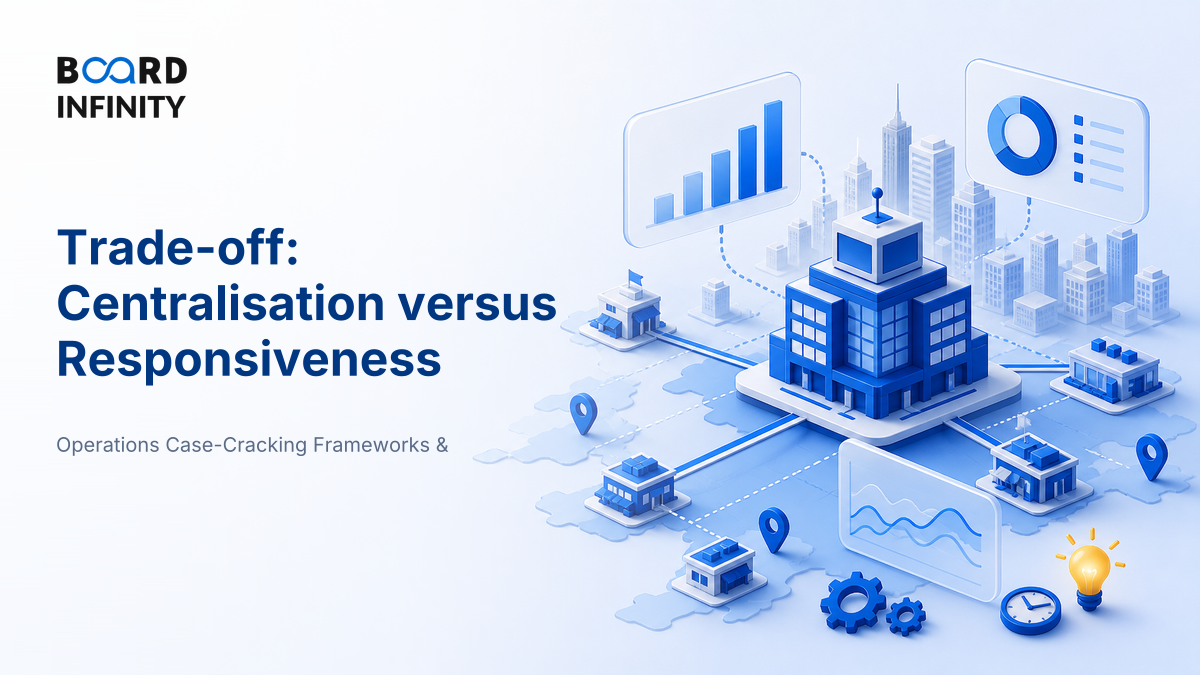
The biggest misconception is that centralisation is “efficient but slow” and responsiveness is “fast but expensive.” In real operations, the best companies do not choose one side blindly - they centralise what must be consistent and decentralise what must react.
- Centralisation concentrates decisions, resources or processes in fewer nodes to gain scale, control and standardisation.
- Responsiveness is the ability to react quickly and effectively to changes in demand, supply, location or customer need.
- The trade-off is not “cost versus customer.” It is scale economics versus local adaptability.
- Centralise stable, repeatable, high-scale activities like procurement standards, master data, platform rules and core planning.
- Decentralise volatile, local, time-sensitive activities like last-mile decisions, store replenishment exceptions and customer recovery.
- The winning design is usually a hybrid operating model: central control tower plus local execution rights.
- Interview answer rule: diagnose volatility, decide decision rights, set service-cost metrics, and explain the risks of overdoing either side.
Big Picture: This Is a Design Trade-off, Not an Ideology
Centralisation and responsiveness sit on a rising trade-off curve. As you move toward faster local response, you usually add buffers, local decision rights, duplicated capability or coordination cost. As you move toward centralisation, you gain scale and control but may lose speed and local fit.
Core Explanation: What Changes When You Centralise or Decentralise
Centralisation means fewer decision centres. It is powerful when demand is predictable, processes are repeatable, suppliers are common, and mistakes from inconsistency are costly.
Responsiveness means decisions are closer to the customer, store, warehouse, plant or delivery route. It is powerful when demand changes quickly, local context matters, and delay is more expensive than duplication.
The Best Operating Model: Centralise the Spine, Localise the Reflexes
A strong operations design separates the spine from the reflexes. The spine is what must stay common: policies, data, supplier standards, technology platforms and planning rules. The reflexes are what must react quickly: local replenishment, delivery routing, exception handling and customer recovery.
For example, inventory policy is often centrally designed but locally triggered. Headquarters may define service levels, safety stock rules and reorder logic, while stores or warehouses act on demand signals. If you want to go deeper into this mechanics, revise setting inventory policy for a multi-product business.
Similarly, a pull system such as Kanban can make local replenishment responsive while still operating within central rules. That is why Kanban and pull-based replenishment is a natural next step after this topic.
When to Choose Which Side: The 2x2 Decision Map
The fastest way to answer a case or interview question is to map the activity on two axes: demand uncertainty and scale advantage. High scale advantage pushes you toward centralisation. High uncertainty pushes you toward responsiveness.
Use this map at the level of the activity, not the whole company. A company can centralise procurement, decentralise store operations, centralise analytics, and decentralise customer issue resolution at the same time.
The Responsiveness Loop: How Fast Systems Keep Learning
Responsiveness is not just “act quickly.” It is a loop. A responsive system senses demand, decides within clear rights, fulfils through available capacity, and learns so the central rules improve.
Metrics: How to Know Whether the Trade-off Is Working
Do not defend a structure by saying it “feels efficient” or “feels customer-centric.” Track both cost and service. A good design improves one side without silently destroying the other.
Definitions You Can Say in One Breath
- Centralisation: Concentrating decision rights, resources or processes in fewer nodes to improve scale, control and consistency.
- Responsiveness: The ability to react quickly and effectively to demand, supply or customer changes.
- Decentralisation: Moving decision rights closer to local teams, customers, assets or market signals.
- Hybrid operating model: A design where central standards guide local decisions within defined guardrails.
Case Study: Domino’s India and the Central Kitchen - Local Store Balance
Domino’s India shows how a food-service operation can centralise quality and supply discipline while keeping customer-facing execution highly local.
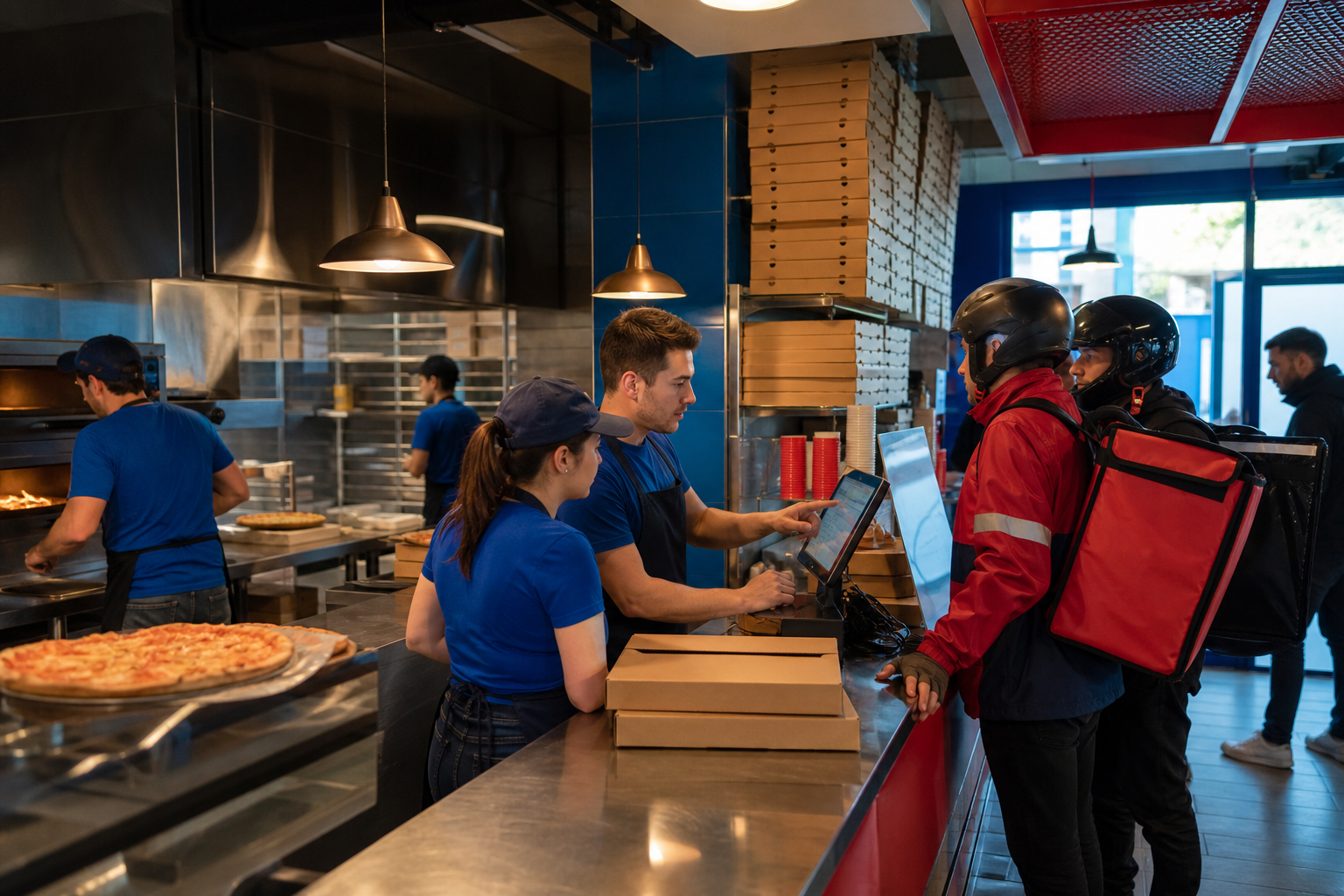
In a quick-service restaurant chain, the operating problem is brutal: customers expect speed, the product must taste consistent, and local demand can spike suddenly during evenings, weekends, rain or sporting events.
The move is a classic hybrid. Central teams define the recipe standards, supplier requirements, food safety norms, technology backbone and supply planning discipline. Local stores then execute the last-mile reality - order sequencing, kitchen flow, rider dispatch, customer recovery and local demand surges.
The strategic lesson is simple: Domino’s India does not win by being only centralised or only responsive. It wins by centralising the things that protect consistency and decentralising the things that protect speed.
How AI Changes Centralisation versus Responsiveness
AI is making this trade-off less binary. It allows companies to centralise intelligence while decentralising action.
- AI demand sensing: Machine-learning models can combine sales, seasonality, weather, promotions and local signals to suggest replenishment actions faster than manual planning cycles. This supports responsiveness without fully surrendering control. For a deeper operations view, revise AI for inventory optimisation and replenishment.
- Control towers with exception logic: AI can flag only the exceptions that need human judgment, allowing central teams to govern rules while local teams act on urgent cases.
- LLM-based decision support: Store, warehouse or procurement teams can ask natural-language questions such as “Which SKUs are at risk this weekend?” or “Which supplier delay affects the most orders?” This reduces decision latency.
Use NotebookLM: upload a company annual report, a supply-chain article and your notes, then ask, “Which decisions should this company centralise and which should be local? Give evidence and risks.” This creates strong interview examples quickly.
Interview Relevance
“A retail chain is suffering from both high inventory and frequent stockouts. Should it centralise replenishment decisions or give stores more autonomy?”
In interviews, never say “centralise” or “decentralise” as a blanket answer. Say, “I would centralise the rules and data, but decentralise time-sensitive exceptions within guardrails.”
Common Mistake
The mistake that costs candidates is treating centralisation and responsiveness as company-level labels. A company is not simply “centralised” or “responsive” - each decision has its own best location. One-line fix: decide at the activity level, based on volatility, scale advantage and service risk.