
Trade-off: Speed versus Sustainability in Delivery
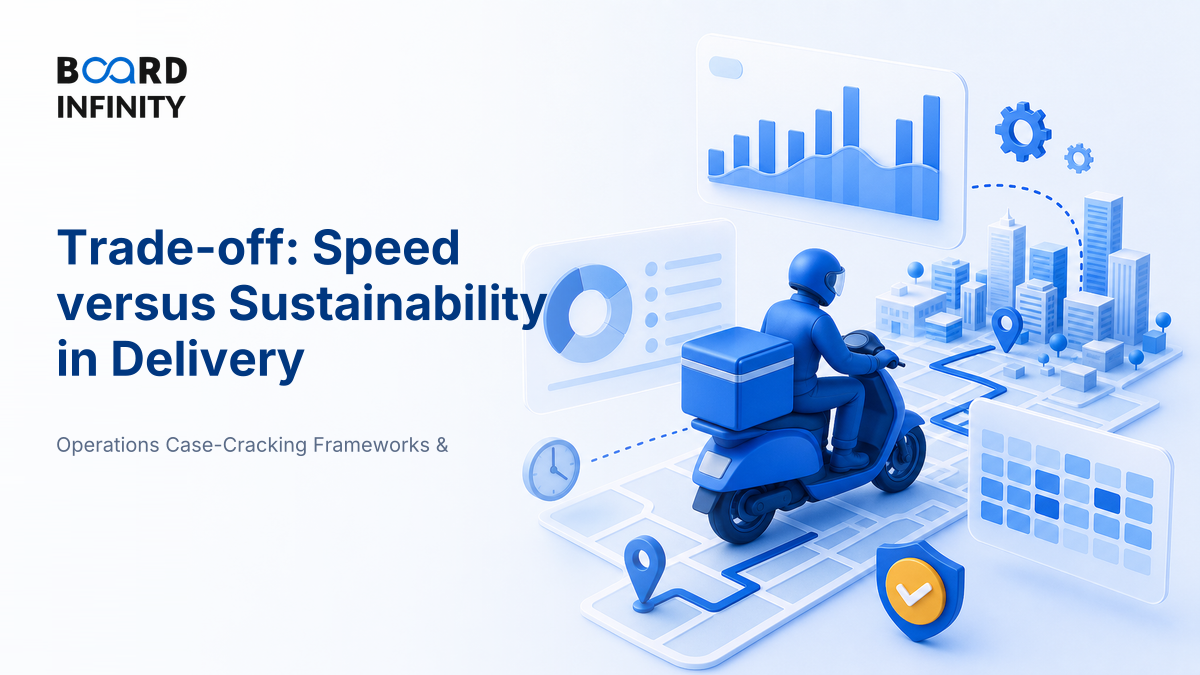
A 12-minute delivery looks magical on the customer's phone. Behind the screen, the same promise can mean more split shipments, more rider kilometres, more packaging and less room to batch orders efficiently.
Now compare that with a scheduled grocery slot: slower on paper, but denser routes, fewer failed attempts and a smaller footprint per order. The best operators do not ask, "Should we be fast or sustainable?" They ask, "For which customer mission is speed worth the operating and environmental cost?"
- Speed is the elapsed time from order confirmation to successful delivery against the promised window.
- Sustainability in delivery means reducing environmental and social harm across transport, packaging, returns and labour practices.
- The real trade-off is not "fast versus green"; it is promise design - which orders deserve instant, same-day, next-day or scheduled delivery.
- Fast delivery usually increases cost and emissions when it reduces batching, lowers drop density or creates fragmented inventory.
- Sustainable delivery improves when firms use route consolidation, EVs where viable, reusable or right-sized packaging, fewer failed attempts and better demand planning.
- Track the trade-off with OTIF, cycle time, cost per order, drop density, first-attempt success and CO2e per order.
- Best interview answer: segment demand, quantify the trade-off, design differentiated service levels, then align incentives and metrics.
Big Picture
Delivery strategy sits on a frontier: pushing every order toward maximum speed can damage economics and sustainability, while pushing every order toward maximum consolidation can damage customer experience. The winning answer is usually a segmented operating model, not a universal delivery promise.
Core Explanation
The speed-sustainability trade-off appears when a delivery system has limited vehicles, riders, warehouse capacity, inventory and time. If customers demand faster delivery, the system may need more local stock, more urgent picking, more riders on fragmented routes and more packaging events. If the company prioritises sustainability, it may use batching, route density, scheduled slots and fewer emergency dispatches - but customers may wait longer.
The cleanest way to think about the problem is through four operating levers:
A fast but unsustainable design usually overuses the first answer available: send the nearest rider, split the shipment and promise the shortest window. A stronger design asks whether the customer mission actually needs that speed. Medicine, urgent repair parts and missed dinner ingredients may justify speed. Bulk groceries, replenishment SKUs and planned purchases often do not.
The Delivery Trade-off in One Table
Use this table to diagnose what really changes when a firm moves from "fastest possible" to "responsibly fast" delivery.
The trick is to avoid false averages. A single average delivery time hides the fact that some orders deserve speed and others deserve consolidation. If replenishment demand is predictable, Kanban and pull-based replenishment can reduce rush orders by triggering movement only when consumption signals justify it.
Metrics That Make the Trade-off Real
Never discuss this topic using only intentions such as "customer delight" or "green logistics". Bring the conversation down to measures. There is no universal benchmark that fits groceries, food, electronics and B2B parts equally, so the strongest number is one that beats the SLA target while improving cost and footprint.
Worked Example: When Faster Becomes Wasteful
Assume a grocery business has 100 orders in one zone. These are fictional planning numbers, but the logic is exactly how an operations manager would compare delivery policies.
The conclusion is not that batched delivery is always better. The conclusion is sharper: if the customer does not value 30-minute delivery enough to pay for it or stay loyal because of it, the firm is spending kilometres unnecessarily.
Definitions
- Delivery speed: the elapsed time from order confirmation to successful delivery against the promised customer window.
- Sustainable delivery: fulfilment that lowers environmental and social harm across transport, packaging, returns and labour.
- Trade-off: a decision where gaining more of one valued outcome makes another valued outcome harder under constraints.
- Drop density: the number of successful deliveries completed per route kilometre or route hour.
Bigbasket: Segmenting Speed Instead of Worshipping It
Bigbasket shows the logic of offering different delivery promises for different grocery missions instead of forcing every basket into one speed model.
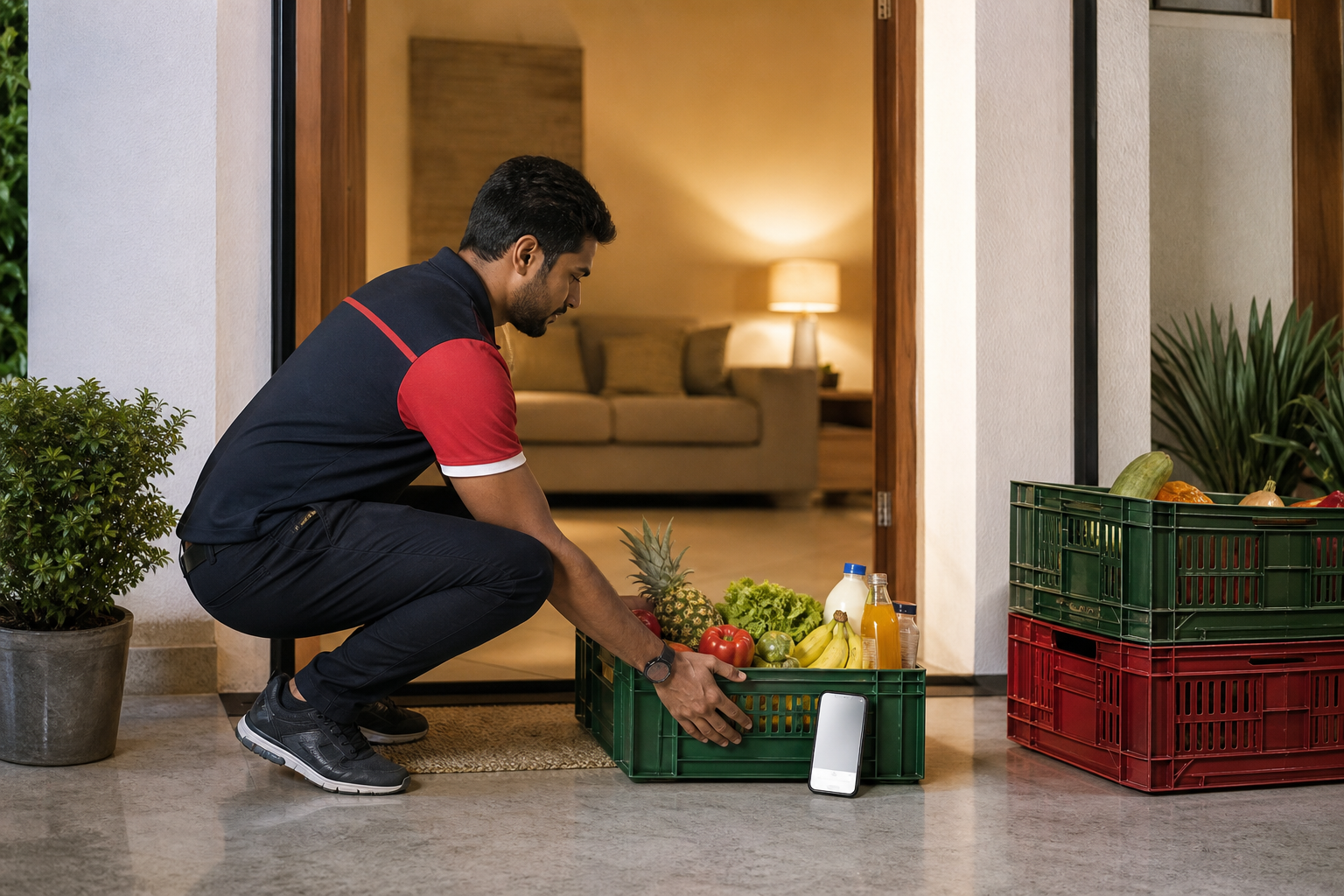
Situation: Grocery delivery has mixed missions. A customer may need milk urgently, but the same customer may also be buying a planned weekly basket of rice, detergent, vegetables and packaged foods. Treating both orders as equally urgent can fragment picking, routing and inventory.
The move: Bigbasket's model has long made room for scheduled grocery delivery, while the broader Indian grocery market has also moved toward express formats for urgent needs. The strategic lesson is segmentation: use faster fulfilment for high-urgency, convenience-driven demand, and use planned slots for larger, predictable baskets where consolidation is valuable.
Outcome or lesson: The primary driver is mission-based service design - urgent missions and planned missions get different delivery promises. Supporting drivers include assortment planning, local fulfilment capacity, route batching, delivery-slot discipline and customer communication. This is how a firm avoids the trap of making its entire operating system chase the fastest promise for every order.
The case is memorable because it reframes sustainability as an operating design problem. A slower promise can be better only when it is matched to the right mission and supported by planning, routing and inventory discipline.
How AI Changes Trade-off: Speed versus Sustainability in Delivery
AI does not remove the trade-off. It helps managers see it earlier, simulate it faster and personalise it better.
For inventory-linked delivery decisions, revise Using AI for Inventory Optimisation and Replenishment because better replenishment is often the hidden reason fewer urgent deliveries are needed.
Use NotebookLM: upload a company annual report, sustainability report and delivery-policy notes, then ask, "Create five interview questions on how this company balances delivery speed, cost-to-serve and sustainability, and suggest metrics for each answer."
Interview Relevance
"A quick-commerce company wants to reduce delivery emissions without hurting customer experience. How would you approach the speed versus sustainability trade-off?"
When discussing incentives, connect the operating model to contracting, incentives and service agreements; otherwise the delivery partner may still be rewarded only for speed.
Use the phrase "differentiated service levels". It signals that you understand trade-offs are solved by segmentation and system design, not by slogans.
Common Mistake
The biggest mistake is treating speed and sustainability as a binary choice: "Either delight customers or go green." That sounds shallow because it ignores segmentation, route density, inventory placement and willingness to pay. Fix: say, "I would segment orders by urgency and design different delivery promises with shared metrics for service, cost and impact."