
Channel Sales in India: How It Works
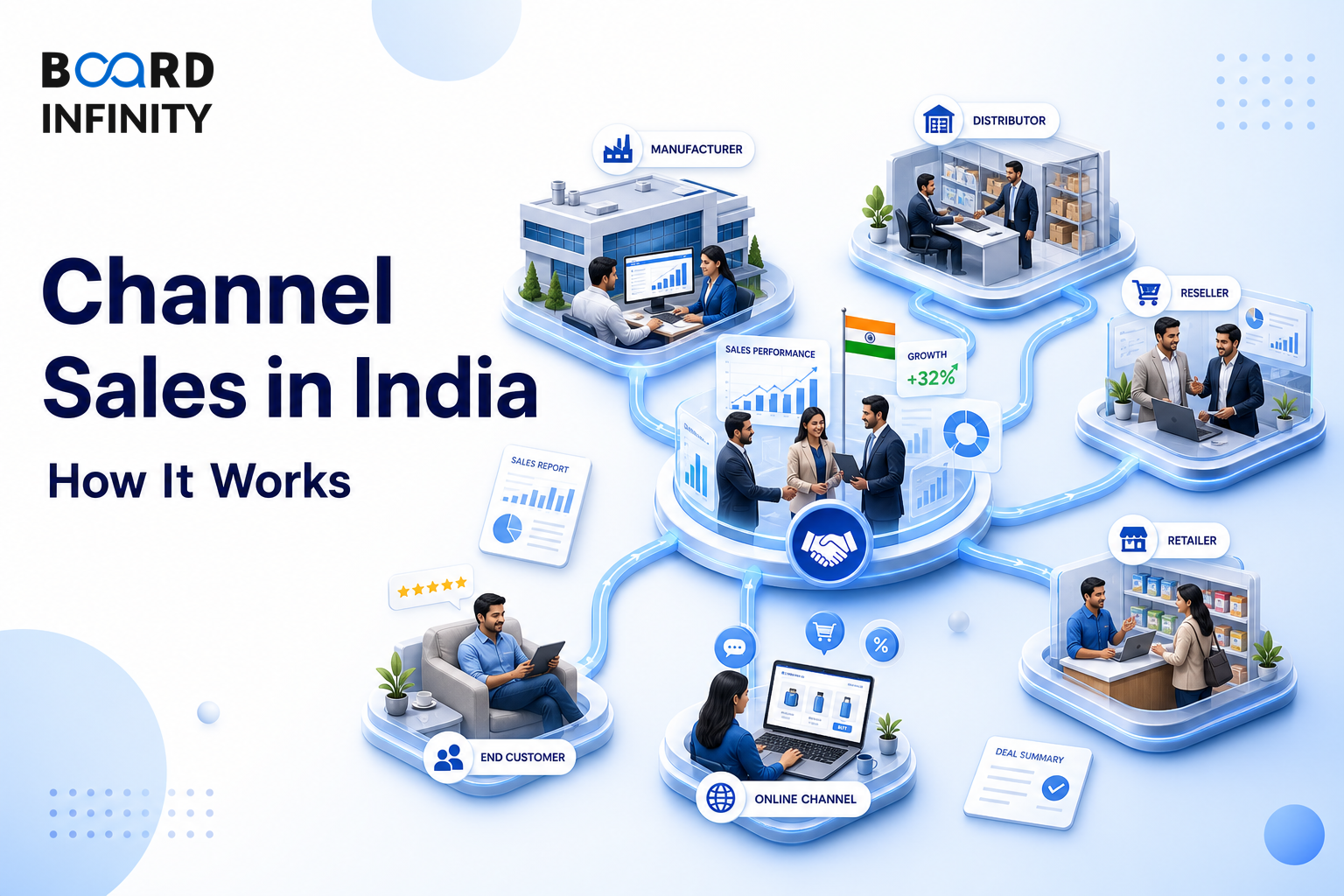
After Consultative & Value Selling Explained, the next question is how products reach customers at scale. Channel sales in India answers that question through FMCG, or Fast-Moving Consumer Goods, where distribution depth can decide whether a product wins or loses. This matters in interviews because FMCG interviews increasingly test sales knowledge and expect candidates to explain the HUL distribution model clearly.
- India's FMCG sector demonstrates channel sales at massive scale.
- Hindustan Unilever (HUL) operates through 3,500+ distributors reaching 8 million+ retail outlets across India.
- Channel sales involves selling through intermediaries - distributors, wholesalers, retailers, resellers - rather than directly to end customers.
- The manufacturer sacrifices margin for reach.
- In India, where organised retail is still ~12% of total retail, channel partners are indispensable.
- In FMCG, the distribution channel IS the competitive advantage - a new product with inferior distribution will lose to an average product with superior distribution every time.
- For retailer stocking questions, use FAB selling - show the retailer the margin, the marketing support, and the consumer demand data.
The Big Picture
Channel sales is a reach-versus-margin tradeoff. The manufacturer gives up some margin to work through intermediaries, but gains access to retail coverage that direct selling alone cannot easily match.
Channel sales involves selling through intermediaries (distributors, wholesalers, retailers, resellers) rather than directly to end customers.
India's FMCG sector demonstrates channel sales at massive scale. Hindustan Unilever (HUL) operates through 3,500+ distributors reaching 8 million+ retail outlets across India. In FMCG, the distribution channel IS the competitive advantage - a new product with inferior distribution will lose to an average product with superior distribution every time.
Why Channel Sales Matters in India
In India, where organised retail is still ~12% of total retail, channel partners are indispensable. The manufacturer sacrifices margin for reach, and that tradeoff becomes especially important when the goal is to reach millions of retail outlets across India.
For FMCG companies, the channel is not just a route to market. In FMCG, the distribution channel IS the competitive advantage - a new product with inferior distribution will lose to an average product with superior distribution every time.
The Reach-versus-Margin Tradeoff
The core logic is simple: channel partners extend reach, but they also take margin. Distributors, wholesalers, retailers, and resellers make it possible for manufacturers to reach end customers indirectly, especially across a market where retail is highly fragmented.
This is why the HUL model is powerful in interviews. HUL operates through 3,500+ distributors reaching 8 million+ retail outlets across India, which shows how distribution depth becomes difficult for competitors to replicate.
How to Think About Retailer Conversion
Interview Insight: FMCG interviews increasingly test sales knowledge. Know BANT, SPIN, and the HUL distribution model cold.
Be ready to answer: "How would you convince a retailer to stock a new product?" Use FAB selling - show the retailer the margin, the marketing support, and the consumer demand data. Frame it as a partnership, not a push.
Structuring a Channel Sales in India Interview Answer
"How would you convince a retailer to stock a new product?"
The strongest answers do not treat the retailer as a passive outlet. They show the retailer the margin, the marketing support, and the consumer demand data, then frame it as a partnership, not a push.
The most frequent error is describing channel sales as only a logistics network. In FMCG, the distribution channel IS the competitive advantage, so missing the reach-versus-margin tradeoff costs points in interviews.
Conclusion
Channel sales in India is about sacrificing margin for reach through intermediaries. HUL's 3,500+ distributors and 8 million+ retail outlets show why FMCG winners build distribution depth that competitors cannot easily replicate.