
FAB Selling: Features, Advantages and Benefits
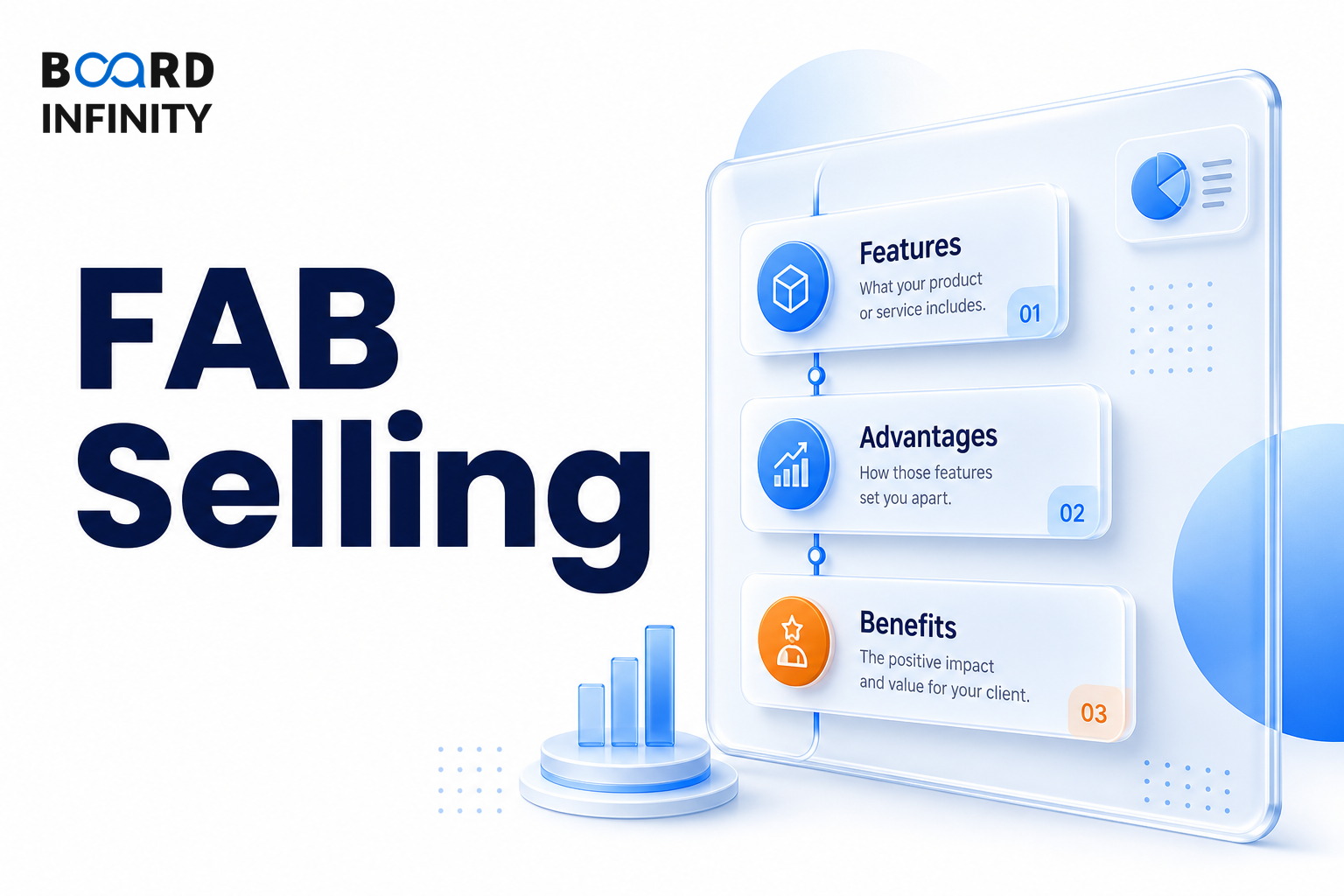
After understanding Hunter vs Farmer as two sales role types, the next question is how a salesperson actually turns a product conversation into customer motivation. FAB Selling answers that by moving from what the product has, to what it does, to what it means for the customer. In interviews, it matters because it shows that you can craft compelling sales pitches instead of simply listing product facts.
- FAB stands for Features, Advantages, Benefits.
- FAB is a fundamental framework for crafting compelling sales pitches.
- The key principle: always sell Benefits, not Features.
- Features describe what the product has.
- Advantages describe what the product does.
- Benefits describe what the product means for the customer.
- Buyers make emotional decisions justified with logic - Benefits connect emotionally.
How FAB Selling Fits Together
FAB Selling moves in a simple sequence: Features to Advantages to Benefits. The framework is useful because it translates a product fact into usefulness, and then into customer meaning.
FAB (Features → Advantages → Benefits) is a fundamental framework for crafting compelling sales pitches.
FAB in Action
The key principle of FAB Selling is direct: always sell Benefits, not Features. A feature gives the product fact, an advantage explains usefulness, and a benefit connects the product to the customer's real situation.
Features, Advantages and Benefits
Features describe what the product has. In the example, the feature is 16GB RAM.
Advantages describe what the product does. In the example, the advantage is that it runs 20 applications smoothly without lag.
Benefits describe what the product means for the customer. In the example, the benefit is that you never miss a deadline because your laptop froze during a client presentation.
Why Benefits Matter in Sales Pitches
Buyers make emotional decisions justified with logic - Benefits connect emotionally. This is why FAB Selling asks the salesperson to move beyond the specification and show what the specification means for the customer.
The 16GB RAM example shows the complete movement: the product has 16GB RAM, it runs 20 applications smoothly without lag, and the customer never misses a deadline because the laptop froze during a client presentation. That final benefit is what makes the pitch compelling.
Structuring a FAB Selling Interview Answer
"How would you use FAB Selling to craft a compelling sales pitch?"
The strongest answers do not stop at the feature. Move from what the product has, to what the product does, to what the product means for the customer.
The most frequent error is selling Features instead of Benefits. It costs points because Features describe what the product has, but Benefits describe what the product means for the customer and connect emotionally.
Conclusion
FAB Selling is the simplest way to turn product facts into customer motivation. Features explain the product, advantages explain usefulness, and benefits close the emotional sale.