
Co-Branding, Brand Extensions and Brand Personality
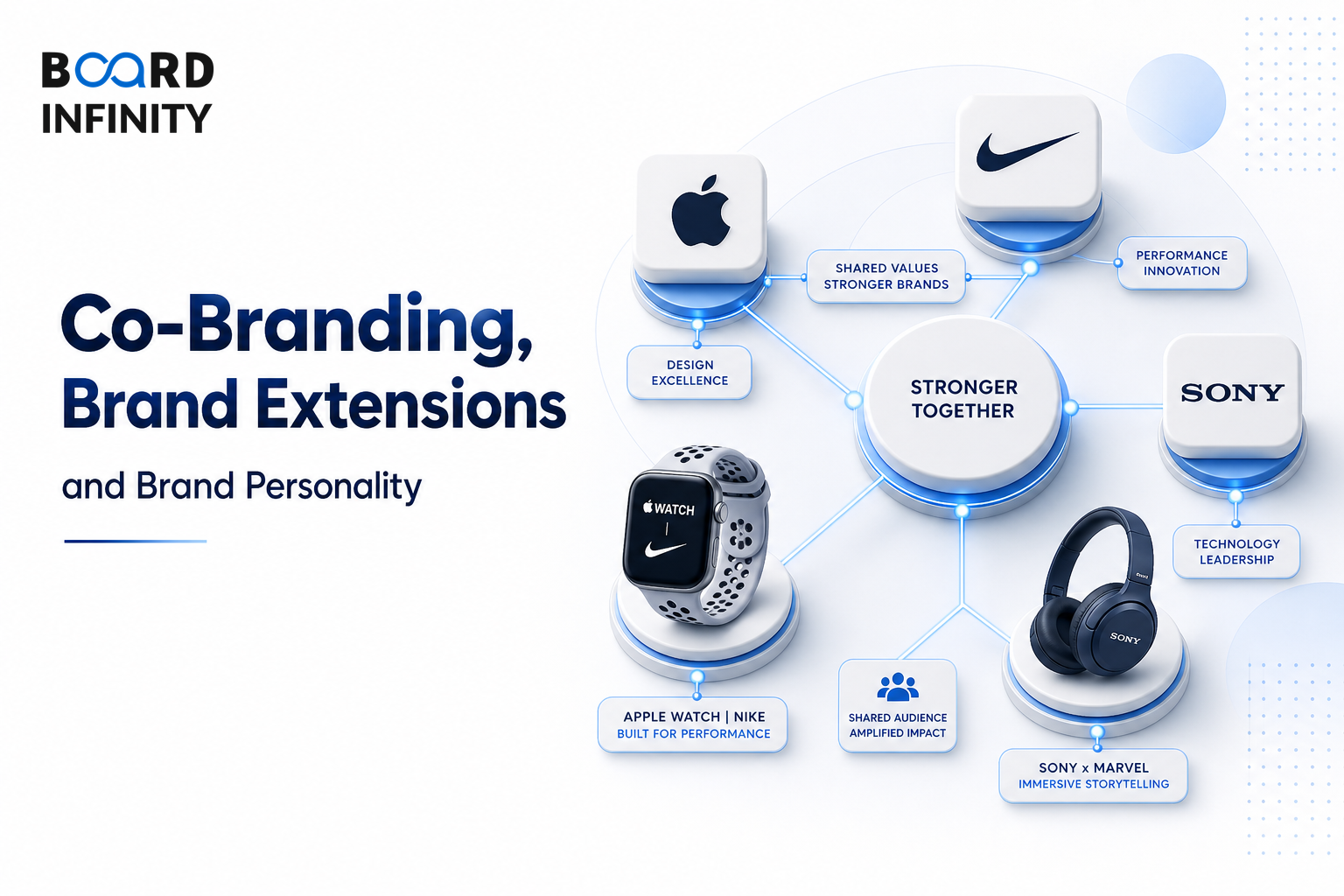
In Brand Positioning - Points of Parity, Points of Difference and Perceptual Mapping, the central question was how a brand becomes distinct in the customer’s mind. This lesson takes the next step: how can a brand borrow another brand’s equity through co-branding, and how can it sound more human through brand personality? These ideas matter in interviews because they test whether you can connect strategy, consumer perception and execution using named examples like Intel, Dolby, Nike, Apple, GoPro, Red Bull, Oreo and Mondelez.
- Co-branding is a strategic alliance where two or more brands collaborate to create a joint product or campaign, leveraging each other’s equity for mutual benefit.
- The four co-branding types in the source are ingredient co-branding, joint venture co-branding, promotional co-branding and same-company co-branding.
- Ingredient co-branding makes one brand’s component visible inside another product, as seen in Intel Inside on laptops and Dolby Audio in cinemas.
- Joint venture co-branding is deeper because two brands co-create a new product, such as Nike + Apple creating the Nike+iPod fitness tracker.
- Promotional co-branding is usually campaign-led and short term, such as GoPro + Red Bull in an extreme sports content partnership.
- Aaker’s five brand personality dimensions are Sincerity, Excitement, Competence, Sophistication and Ruggedness.
- In interviews, do not describe co-branding only as logo sharing; explain the equity being borrowed, the type of collaboration and the personality fit.
The Big Picture: Borrowing and Expressing Brand Equity
Brand strategy is not only about what a brand offers; it is also about what associations the brand carries. Co-branding helps a brand borrow equity from another brand, while brand personality helps it express human-like traits such as sincerity, excitement, competence, sophistication or ruggedness.
Co-branding is a strategic alliance where two or more brands collaborate to create a joint product or campaign, leveraging each other’s equity for mutual benefit.
Use the following map before going into any detailed answer. It separates the strategic question, the branding tool and the interview use case.
Co-Branding: What It Means and Why It Matters
Co-branding works because brands are not neutral labels. They carry associations, credibility, trust, status, excitement and expectations. When two brands collaborate, each brand can make the other more meaningful to the customer, provided the partnership feels relevant.
In a case interview, co-branding usually appears when a brand wants to enter a new usage context, sharpen its positioning, make a product feature more credible or create a campaign with stronger consumer pull. The interviewer is not only looking for a creative idea; they are checking whether you can explain why the partner’s equity helps.
The key is to move from “two brands are working together” to “which equity is being transferred, and what does the customer now believe?” Intel Inside tells a laptop buyer that the component matters. Dolby Audio tells a cinema-goer that the sound experience has a credible specialist behind it. GoPro + Red Bull makes sense because both are linked with extreme sports content in the source.
Types of Co-Branding
The source gives four co-branding types. Each type differs in depth, duration and the way the customer experiences the partnership.
Ingredient co-branding is powerful when a hidden component influences perceived quality. A laptop buyer may not inspect the processor directly, but the Intel Inside association makes the component visible in the purchase decision. Similarly, Dolby Audio in cinemas gives a technical feature a brand name the customer can recognize.
Joint venture co-branding is more involved because the partners create a new product together. Nike + Apple creating the Nike+iPod fitness tracker is a clear example from the source. The partnership links Nike’s fitness association with Apple’s device and technology association, creating an offer that neither example should be described as a simple ad campaign.
Promotional co-branding is usually shorter term. GoPro + Red Bull in an extreme sports content partnership works because both brands fit the same high-energy, action-led context. The customer does not need a detailed explanation of the fit because the shared context is already visible.
Same-company co-branding needs extra care in interviews. The source defines it as multiple brands from the same parent partnering, while also listing Oreo McFlurry as Mondelez + McDonald’s and noting both are independent. The lesson for candidates is practical: do not force a label without checking whether the brands share ownership or are simply collaborating.
Brand Extensions: Where They Fit in This Discussion
Brand extension is adjacent to co-branding because both rely on existing brand equity. In a brand extension, the central question is whether a known brand can stretch into a new product, format or experience. In co-branding, the central question is whether another brand’s equity should be added to make the offer stronger.
The distinction matters because interviewers may use the terms loosely. If a brand uses its own equity in a new space, discuss it as an extension. If two or more brands collaborate, discuss it as co-branding. If both forces are present, explain both instead of trying to fit the case into one label too quickly.
Aaker’s Five Brand Personality Dimensions
Brand personality means the human-like traits associated with a brand. Aaker’s five brand personality dimensions give a simple structure for describing those traits: Sincerity, Excitement, Competence, Sophistication and Ruggedness.
This framework is useful because customers often describe brands as if they were people. A brand can feel honest, daring, reliable, elegant or tough. These associations influence the kind of partnerships that feel natural, the kind of campaigns that feel believable and the kind of extensions that customers may accept.
Sincerity works when the brand wants to feel genuine, wholesome and trustworthy. Amul, Dove, Tata and Patanjali are listed in the source as examples. In an answer, use this dimension when the brand’s credibility depends on being honest, down-to-earth or caring.
Excitement is about energy, imagination and trendiness. Red Bull and Nike are examples from the source, along with Swiggy and Zomato. This is why the GoPro + Red Bull example fits the promotional co-branding logic: the extreme sports content partnership aligns with an exciting, daring world.
Competence signals reliability, intelligence and responsibility. Google, Microsoft, Infosys and HDFC Bank are listed as examples. This personality dimension is especially useful when customers need confidence that the brand will perform consistently.
Sophistication is upper class, charming, elegant and prestigious. Mercedes-Benz, Chanel, Taj Hotels and Tanishq are listed in the source. In interview answers, sophistication is useful when the brand must preserve premium associations rather than chase mass excitement.
Ruggedness is outdoorsy, tough, adventurous and strong. Jeep, Woodland, Royal Enfield and Thums Up are the source examples. This dimension fits brands that want customers to associate them with resilience, action and strength.
How Co-Branding and Personality Work Together
A good co-branding decision is not only a commercial alliance; it is also a personality fit. If two brands carry very different human-like traits, the partnership may confuse customers unless the role of each brand is clear. If the traits reinforce each other, the collaboration becomes easier to understand.
For example, GoPro + Red Bull works as a promotional partnership in the source because the shared extreme sports content context supports an excitement-led personality. Nike + Apple works as joint venture co-branding because the Nike+iPod fitness tracker combines a fitness-led brand association with a technology-led product experience. Intel Inside and Dolby Audio work as ingredient co-branding because the partner brand makes an internal product or experience component more credible.
Before recommending co-branding, check three things: the partner’s equity, the role of that equity in the customer decision and the fit with the brand personality you want to express.
Worked Example: Nike + Apple and the Nike+iPod Fitness Tracker
This example is useful because it shows the difference between a loose promotional tie-up and a deeper co-created product. The source classifies Nike + Apple as joint venture co-branding because the two brands co-created the Nike+iPod fitness tracker.
The interview learning is simple: name the type, explain the borrowed equity and connect it to the customer’s reason to believe. A vague answer like “Nike and Apple collaborated for marketing” misses the depth of the example.
Practical Decision Framework for Case Interviews
When a case asks whether a brand should partner, extend or reposition, do not start with a random brand idea. Start with the customer perception problem. Then decide whether the solution requires a clearer personality, a stronger partner association or a broader use of existing brand equity.
This framework keeps the answer structured. It also prevents a common case-interview error: recommending a famous partner without explaining why the customer would care.
Structuring a Co Interview Answer
"A consumer brand wants to partner with another brand for a new product or campaign. How would you evaluate whether co-branding is the right move?"
The strongest answers separate type of collaboration from personality fit. Do not jump from “these are both popular brands” to “therefore they should partner”; explain the customer association being created.
Conclusion
Co-branding is about borrowing equity in a way the customer can understand, while brand personality is about expressing consistent human-like traits. In interviews, the winning answer names the co-branding type, explains the partner’s role and checks whether the personality fit makes the collaboration believable.
The most frequent error is treating co-branding as simple logo sharing. That costs points because it ignores the real strategic question: what equity is being borrowed, why it matters to the customer and whether the partnership fits the brand personality!