
Computer Vision in Quality, Safety & Warehouse Operations
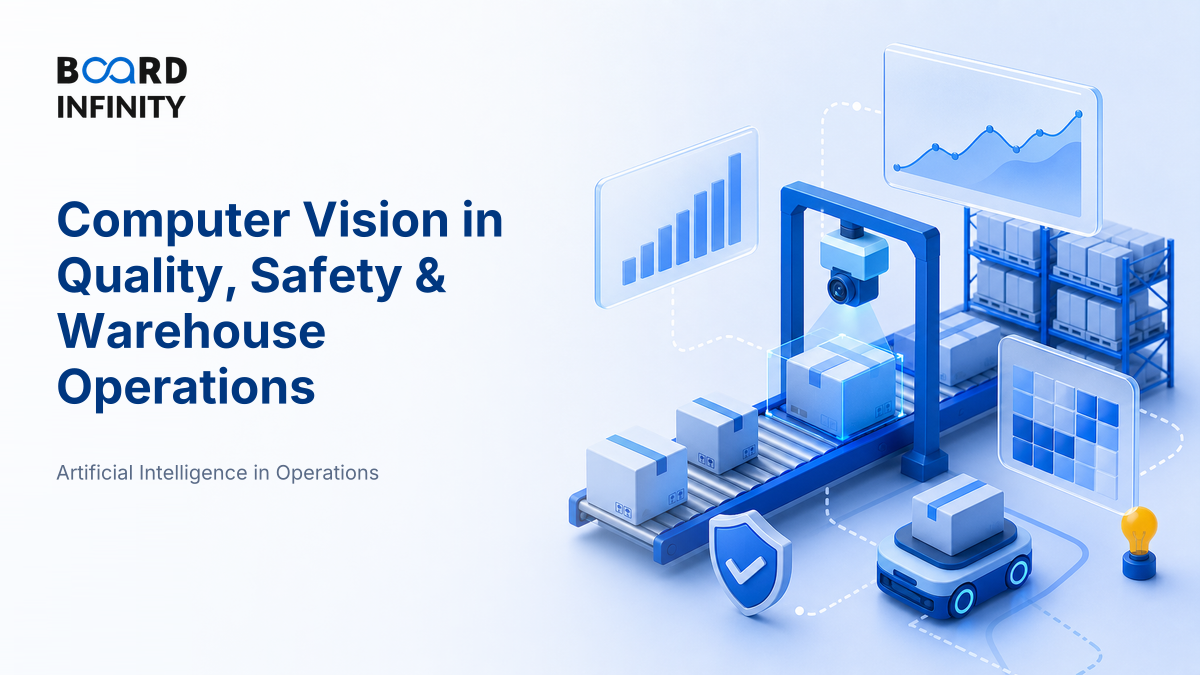
A worker once had to notice a hairline crack, a missing label, or a blocked emergency aisle before the line moved on. Now a camera can flag the same exception in milliseconds - but only if the business has taught the system what matters, what action to trigger, and when a human must override it.
- Computer vision uses images or video to detect, classify, measure, or track objects and events.
- In operations, it creates value in three places: quality inspection, safety monitoring, and warehouse visibility.
- The operating model is simple: sense - decide - act - learn. A camera without a decision rule is just CCTV.
- The best use cases are high-volume, visually observable, costly-to-miss, and linked to a clear action.
- Do not sell “accuracy” alone. Track recall, precision, false alerts, defect escapes, cycle-time impact, and system uptime.
- The hard part is not the model demo - it is lighting, camera placement, label quality, edge cases, SOP integration, and operator trust.
- In interviews, answer with the use case, data, model, workflow integration, KPIs, risks, and scale-up plan.
Big Picture: Cameras Become Control Points
Computer vision matters in operations because it moves visual judgment from occasional human inspection to continuous, measurable control. The business question is not “Can AI see it?” The better question is: when the system sees something, what operational decision changes?
Core Explanation: Where Computer Vision Fits in Operations
Computer vision is best understood as a layer between the physical world and the operating system. It watches products, people, equipment, pallets, shelves, and aisles - then converts visual evidence into a decision signal.
In an operations role, you will usually see three application families.
For manufacturing lines, the inspection station must fit the takt and workstation design. If the camera adds delay at a bottleneck, the “AI solution” becomes an operations problem - connect it to line balancing and workstation design.
The Two-Sided Comparison: Human Inspection vs Computer Vision
Human visual inspection is flexible, contextual, and excellent for ambiguous judgment. Computer vision is tireless, consistent, and strong where the same visual pattern repeats thousands of times. The right answer is often not replacement - it is human-in-the-loop automation.
Use-Case Selection: Do Not Automate the Wrong Visual Problem
The best computer vision use cases sit at the intersection of high operational pain and high visual observability. A defect that cannot be seen clearly cannot be automated reliably. A visible defect that does not change any decision is not worth automating.
In warehouses, the computer vision signal often becomes useful only when connected to replenishment, slotting, or inventory policy. That is why it naturally pairs with using AI for inventory optimisation and replenishment.
Implementation Framework: From Camera to Control
A clean interview answer should show that you understand the full deployment chain, not just the AI model.
Key Metrics: What to Track After Deployment
Computer vision projects fail when teams celebrate a lab accuracy score and ignore shop-floor performance. Use these six metrics to evaluate whether the system is operationally useful.
Definitions
Computer vision is “a field of AI that enables computers and systems to derive meaningful information from digital images, videos and other visual inputs” (IBM, Computer Vision).
Object detection identifies what object is present and where it is located in an image.
Image classification assigns an image to a category, such as pass, fail, damaged, or compliant.
Segmentation marks the exact pixels belonging to an object, defect, spill, crack, or zone.
Optical character recognition reads printed or handwritten text, such as labels, batch codes, expiry dates, or invoice identifiers.
Case Study: IKEA and Autonomous Inventory Drones
IKEA used autonomous drones for stock-taking, showing how computer vision can convert warehouse aisles into live inventory evidence instead of periodic manual counts.
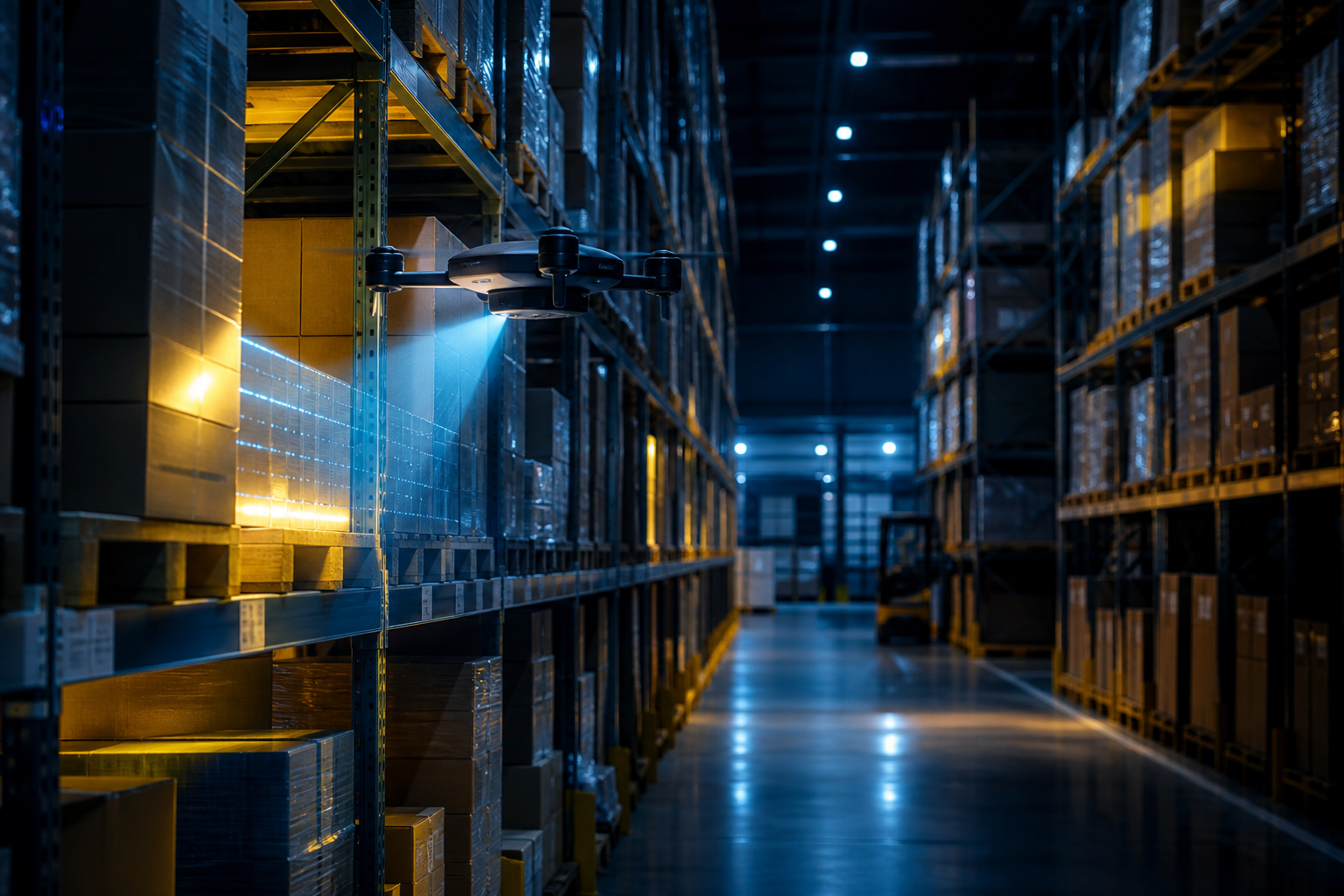
Situation. Large-format retail and warehouse environments hold thousands of SKUs across high racks, backrooms, and selling areas. Manual stock checks are repetitive, time-consuming, and can expose workers to unnecessary ladder or lift activity.
The move. IKEA reported the use of drones for stock-taking in stores, with autonomous flights scanning storage locations and supporting inventory visibility (IKEA Global Newsroom, 2022). The primary driver was not “drones are cool”; it was the conversion of shelf and rack images into reliable inventory signals. Supporting drivers included off-hours scanning, integration with inventory processes, and shifting people from repetitive counting to exception handling.
Outcome and lesson. The lesson for operations is clear: computer vision wins when it reduces manual search, improves stock visibility, and makes the next action obvious. For an Indian retailer or dark-store network during festival peaks, the same logic applies - cameras or drones are useful only if they handle messy realities such as mixed packaging, dust, glare, crowded aisles, damaged barcodes, and rapid SKU churn.
How AI Changes Computer Vision in Quality, Safety & Warehouse Operations
AI is changing computer vision in 2026 in three concrete ways.
First, vision foundation models reduce pilot effort. Earlier projects needed many labelled examples for every defect type. Newer multimodal and vision models can start with fewer examples, understand broader visual patterns, and help teams test whether a use case is feasible before investing heavily.
Second, computer vision is becoming multimodal. A safety system can combine camera feed, shift logs, equipment movement, and SOP text. Instead of only saying “person detected,” it can help generate an incident summary, identify the violated safety zone, and route the case to the right supervisor.
Third, edge AI is becoming important. Factories and warehouses often need low latency, data privacy, and resilience when connectivity drops. Running inference near the camera or gateway can reduce delay and keep critical inspection running even when cloud connectivity is imperfect.
Use NotebookLM or ChatGPT like a placement-prep analyst: upload a company annual report, a warehouse SOP, and your notes on this topic, then ask: “Identify three computer vision use cases, the operational KPI for each, likely implementation risks, and one interviewer question.”
Interview Relevance
“Suppose a warehouse wants to use computer vision to improve quality, safety, and inventory accuracy. How would you evaluate and implement it?”
If you mention “accuracy,” immediately add “but for operations I would prioritise recall for critical misses and precision to avoid alert fatigue.” That one sentence sounds like a practitioner.
Common Mistake
The biggest mistake is treating computer vision as a camera-and-model project. That costs candidates because it ignores the actual operating system - who acts on the alert, how fast, with what authority, and how feedback improves the model. Fix: always connect the visual signal to a decision, KPI, owner, and feedback loop.