
Consumer Goods Distribution Across Millions of Outlets
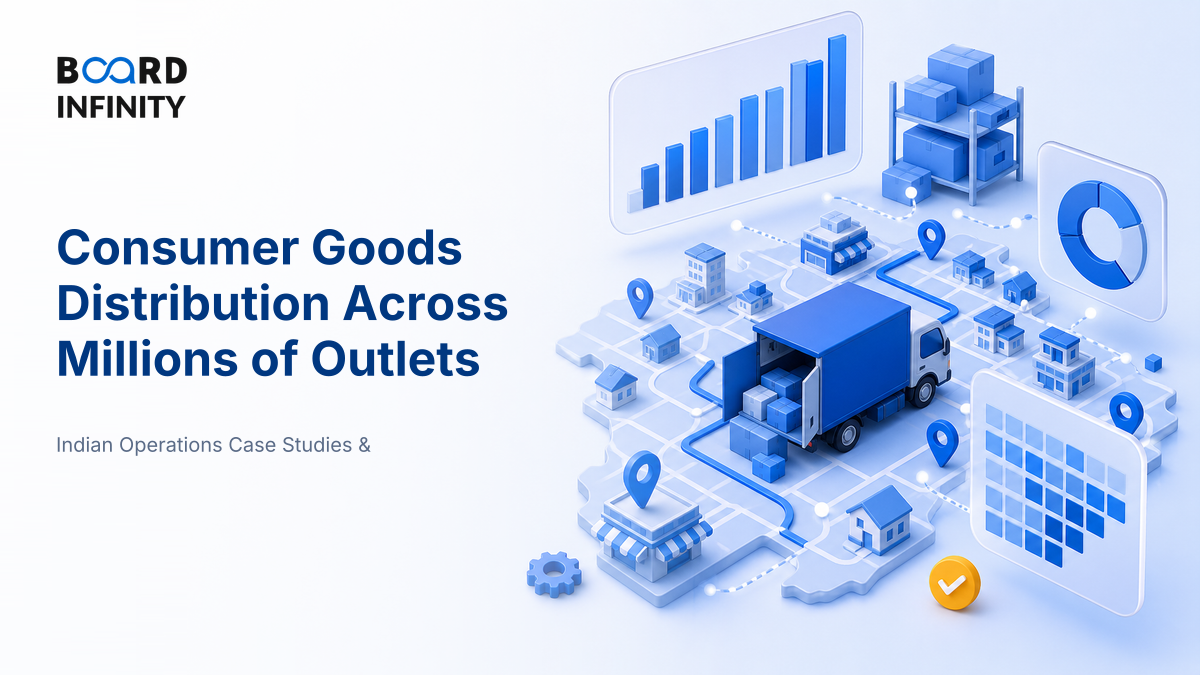
How does a ₹10 shampoo sachet reach a tiny kirana in a lane where a truck cannot enter - and still make money for the company, distributor and shopkeeper? That is the real puzzle of consumer goods distribution: not “shipping products”, but designing a machine that can serve millions of small orders without breaking economics.
- FMCG distribution is a reach-and-replenishment system: it converts national demand into outlet-level availability.
- The core chain is company - carrying point - distributor - wholesaler - retailer - shopper, with bypasses for modern trade, e-commerce and key accounts.
- The three big design choices are coverage - which outlets to serve, service model - direct or indirect, and economics - margin, credit, order size and cost-to-serve.
- Great distribution is judged by numeric reach, weighted reach, fill rate, on-shelf availability, outlet productivity and distributor ROI.
- The hidden trade-off is simple: more reach usually raises cost and complexity; the answer is segmented service, not serving every outlet in the same way.
- For interviews, explain distribution as a segmented operating model, not a list of intermediaries.
Big Picture: Distribution Is the Last-Mile Operating System of FMCG
In consumer goods, marketing creates preference, but distribution converts that preference into sales. If the product is not available at the outlet at the moment of purchase, the brand’s advertising, pricing and packaging are wasted.
The system works only when three flows move together: physical flow of goods, information flow of orders and stock, and money flow through margins, credit and collections. Weak candidates talk only about trucks. Strong candidates talk about all three flows.
Core Explanation: How Consumer Goods Reach Millions of Outlets
1. The Channel Architecture
A typical FMCG company does not sell directly to every shop. It uses a layered network because India’s retail universe is fragmented, geographically dispersed and order sizes are small.
The distribution manager’s job is not to “add more outlets” blindly. It is to decide which outlet deserves which service model. A high-potential supermarket, a rural wholesaler and a small paan shop cannot be served with the same frequency, credit terms or assortment.
2. The Coverage vs Cost-to-Serve Matrix
The most interview-useful lens is a 2x2 matrix. Put each outlet or territory on two axes: sales potential and cost-to-serve. This immediately tells you where direct reach is worth it and where an indirect route is smarter.
Direct Focus outlets justify sales visits, merchandising and tighter service levels because they influence large sales. Indirect Cover outlets are better served through wholesalers, stockists or van routes. Selective Reach needs discipline - not every outlet is worth chasing. Scale Engine is the dream: high volume with low service cost, often achieved in dense urban beats.
3. The Beat Plan: The Daily Engine of Distribution
A beat is the route and schedule followed by a salesperson or distributor salesman to visit a fixed set of outlets. In FMCG, beat discipline matters because it converts planning into actual shelf availability.
Good beat design considers outlet density, order value, delivery capacity, credit risk, merchandising need and route travel time. If a salesman spends half the day travelling or collecting overdue payments, coverage suffers.
4. Key Metrics: What to Track in FMCG Distribution
There is no universal “good” benchmark for every FMCG category because biscuits, hair oil, beverages and household cleaners have different velocity, margins and shelf life. In interviews, quote the formula, then say a good number is one that beats the company’s SLA, improves versus territory baseline and does not destroy distributor ROI.
5. Worked Example: Fill Rate and Lost Sales
Suppose a distributor receives retailer orders for 10,000 units of a fast-moving SKU in a week, but can dispatch only 8,700 units because depot stock is short.
Fill rate = 8,700 ÷ 10,000 = 87%. The unfulfilled 1,300 units are not just “pending orders”. In FMCG, they can become lost sales because the retailer may stock a competitor and the shopper may switch brands.
This is why distribution planning connects directly with inventory policy. If you want to go deeper into the replenishment side, revise setting inventory policy for a multi-product business after this topic.
Definitions You Can Say in One Breath
- Distribution: The system that makes products available to target customers at the right outlet, time, quantity and cost.
- Route-to-market: The chosen path through which a company reaches, sells to and services customers profitably.
- Numeric distribution: The percentage of relevant outlets where the product is available.
- Weighted distribution: Distribution measured by the sales importance of outlets carrying the product.
- Cost-to-serve: The total cost of selling, delivering, collecting and supporting a customer or outlet.
Case Study: Tata Consumer Products and the Power of Integrated Distribution
Tata Consumer Products shows how a consumer goods company can improve route-to-market by integrating categories, channels and execution discipline under one distribution engine.
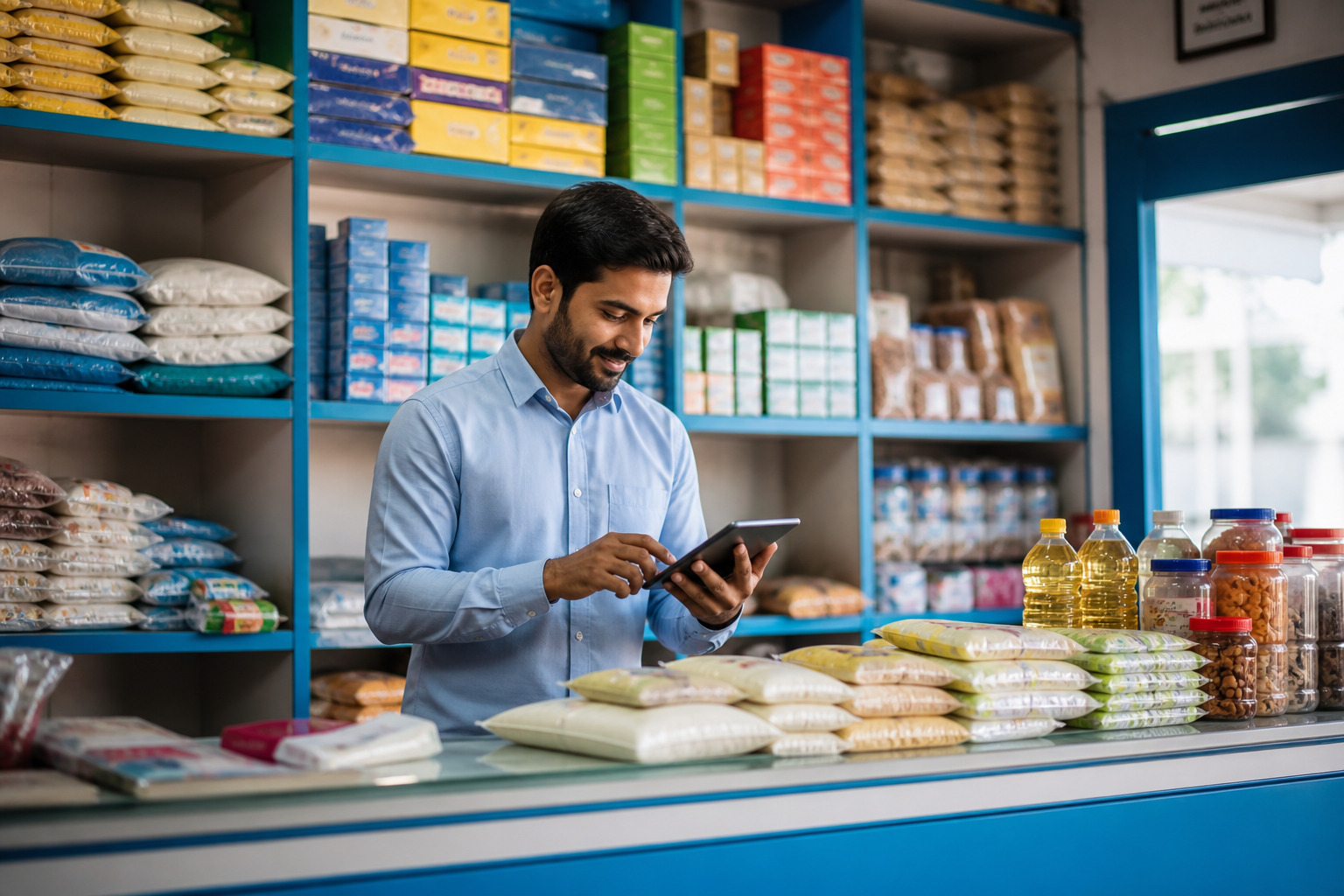
Situation: Tata Consumer Products operates across everyday categories such as tea, salt, pulses, spices and packaged foods. These categories often go to the same retailer, but historically food and beverage businesses can carry different sales teams, distributor relationships and channel rhythms.
The move: The strategic logic was to build a more integrated FMCG engine - common customer access, sharper assortment planning, better cross-selling across categories and stronger execution in general trade, modern trade and emerging digital channels. The primary driver was portfolio integration through a shared route-to-market. Supporting drivers included stronger brand trust, wider everyday-use categories, distributor leverage, data visibility and the ability to place multiple SKUs through the same retail relationship.
The lesson: In consumer goods distribution, scale does not come only from adding more outlets. It comes from increasing the value of each outlet relationship - more categories, better service, better visibility and better economics for the distributor.
The strategic “so what” is simple: a strong FMCG distribution network is not a pipeline; it is a platform. Once built, it can carry more categories, improve launch speed and make each sales call more valuable.
How AI Changes Consumer Goods Distribution Across Millions of Outlets
AI is making FMCG distribution more granular. The old model grouped outlets by territory and salesman judgment. The new model can predict demand, service priority and risk at outlet-SKU level.
The risk is over-automation. AI recommendations are only useful when distributor master data, outlet tagging, SKU hierarchy and sales returns are clean. Bad outlet data creates confident but wrong replenishment decisions. For a deeper operations view, connect this topic with using AI for inventory optimisation and replenishment.
Use NotebookLM or ChatGPT like a distribution analyst: upload a company annual report, extract mentions of distribution, rural reach, digital sales tools and channel mix, then ask: “Build a route-to-market diagnosis using coverage, service model, cost-to-serve, distributor ROI and availability.”
Interview Relevance
“You are launching a new packaged food brand in India. How would you design distribution across millions of kirana and modern trade outlets?”
Use the phrase “segmented route-to-market”. It signals that you understand the economic trade-off between reach and service cost.
Common Mistake
The mistake that costs candidates is saying “increase distribution” as if more outlets automatically means more sales. It can also mean higher credit risk, lower outlet productivity, stock-outs in priority stores and poor distributor ROI. One-line fix: always say which outlets you will add, how you will service them and how the economics will work.