
Electronics Assembly and Localisation in India
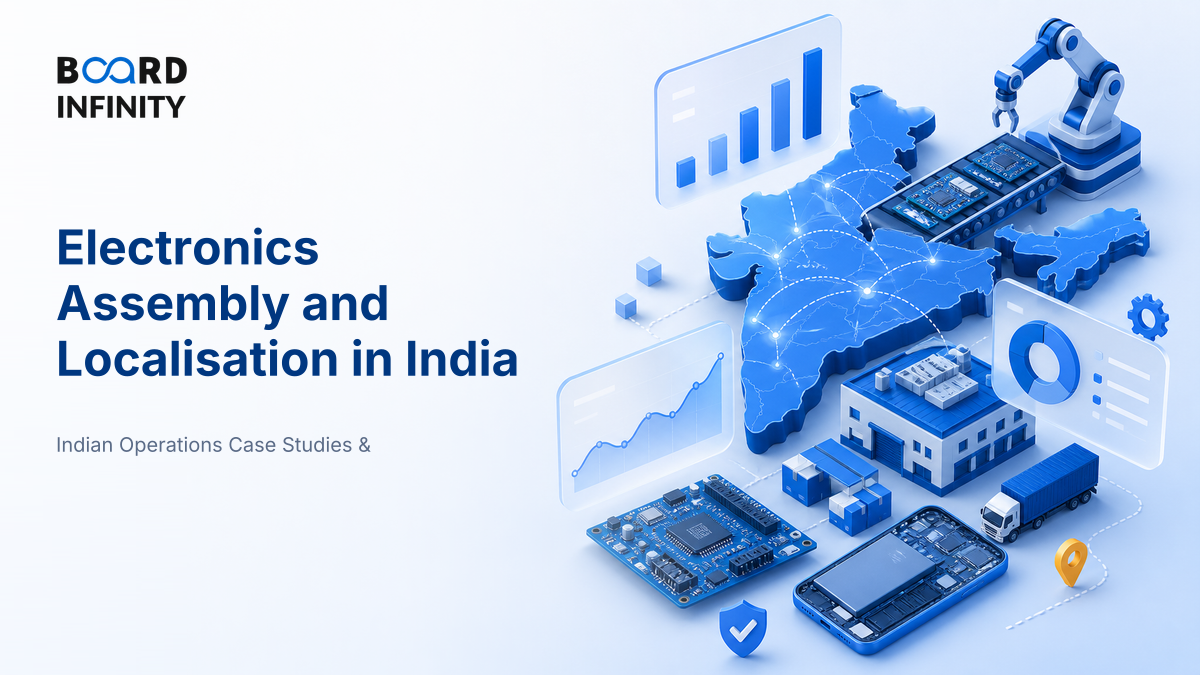
Walk into a smartphone assembly line near Chennai or Noida and the word “local” becomes complicated fast. Operators may be fitting the phone, testing the camera and packing the box in India, while the display, chipset, memory and camera module may still arrive from a global supplier network.
That tension is the heart of electronics localisation: India is not just trying to assemble more devices, but to capture more value inside the bill of materials, process know-how, tooling, suppliers and engineering.
- Electronics assembly means converting components, printed circuit boards, modules and enclosures into a tested finished product.
- Localisation is deeper than “made in India”; it asks how much value, capability and supplier base are actually domestic.
- The localisation ladder usually moves from import of finished goods to final assembly, PCB assembly, local modules, local components and finally design-led manufacturing.
- High localisation is hard because semiconductors, displays, sensors and precision components have scale, technology and IP barriers.
- Interview answers should separate assembly depth, BOM localisation, process capability, supplier ecosystem and policy economics.
- The key trap: saying “assembled in India” equals “fully local”. It does not.
- Track localisation with local value addition, import dependency, first-pass yield, supplier defect PPM, line utilisation and cash conversion cycle.
Big Picture: Localisation Is a Ladder, Not a Switch
The cleanest way to understand electronics localisation is to see it as a staged migration of value. India may begin by reducing finished-goods imports, but the real prize is moving capability upstream into boards, modules, components, tooling and design.
For MBA interviews, this funnel matters because every stage changes the business case. Final assembly creates jobs and scale. PCB assembly builds process capability. Local modules reduce lead time and working capital. Design-led manufacturing creates defensibility because the firm is no longer only a low-cost assembler.
Core Explanation: What Electronics Localisation Really Means
Electronics assembly is the operational process of taking a bill of materials - chips, passive components, PCB, display, battery, connectors, casing, software image and packaging - and turning it into a tested product.
Localisation asks a sharper question: of the value inside that product, how much is created domestically through Indian factories, suppliers, labour, tooling, testing, engineering and intellectual property?
This distinction is crucial in electronics because a product can look locally manufactured while most of its economic value sits in imported components. A smartphone, hearable, laptop or smart meter has many value layers: semiconductor content, display, battery, printed circuit board assembly, enclosure, firmware, testing and final packing.
The Five Layers of Electronics Localisation
The economic logic is simple: localisation is attractive when domestic production can match imported alternatives on landed cost, quality, reliability and scale. If one of these fails, brands may assemble locally but continue importing critical parts.
Localisation Decisions: What Should Be Made Locally First?
Not every component should be localised at once. A sensible sourcing team asks: which parts are high-value, feasible, quality-sensitive, bulky, lead-time heavy or strategically risky? This is where procurement thinking becomes central. If you need a sharper sourcing foundation, revise supplier selection, scorecards and evaluation before attempting a localisation case.
Localise first candidates are often bulky, repetitive, quality-controllable and logistics-sensitive items such as packaging, plastic parts, cables, chargers, enclosures or selected PCB assembly steps. Watch list items may include advanced semiconductors or displays - attractive but not instantly feasible because they require deep scale, technology and capital.
The best answers also mention the hidden constraint: localising a part is not only a supplier search. It needs tooling, process validation, testing standards, warranty confidence, dual sourcing, inventory policy and commercial terms. For the cost side of this logic, should-cost analysis and cost breakdown modelling is the natural next topic.
Definitions You Can Say in One Breath
- Electronics assembly: Converting electronic components, boards, modules and enclosures into tested finished products.
- Localisation: Increasing domestic value in materials, processes, suppliers and engineering while meeting cost, quality and scale requirements.
- EMS: Electronics manufacturing services, where a specialist manufacturer assembles or tests products for brand owners.
- ODM: Original design manufacturing, where the manufacturer contributes product design along with manufacturing capability.
- Bill of materials: The structured list of parts, quantities and specifications required to build one product.
Metrics That Show Whether Localisation Is Working
Do not evaluate localisation only by counting factories. In interviews, use operating metrics that connect the localisation story to cost, quality, risk and cash.
Worked Example: Calculating Local Value Addition
Assume a locally assembled smart device has an ex-factory product value of ₹10,000. Imported display, chipset, memory, camera and battery inputs cost ₹6,200. Domestic labour, PCB assembly service, casing, packaging, testing and margin account for the remaining ₹3,800.
Local value addition = (₹10,000 - ₹6,200) / ₹10,000 = 38%.
Now the interview insight: if the firm later localises the battery pack and charger and reduces imported inputs to ₹5,500, local value addition becomes 45%. But if first-pass yield falls or warranty claims rise, the apparent localisation gain may be destroyed by quality cost. That is why localisation must be evaluated through cost, quality and reliability together.
Real Example: Why India Uses Policy to Pull the Ecosystem
India's electronics policy push uses incentives to encourage domestic manufacturing scale. The Ministry of Electronics and Information Technology describes the Production Linked Incentive scheme for large-scale electronics manufacturing as a framework linked to eligible incremental sales and investment (MeitY).
The strategic logic is not “subsidy equals success.” The primary driver is scale creation: higher committed volumes make it more rational for EMS firms, tooling vendors, component suppliers and logistics partners to invest. Supporting drivers include policy visibility, customer commitments, supplier development, quality systems and export access.
Case Study - Dixon Technologies: Moving from Assembly Scale to Deeper Capability
Dixon Technologies shows how an Indian EMS player can build relevance by combining assembly scale, customer relationships and selective backward integration.
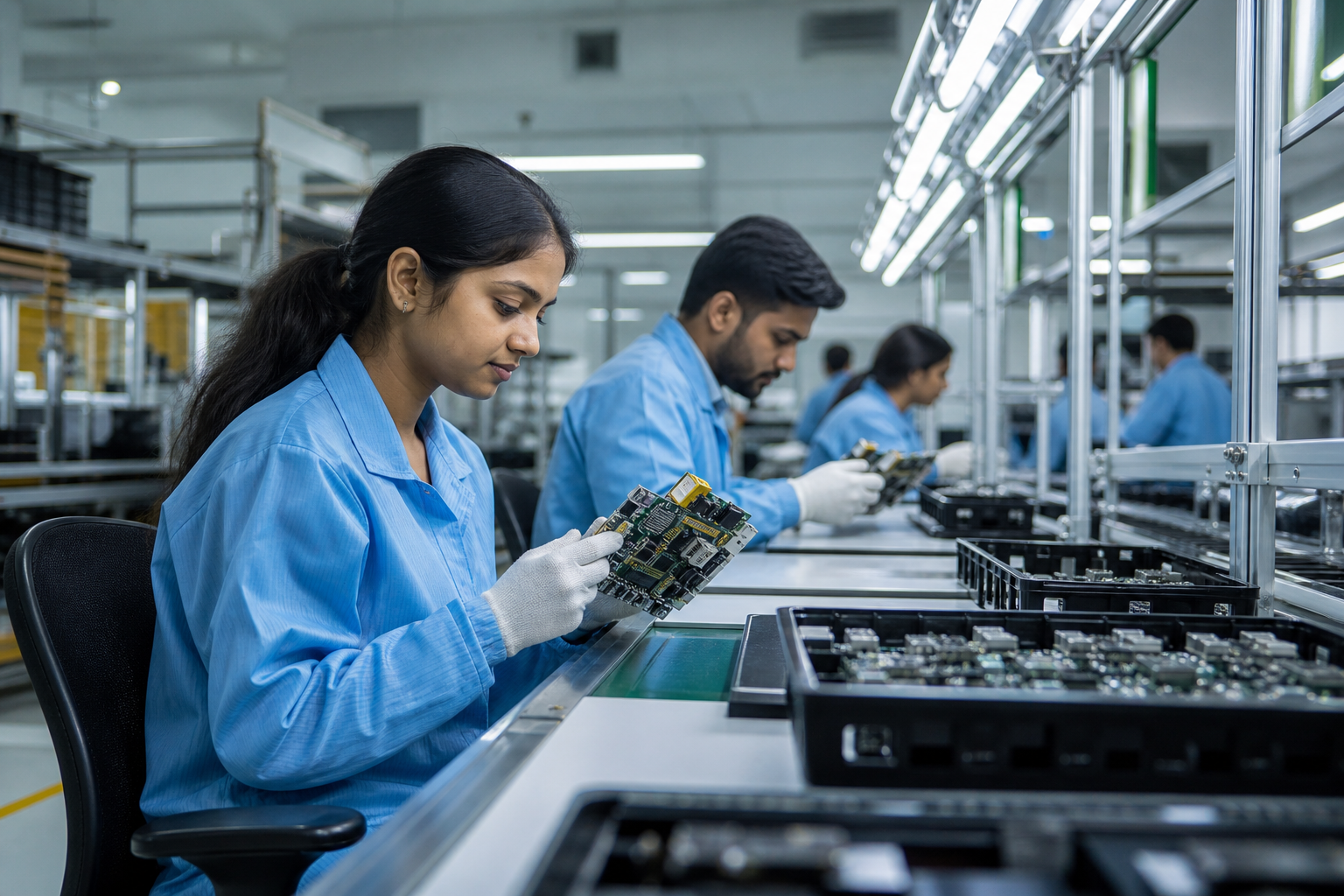
Situation. Global and Indian electronics brands want Indian manufacturing capacity, but they also need predictable quality, fast ramp-up, confidentiality and cost discipline. For many brands, building their own full manufacturing base for every category is slow and capital-intensive.
The move. Dixon Technologies positioned itself as an electronics manufacturing services player across categories such as consumer electronics, home appliances, lighting, mobile phones and security systems, as described on its corporate website (Dixon Technologies). Instead of being only a labour-arbitrage assembler, the company has built category-specific manufacturing capabilities, customer relationships and process know-how.
The result or lesson. The Dixon story teaches a useful localisation principle: EMS capability compounds when volumes, process depth and customer trust reinforce each other. The primary driver is execution at manufacturing scale. Supporting drivers are category diversification, quality systems, supplier qualification, working-capital management and the ability to serve multiple brands without becoming dependent on only one product cycle.
The case also shows the limit of shallow localisation. If a firm only screws together imported kits, the advantage is fragile. If it builds repeatable processes, local supplier development, testing capability and customer confidence, it becomes part of the manufacturing ecosystem.
How AI Changes Electronics Assembly and Localisation in India
1. AI improves inspection and yield management. Computer vision systems can detect soldering defects, missing components, cosmetic damage and assembly errors faster than manual sampling. The managerial point is not “replace inspectors”; it is to reduce escapes, rework and warranty risk as volumes scale.
2. AI makes localisation decisions more analytical. Teams can combine BOM data, supplier quotes, defect history, lead times, customs exposure and demand forecasts to identify which parts should be localised first. This connects closely with using AI for inventory optimisation and replenishment, because localisation changes lead times, reorder points and buffer-stock logic.
3. AI supports line balancing and changeover planning. Electronics plants often run multiple SKUs, variants and customers on shared lines. AI-assisted scheduling can recommend sequence changes, manpower allocation and bottleneck relief, but managers still need the basics of line balancing and workstation design.
Use NotebookLM: upload a company annual report, a product BOM template and this lesson, then ask, “Which components should this electronics manufacturer localise first, and what risks should I mention in an interview?” Cross-check every generated claim before using it.
Interview Relevance
“A consumer electronics brand wants to increase localisation in India. How would you decide what to localise first, and how would you measure success?”
A strong answer sounds operational, not patriotic. Use phrases like “BOM-level value capture,” “supplier qualification,” “yield stability” and “landed-cost comparison.”
Common Mistake
Mistake: Equating “assembled in India” with “fully local manufacturing.” This costs candidates because it ignores imported BOM value, component technology, supplier capability and quality risk. Fix: always answer in layers - assembly, PCB, modules, components, tooling, suppliers and design.