
Railway Freight and Public Logistics at Scale
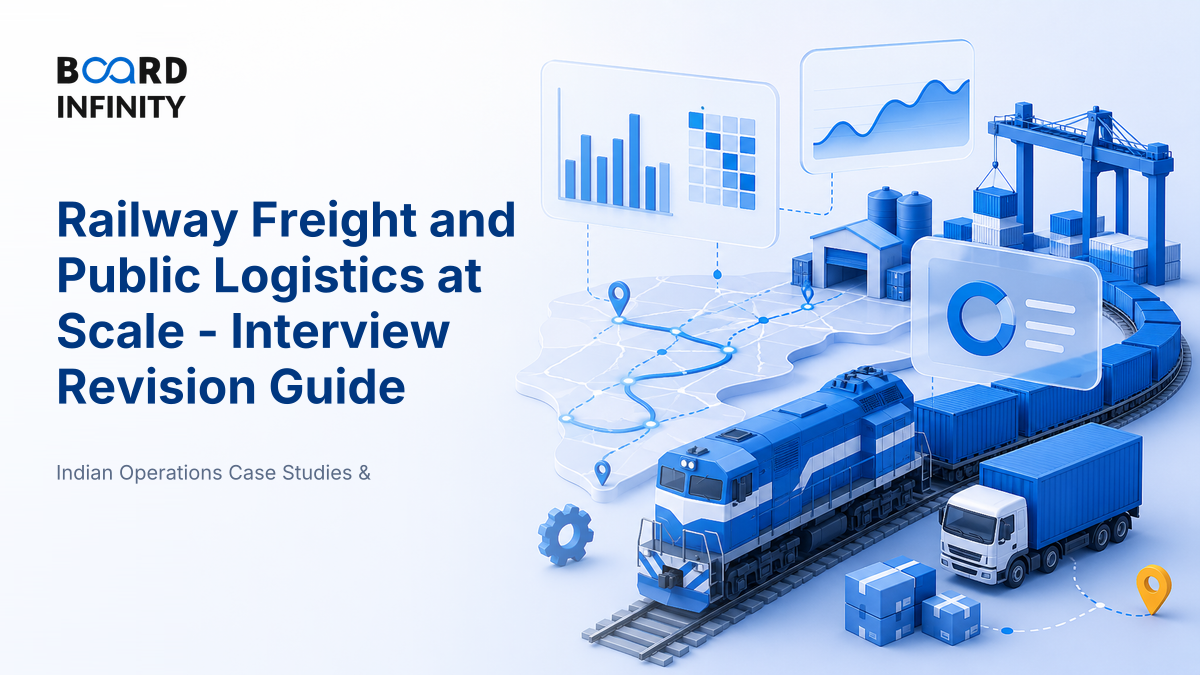
A truck stuck outside a crowded city warehouse carries one company’s urgency. A freight train pulling containers across states carries an economy’s operating system - steel, coal, cement, foodgrain, parcels, exports and imports moving on shared infrastructure.
Railway freight looks slow only if you see the train. The real game is terminals, timetables, wagon availability, policy, digital visibility and whether thousands of shippers can trust the network enough to plan around it.
- Rail freight wins when volume is dense, repeatable, heavy and less time-fragile than express road freight.
- Public logistics at scale means shared infrastructure - rail lines, terminals, ports, digital platforms and rules - that many shippers can use reliably.
- The core trade-off is line-haul efficiency versus end-to-end flexibility: rail is powerful between nodes, but first-mile, terminal and last-mile design decide the final outcome.
- A good answer should cover lane economics, capacity, reliability, terminal dwell, digital visibility and governance, not just “rail is cheaper”.
- Track rail logistics using cost per tonne-km, wagon turnaround, terminal dwell, rake utilisation, OTIF and damage rate.
- AI improves rail freight through demand forecasting, predictive ETA, yard optimisation, anomaly detection and network simulation.
- The biggest interview trap is treating railway freight as a transport mode only. It is a network operations problem.
Big Picture: Rail Freight Is a Network, Not a Train
Rail freight creates value only when five pieces work together: the shipper’s origin, first-mile access, rail line-haul, terminal operations and last-mile delivery. A train may be the most visible asset, but the bottleneck is often outside the train.
The Core Explanation: How Railway Freight Creates Scale
Railway freight is the movement of goods by rail wagons or containers over a scheduled rail network, strongest on dense and repeatable lanes.
Public logistics at scale is logistics infrastructure and coordination built for many users - not one company’s private network. It includes rail corridors, inland container depots, ports, customs interfaces, digital freight systems, warehousing clusters and policy rules.
The management idea is simple: rail converts asset scale into unit-cost advantage. But scale works only when demand is pooled, terminals are efficient and service reliability is high enough for firms to redesign their supply chains around rail.
Use this mental model in any answer:
Where Rail Freight Fits Best
Rail is not automatically superior. It is superior in the right operating envelope: heavy or containerised loads, longer distances, predictable flows and lower need for door-to-door spontaneity.
The Public Logistics Stack
Public logistics succeeds when physical assets, operating rules and information systems reinforce each other. If any layer is weak, users stay with fragmented private arrangements even if the public network is cheaper on paper.
India’s policy direction reflects this stack: the National Logistics Policy launched in 2022 emphasised integrated logistics, digital systems and lower logistics friction (Press Information Bureau, 2022). The practical lesson for managers is that freight reform is not only a railway project - it is a coordination project across ministries, ports, states, shippers, warehouses and technology platforms.
Key Metrics to Track in Railway Freight
Rail freight performance must be measured end-to-end. A cheap rail rate means little if the wagon is unavailable, the container waits at a terminal, or the customer receives uncertain ETAs.
A Small Worked Example: When Rail Beats Road
Use numbers carefully in interviews. The right comparison is not “rail rate versus truck rate”; it is total landed logistics cost.
In this illustrative case, rail saves ₹4.6 lakh, or about 19.5%, but only because the lane has enough volume and the extra handling is controlled. If terminal dwell rises or the shipment is urgent, the answer may flip.
Definitions to Say Clearly
- Rail freight: movement of goods by rail wagons or containers over a scheduled rail network.
- Public logistics: shared logistics infrastructure and rules that multiple shippers use to move goods at scale.
- Multimodal logistics: coordinated movement using two or more transport modes, such as rail plus road.
- Terminal dwell: time cargo spends inside a terminal between arrival and exit.
- Line-haul: the main long-distance transport leg between two logistics nodes.
Case Study: CONCOR and the Inland Rail Logistics Play
Container Corporation of India, or CONCOR, shows how rail freight becomes a public logistics platform when terminals, container handling and rail movement are integrated for many customers.
The situation: Indian exporters, importers and domestic shippers often need to connect factories far from the coast to ports and consumption centres. A pure road model gives flexibility, but it also fragments capacity and creates congestion around ports and highways.
The move: CONCOR built its role around rail-linked container logistics, inland container depots, container freight stations and multimodal services, as described on the company’s official business presence (CONCOR). Its core advantage is not simply “owning containers” or “using trains”; it is connecting port gateways, inland terminals, rail movement and customer-facing logistics into one repeatable system.
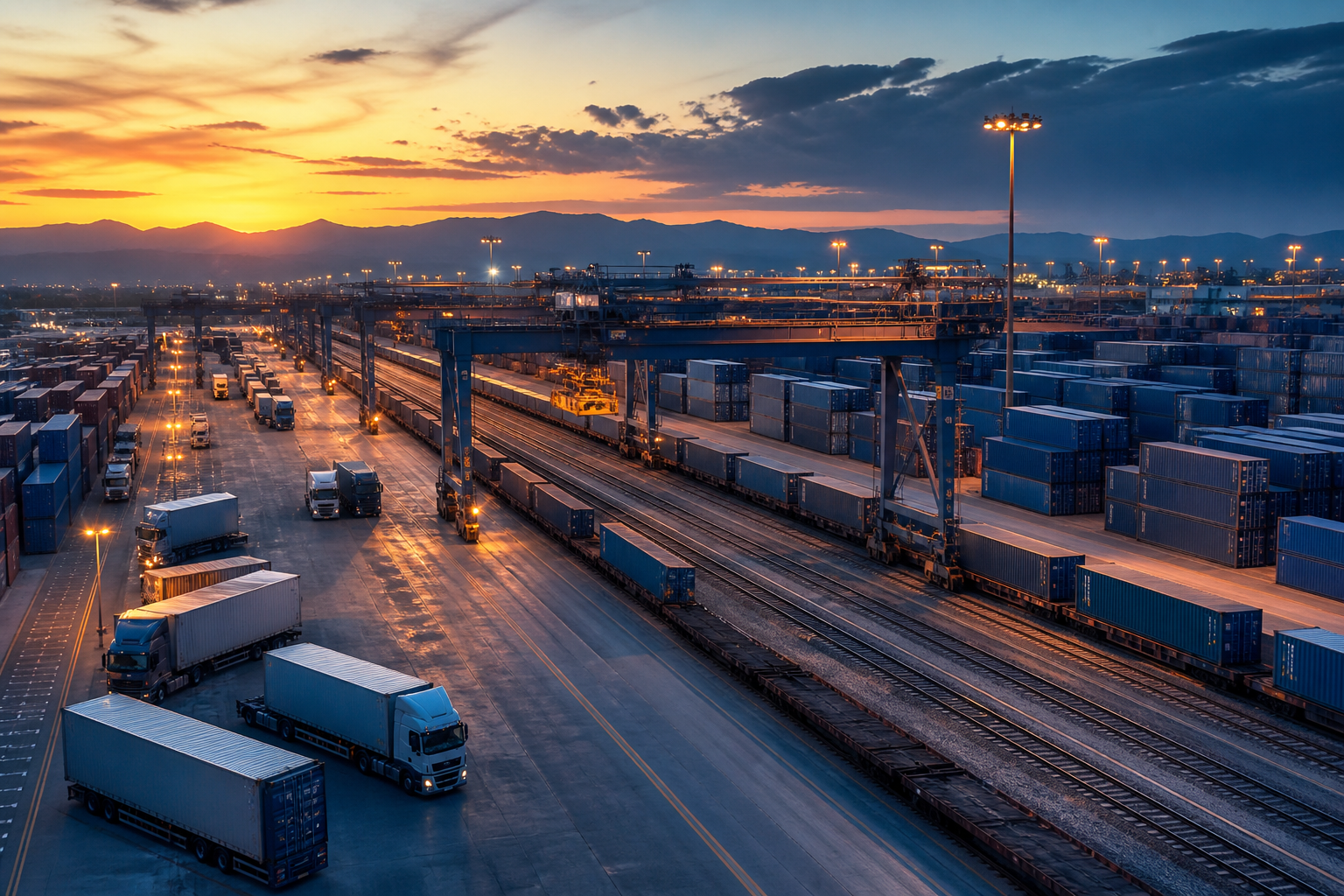
The result or lesson: the primary driver is network integration - rail-linked terminals convert scattered demand into trainload volumes. Supporting drivers include containerisation, inland depot access, port connectivity, customer documentation support and last-mile partnerships. The strategic “so what” is powerful: public logistics platforms win when they reduce coordination cost for many firms at once.
How AI Changes Railway Freight and Public Logistics at Scale
AI does not replace rail infrastructure. It makes the infrastructure more predictable, better utilised and easier for shippers to trust.
A practical student workflow: load a railway logistics company annual report, the National Logistics Policy note and one customer industry profile into NotebookLM. Ask it to generate: “What are the top five operational bottlenecks in this freight network, what KPIs would reveal them, and what interview questions could be asked?” If the case involves stock movement and replenishment, revise using AI for inventory optimisation and replenishment next, because rail reliability directly affects safety stock and reorder planning.
Interview Relevance
“A cement company wants to shift 40% of long-distance movement from road to rail. How would you evaluate whether this is operationally and financially sensible?”
When you mention SLAs, be specific: service windows, damage liability, dwell responsibility, documentation cut-offs and escalation rules. For a deeper procurement angle, revise contracting, incentives and service agreements.
Common Mistake
The mistake: saying “rail is cheaper than road” and stopping there. That loses marks because it ignores first-mile, last-mile, dwell, reliability, customer promise and working-capital impact. The fix: always answer with total landed cost plus service reliability plus network constraints.