
Dairy Cooperative Cold Chain at National Scale
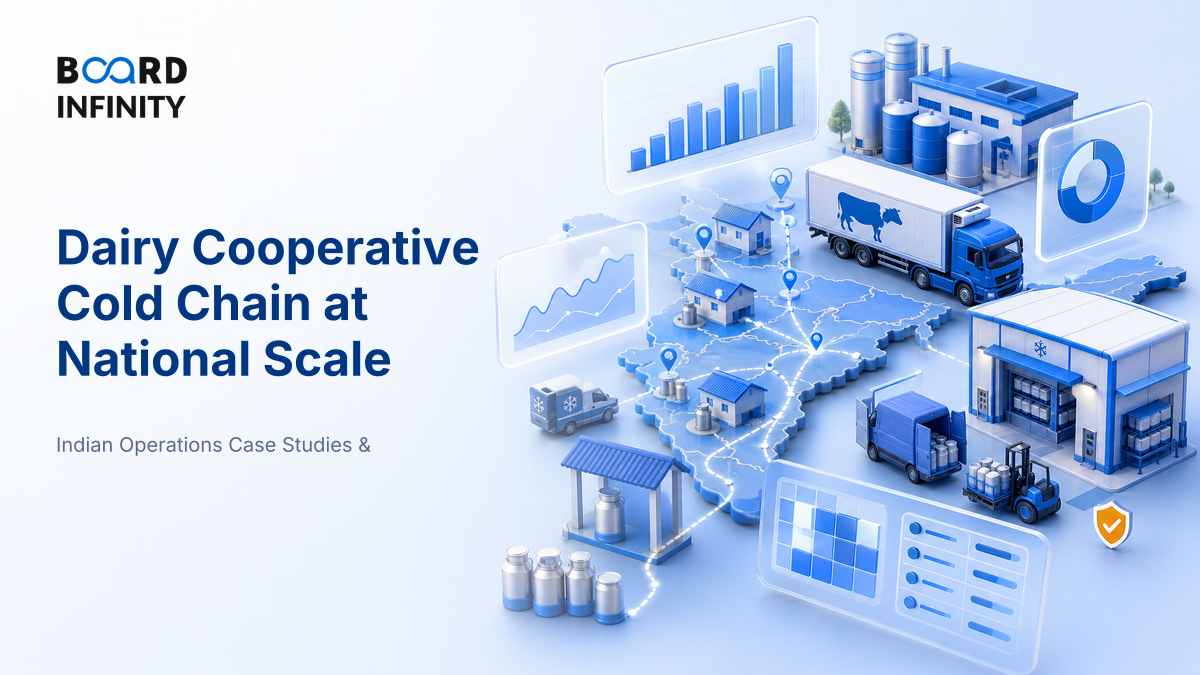
At dawn, a small farmer can pour a few litres of milk into a village collection can, and by evening that milk may be sitting in a branded pouch in a city refrigerator. The miracle is not one freezer truck - it is thousands of tiny, time-sensitive handoffs that must behave like one national machine.
- A dairy cooperative cold chain converts scattered, perishable milk supply into reliable, quality-assured consumer products.
- The core design is: village collection - chilling - bulk transport - processing - cold distribution - retail.
- The hardest problem is not temperature alone; it is balancing perishability, farmer incentives, route density, quality testing and demand volatility.
- Cooperatives scale because ownership and procurement are local, while processing, branding and distribution are pooled.
- Key metrics: chilling latency, temperature excursion rate, route fill, plant yield, OTIF and spoilage or returns.
- The interview trap is treating cold chain as a capex problem. The better answer treats it as a flow, governance and trust problem.
Big Picture - The National Cold Chain as a Time-to-Temperature System
Fresh milk is unforgiving: quality begins to deteriorate if collection, chilling, testing and movement are not tightly controlled. A national dairy cooperative cold chain is therefore best understood as a time-to-temperature operating system - every node exists to reduce delay, protect quality and aggregate volume economically.
Core Explanation - What Actually Makes Dairy Cooperative Cold Chains Work
A dairy cooperative cold chain has two jobs that often fight each other. First, it must procure milk from dispersed producers, many of whom supply small daily quantities. Second, it must serve urban and semi-urban consumers who expect safe, fresh and affordable products every morning.
The cooperative structure solves this by separating the system into three linked layers:
The Six Operating Blocks
For interviews, explain the cold chain through six operating blocks. This is sharper than saying “they use refrigerated trucks.”
The classic Indian insight is that procurement and demand cannot be designed separately. NDDB’s Operation Flood overview is a useful reference for the idea that dairy development required linking producer institutions, processing infrastructure and urban markets - not merely building plants.
The Cold Chain Trade-Offs Managers Must Balance
At national scale, every improvement creates a trade-off. More chilling centres reduce collection time but increase fixed cost. Larger tankers improve transport economics but need route density. More SKUs improve margins but complicate forecasting and returns. This is why dairy cold chain decisions feel like supply chain strategy, not warehouse administration.
Fresh pouch milk is the discipline-builder: daily procurement, daily processing and daily distribution. Longer-life products such as ghee or milk powder can absorb surplus, while short-shelf products need tight demand planning. For SKU-level stocking logic, revise setting inventory policy for a multi-product business after this topic.
Metrics That Prove the Cold Chain Is Working
If you are asked how to evaluate a dairy cold chain, do not answer with intentions like “quality should be good.” Use measurable operating controls.
A Quick Worked Example - Route Fill vs Freshness
Assume a milk route uses an 8,000-litre insulated tanker. On Monday it collects 6,400 litres.
Route fill = 6,400 / 8,000 = 80%. That looks efficient. But if the route takes too long and increases chilling latency, the system may still be poor. In dairy, a “good” cost metric becomes dangerous if it quietly damages freshness.
Never optimise one cold-chain metric alone. The right dashboard pairs cost efficiency with temperature, time, quality and service.
Definitions You Should Be Able to Say Cleanly
- Cold chain: A temperature-controlled network that preserves product safety and quality from procurement to consumption.
- Dairy cooperative: A member-owned dairy institution that aggregates farmer milk and shares value through procurement, processing and marketing.
- Milk shed: The defined geographic supply area from which a dairy plant or union procures milk.
- Bulk milk cooler: A village or cluster-level chilling asset that cools collected milk before bulk transport.
- OTIF: On-time-in-full delivery, measuring whether orders reached customers at the promised time and quantity.
The broader cooperative idea is rooted in member ownership and shared economic benefit; the International Cooperative Alliance’s cooperative identity is the standard reference for that principle.
Case Study - Nandini: A State-Scale Cooperative Cold Chain
Karnataka Milk Federation’s Nandini shows how a dairy cooperative can combine farmer procurement, processing scale and a trusted consumer brand.
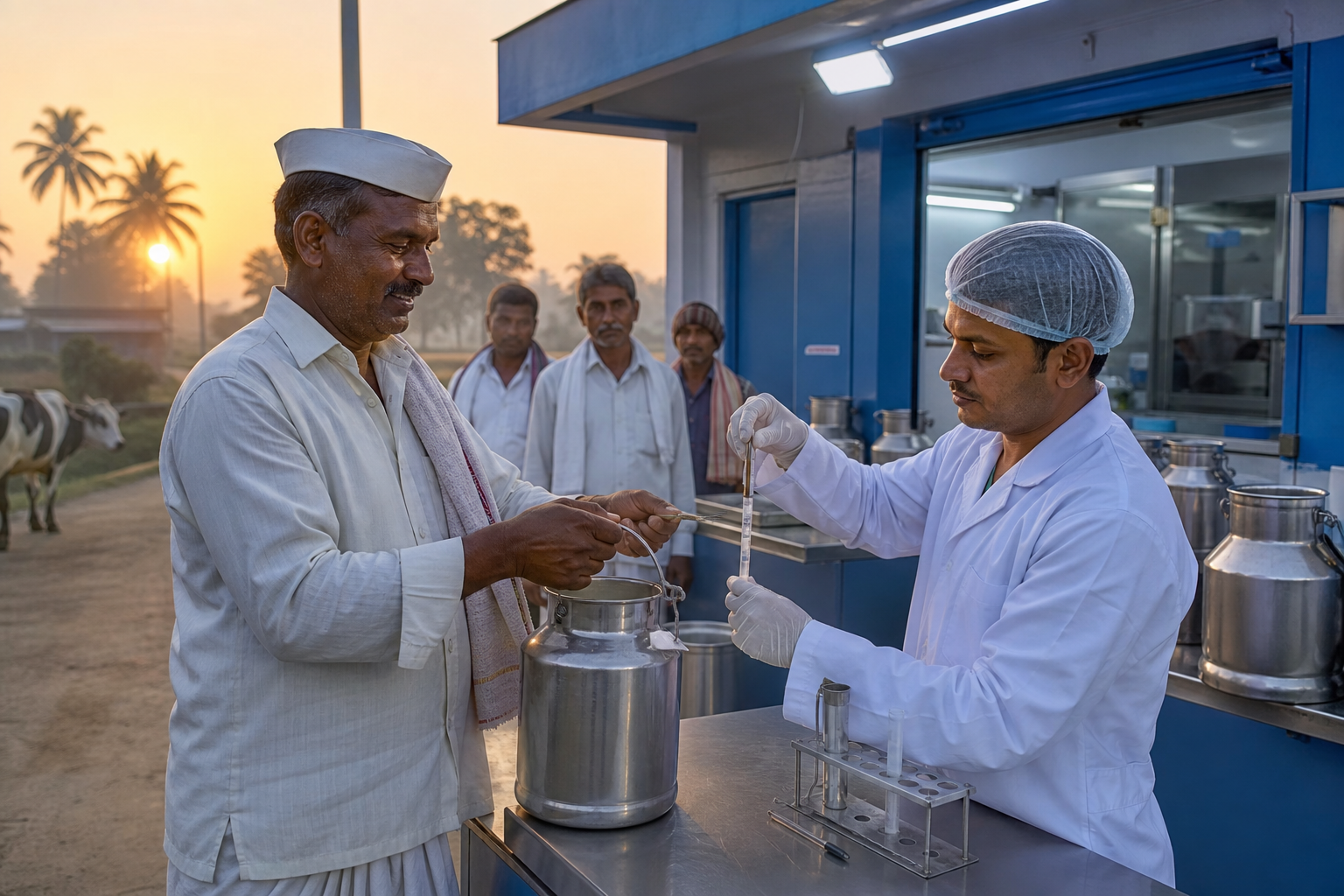
Karnataka Milk Federation markets dairy products under the Nandini brand. What makes the case useful for interviews is not just brand visibility. It is the operating architecture behind the brand: local procurement, cooperative institutions, chilling infrastructure, processing plants and a retail-facing product portfolio.
Situation: Dairy supply is naturally fragmented. Many farmers supply small quantities, while consumers expect fresh milk and dairy products every day. Without aggregation, testing and chilling, the system becomes unreliable for both sides.
The move: Nandini’s model connects village-level procurement to union-level processing and federation-level brand distribution. The primary driver is dense, cooperative procurement linked to local processing capacity. Supporting drivers include farmer payment systems, quality testing, chilling and transport discipline, a recognizable consumer brand, and a product mix that includes both fresh and longer-shelf-life dairy products.
The lesson: A dairy cooperative cold chain wins when the upstream and downstream reinforce each other. Farmers supply regularly because collection and payment are trusted; consumers buy repeatedly because the brand delivers freshness and availability. Cold assets matter, but the real advantage is the governed flow from milk shed to market.
How AI Changes Dairy Cooperative Cold Chain at National Scale
AI does not replace the cooperative model. It makes the weak spots visible earlier: demand swings, route delays, equipment failures, quality anomalies and inventory mismatches.
A practical student workflow: load a dairy company annual report, a route map summary and your notes into NotebookLM, then ask it to generate “five likely interview questions on dairy cold-chain bottlenecks and the metrics to diagnose them.” For the analytics side, revise using AI for inventory optimisation and replenishment.
Interview Relevance
“Suppose you are consulting a dairy cooperative that wants to expand from one state to national scale. How would you design its cold chain?”
Use the phrase “time-to-temperature” in your answer. It signals that you understand dairy cold chain as a perishable-flow system, not just a refrigerated logistics network.
Common Mistake
The biggest mistake is saying, “Build more cold storage and refrigerated trucks.” That misses the real problem: scattered supply, short shelf life, quality trust, farmer incentives and demand matching. One-line fix: frame the answer as a governed flow from milk shed to market, measured by time, temperature, quality, cost and service.