
Business Models: How Electronics & Semiconductors Players Make Money
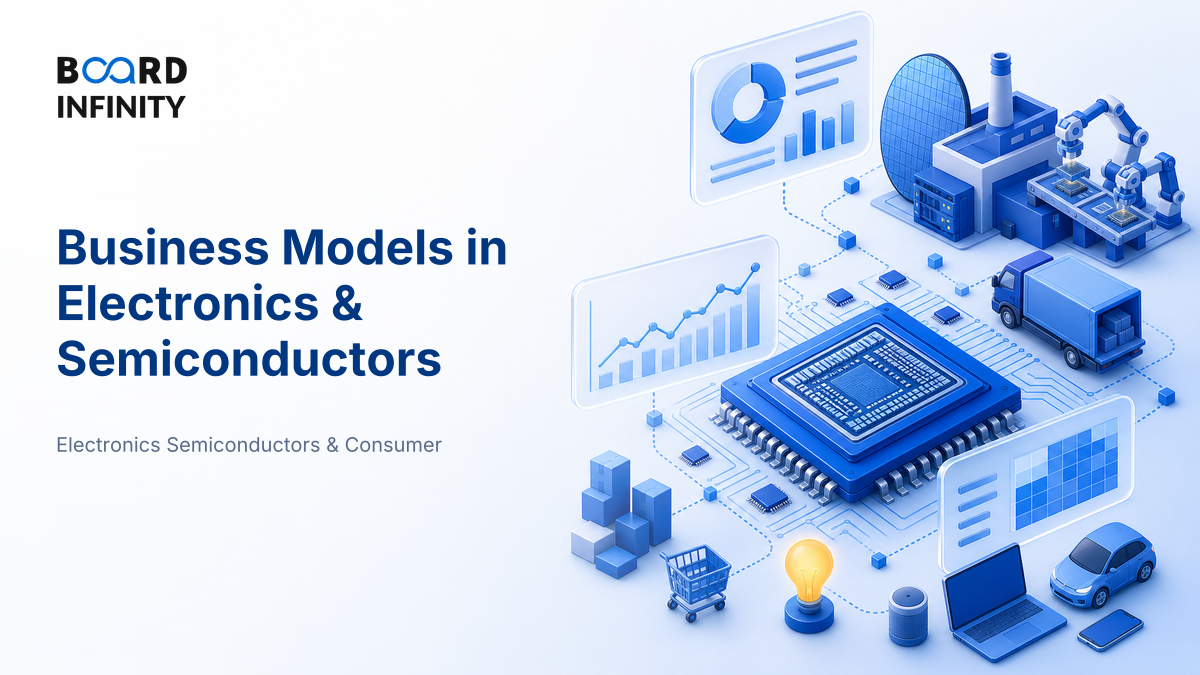
The biggest misconception in electronics is that every company “makes chips.” In reality, the profit in a smartphone or data-centre server is split across design IP, chip architecture, wafer fabrication, packaging, assembly, software, distribution and after-sales - and each layer earns in a very different way.
- Business model = how a company creates, delivers and captures value; in electronics, the “where” in the value chain often matters more than the product name.
- Fabless companies design chips and outsource manufacturing; they earn from differentiated design and scale.
- Foundries manufacture wafers for others; they earn from capacity, process technology, yield and high utilisation.
- EMS/ODM players assemble or design-and-manufacture electronics for brands; they earn thin but scalable conversion margins.
- Equipment and materials suppliers sell the tools and inputs that make fabs possible; their moat is precision, reliability and switching cost.
- OSAT players package and test chips after fabrication; they earn from specialised back-end capability and volume efficiency.
- Interview shortcut: always answer by naming the value-chain layer, revenue formula, cost structure, moat and key metric.
Big Picture: Follow the Value Stack, Not the Device
A laptop, EV, router or smartphone looks like one product to a consumer. To the industry, it is a stack of specialised business models. The same “chip boom” can benefit a design company, a foundry, an equipment maker and an EMS assembler - but for completely different reasons.
The Core Idea: Money Pools Follow Scarcity
In electronics and semiconductors, companies make money from the scarce capability they control. For one player, scarcity may be chip design talent. For another, it is advanced manufacturing capacity. For an EMS player, it is the ability to produce at scale, meet quality standards and manage working capital without delays.
This is why revenue can look similar while economics differ sharply. A fabless chip company may have high gross margins but heavy R&D risk. A foundry may have massive fixed assets and cyclicality. An EMS player may have large revenue but lower margins because much of the bill of materials passes through the company.
The Six Money-Making Archetypes
Use these six archetypes to decode almost any company in the sector. The names matter because they tell you the revenue formula, margin profile, investment need and risk.
If you want a repeatable way to extract these business models from filings, revise Reading an Annual Report for Sector Insight before analysing any listed electronics company.
Where Each Model Sits on Asset Intensity and Customer Control
The fastest way to compare business models is to ask two questions: does the company own expensive production assets, and does it control the end customer?
A smartphone brand may outsource much of manufacturing but control pricing, distribution and consumer trust. A foundry may never sell to consumers but still hold enormous bargaining power because its process capability is scarce. An EMS player may handle large volumes but capture mainly conversion margin unless it moves into design, components or deeper customer integration.
Dixon Technologies is an Indian electronics manufacturing services player across categories such as consumer electronics, home appliances, lighting, mobile phones and security systems, as described on the Dixon Technologies company site. The strategic point: an EMS player can scale fast with India manufacturing demand, but it usually captures manufacturing economics rather than full brand economics.
Revenue Logic: The Formula Behind Each Model
When an interviewer asks “how does this company make money?”, do not stop at “it sells electronics.” Give the revenue equation.
Worked Example: Why Revenue Size Can Mislead
Here is a simplified, hypothetical comparison. The point is not the exact margin; the point is how the business model changes the economics.
The EMS company may report large revenue because components pass through its books. The fabless company may report lower unit volumes but retain more value if its chip design is differentiated. That is why sector analysis must compare margins, asset intensity and risk - not revenue alone.
Key Metrics to Track
Do not use one metric for the whole sector. A foundry, EMS player and fabless designer are different machines. These six metrics help you compare them without mixing up business models.
For cross-sector comparisons, the same logic of matching metrics to business models applies; the framework in Comparing Two Sectors on the Same Framework is a useful next layer.
Definitions You Can Say in One Breath
Alexander Osterwalder and Yves Pigneur define a business model as “the rationale of how an organization creates, delivers, and captures value” in Business Model Generation.
Dixon Technologies: The EMS Model in an Indian Manufacturing Story
Dixon shows how an Indian electronics manufacturer can build a scalable business by serving brands rather than becoming a consumer electronics brand itself.
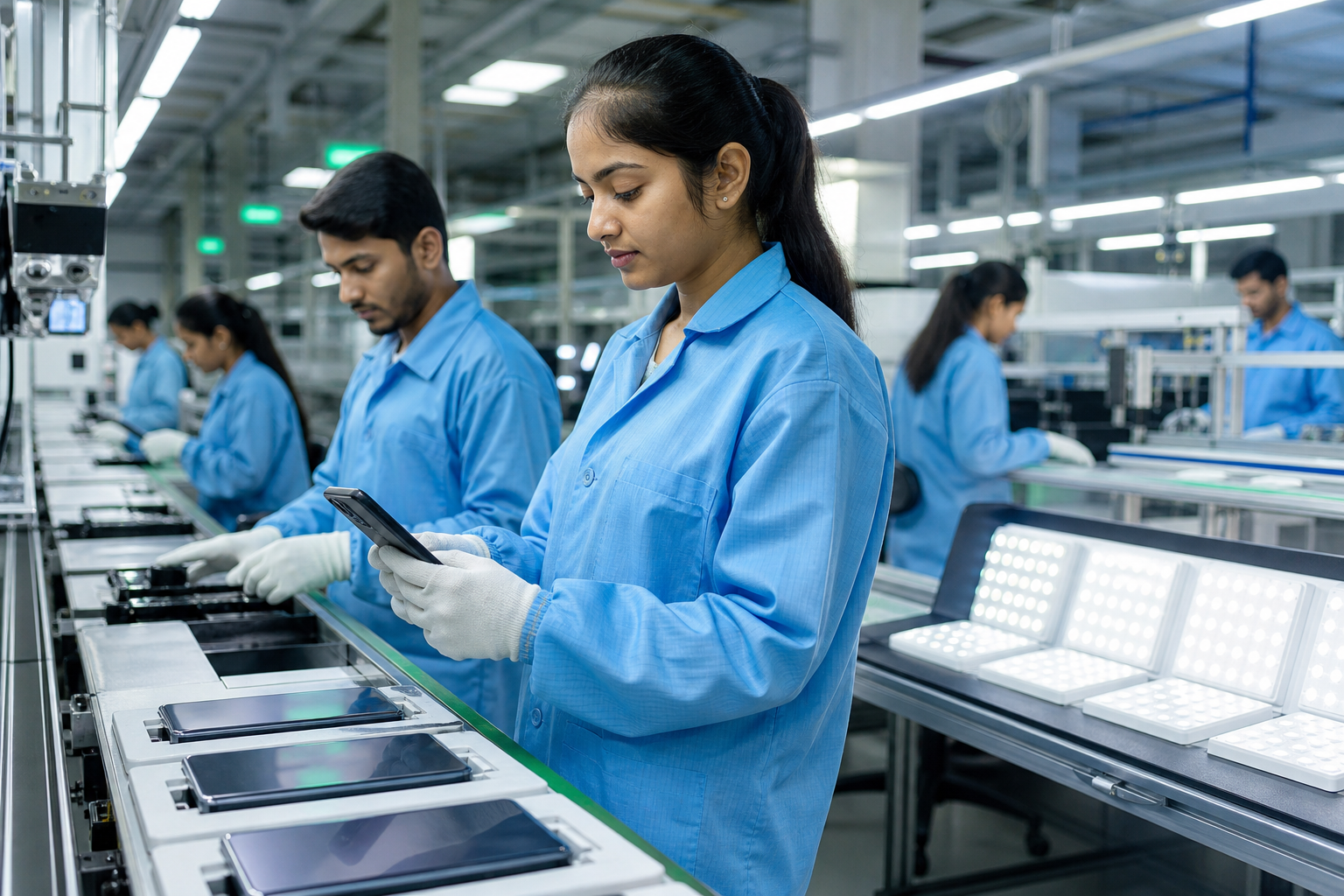
Situation: India’s electronics demand, import-substitution focus and manufacturing incentives created a strong pull for local electronics production. Brands wanted domestic manufacturing capacity, quality systems and supply-chain execution without necessarily building every factory themselves. The India Semiconductor Mission also reflects the broader national push to deepen India’s electronics and semiconductor ecosystem.
The move: Dixon positioned itself as an EMS/ODM partner across multiple categories rather than betting everything on one branded product. Its model depends chiefly on scale manufacturing execution - supported by customer relationships, category diversification, operational quality, procurement discipline and selective movement into design-led or higher-value activities.
The lesson: Dixon’s business is not “make gadgets and sell them to consumers.” It is “help brands manufacture efficiently in India.” That means the revenue pool can be large, but the value capture depends on conversion margin, asset turns, customer concentration, working capital and the ability to move up the value chain.
So what: The case proves that in electronics, the winning model is not always consumer branding. A behind-the-scenes manufacturer can create significant value if it owns execution capability that brands urgently need.
How AI Changes Electronics & Semiconductor Business Models
1. AI raises chip demand and changes product mix. AI workloads increase demand for accelerators, memory, networking chips, advanced packaging and power-efficient edge devices. This benefits not just chip designers, but also foundries, OSAT players, equipment suppliers and EMS firms that support AI hardware supply chains.
2. AI enters chip design and manufacturing operations. Semiconductor companies use AI-assisted EDA workflows, design-space exploration, defect detection, yield analysis and predictive maintenance. The business impact is faster iteration, better yield learning and lower downtime - all directly linked to the flywheel shown earlier.
3. AI improves electronics supply-chain decisions. EMS and ODM players can use machine-learning forecasts to plan components, capacity, quality checks and supplier risk. The constraint is data quality: a wrong demand forecast can create either excess inventory or missed production commitments.
Load a company annual report and this lesson into NotebookLM, then ask: “Classify this company into fabless, foundry, IDM, OSAT, EMS/ODM or equipment. Extract its revenue formula, top three cost drivers, key risks and two interview questions.” Then verify every extracted fact against the original report, not the AI summary. For safer prompting habits, revise Using AI to Research a Sector Without Importing Its Errors.
Interview Relevance
“Explain how different players in the electronics and semiconductor value chain make money. How is a fabless company different from a foundry or an EMS player?”
If you get a company name you do not know, do not panic. Ask: “Does it design, manufacture wafers, package chips, assemble devices, sell tools, or own the consumer brand?” That one question usually reveals the model.
Common Mistake
The costly mistake is saying “semiconductor companies make money by manufacturing chips.” That ignores fabless design, IP licensing, foundry capacity, OSAT packaging, EMS assembly and equipment businesses. Fix: always name the value-chain layer first, then the revenue formula.