
How AI Is Reshaping Operations Work and Roles
What happens when a factory supervisor stops walking the floor to find problems because the system flags the bottleneck before the shift begins? That is the real shift: AI is not just adding dashboards to operations - it is changing what work is, who decides, and what managers are responsible for.
- AI in operations means using data, models and automation to sense, predict, decide and improve physical or service processes.
- The biggest shift is from manual monitoring to exception management: humans focus on unusual, risky or high-value decisions.
- AI changes roles in four zones: task automation, decision support, autonomous control and human judgement.
- Operations managers still own trade-offs: cost, service, quality, risk and resilience.
- Good AI operations projects are measured against baseline KPIs such as forecast accuracy, cycle time, first-pass yield, service level and cost per unit.
- The winning candidate answer is not “AI will replace people”; it is “AI reallocates work and raises the skill bar.”
Big Picture: AI Moves Operations from Chasing Problems to Managing Exceptions
Traditional operations work is heavy on coordination: check the plan, chase material, update Excel, call the warehouse, escalate delays. AI changes that by creating a live loop where systems sense what is happening, predict what may happen next, recommend action and learn from outcomes. If you need the base definition of the function itself, quickly revise what operations management actually does.
The Core Shift: From Doing the Work to Designing the Work System
AI reshapes operations work at three levels.
At the task level, repetitive work is automated: invoice matching, production scheduling suggestions, replenishment alerts, quality inspection images, route sequencing and customer service triage.
At the decision level, AI becomes a recommendation engine. It can predict a stockout, identify a likely machine failure, estimate demand by location or flag an unusual supplier delay. The human role becomes validating the recommendation, checking constraints and choosing the trade-off.
At the role level, operations managers spend less time collecting information and more time asking better questions: Is the model using the right data? What is the cost of a wrong recommendation? Which decisions can be automated and which need human review?
The Four AI Role Zones in Operations
Use this simple 2x2 in interviews. It prevents you from giving a vague “AI will improve efficiency” answer and helps you speak like an operations leader.
The best operations roles are moving toward the top-right and bottom-right zones. Managers will not just operate processes; they will design guardrails, escalation rules and KPI systems.
What Exactly Changes in Day-to-Day Operations Work?
This matters because operations is already a flow of goods, money and information. AI mainly attacks the information layer first, then improves the physical flow. For that foundation, revise the supply chain as a flow of goods, money and information.
How to Measure Whether AI Actually Improved Operations
Do not judge AI by the number of tools installed. Judge it by baseline-to-after improvement in operational KPIs. Because industries differ, “good” means better than the pre-AI baseline without damaging another critical KPI.
The interviewer will like this because it shows you understand the core operations trade-off: improvement in one metric is not enough if it breaks cost, quality or service. If that trade-off is weak in your basics, revise cost, service and the core operations trade-off.
Definitions You Can Say Cleanly
- AI in operations: Using data-driven models to predict, recommend or automate decisions across operational processes.
- Operations role: A job responsible for planning, controlling or improving the flow of work, materials, capacity and service.
- Human-in-the-loop: A design where AI supports a decision but a human reviews, approves or overrides it.
- Exception management: Focusing human attention on cases that violate rules, thresholds, risk limits or expected patterns.
- Decision guardrail: A boundary that defines when AI may act automatically and when escalation is mandatory.
Case Study: Schneider Electric and the AI-Augmented Factory Role
Schneider Electric shows how AI reshapes manufacturing work from manual monitoring to digitally assisted performance management.
Situation: A modern electrical equipment and automation business runs complex manufacturing operations: multiple product variants, quality expectations, energy usage, maintenance needs and customer delivery commitments. In such an environment, the old model - supervisors depending mainly on experience, manual reports and end-of-shift reviews - is too slow.
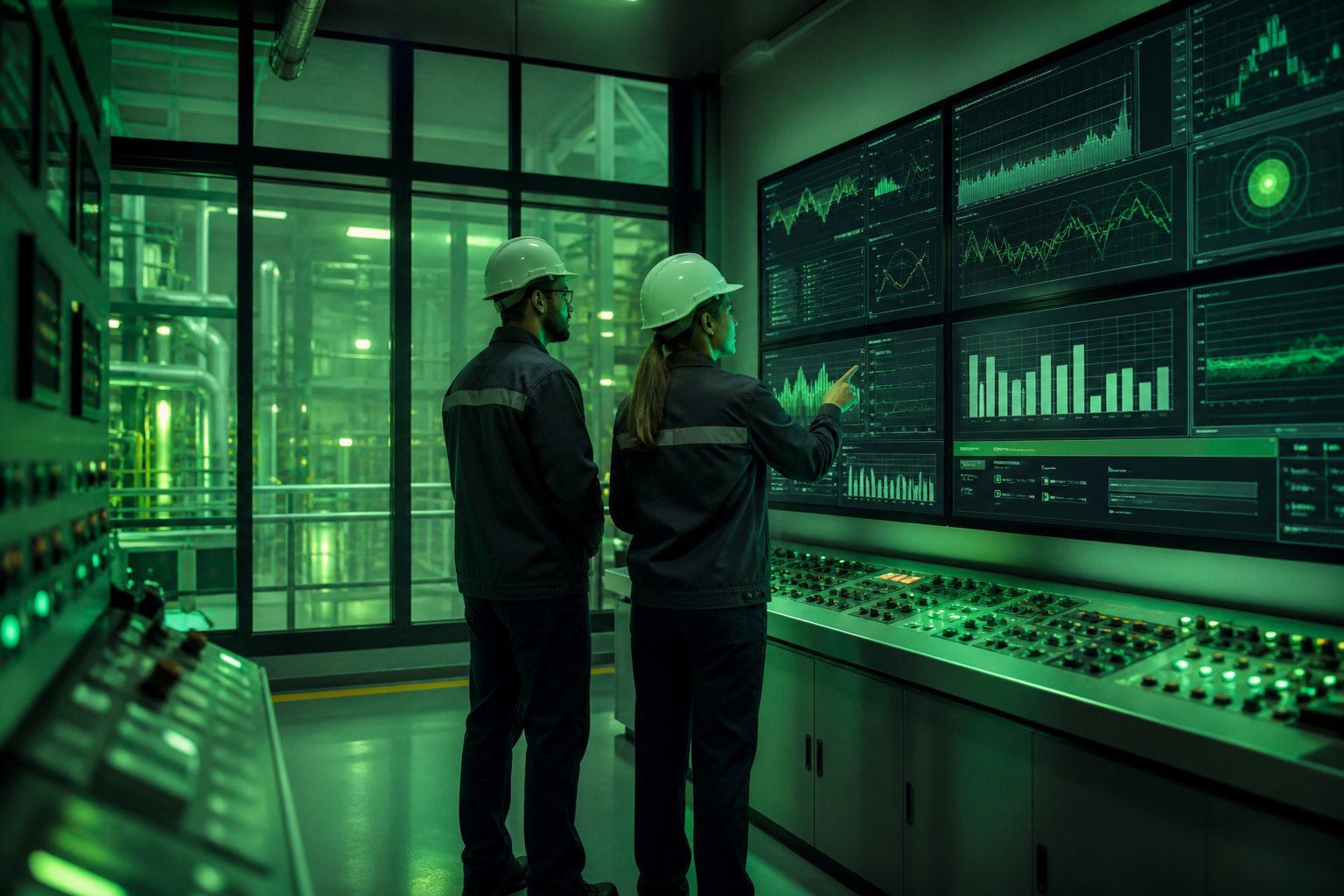
The move: Schneider Electric’s smart-factory approach uses connected machines, production data, digital dashboards and analytics to make operations more visible. The important point is not “robots replaced workers.” The deeper change is role redesign. A maintenance engineer moves from reacting to breakdowns toward interpreting condition alerts. A production supervisor moves from collecting status updates toward prioritising bottlenecks. A plant manager moves from reviewing lagging reports toward managing live trade-offs between output, energy, quality and service.
Outcome or lesson: The primary driver is real-time operational visibility. The supporting drivers are connected equipment, standardised digital workflows, analytics-led maintenance, and disciplined escalation routines. AI creates value only because these elements work together. Without reliable data, trained teams and clear accountability, the same technology becomes dashboard clutter.
So what: This is exactly what MBA students should remember. AI does not make operations “automatic.” It makes operations more data-rich, faster and more exception-driven - which increases the need for managers who understand processes, KPIs and people.
Indian Example: Quick Commerce Dark Stores
In Indian quick commerce, AI affects operations through demand prediction, replenishment, picker assignment, batching and delivery promise logic. A dark-store manager cannot rely only on gut feel when demand changes by locality, time of day, weather, promotions and festival patterns.
The primary driver is dense, local demand sensing. Supporting drivers include SKU-level inventory discipline, rider availability, store layout, replenishment frequency and app-level promise management. The lesson: AI improves speed only when the physical operating system is designed to absorb those recommendations.
How AI Changes Operations Work and Roles
Because this topic is itself about AI, focus on the concrete 2026 shifts rather than generic “digital transformation” language.
Use NotebookLM for interview prep: upload this lesson, the target company annual report and any operations case notes, then ask, “Create 10 interview questions on how AI could change this company’s operations roles, and give model answers using cost, service, quality and risk.”
Interview Relevance
“How is AI changing operations jobs? Will it replace operations managers?”
Use this sentence if you get stuck: “AI handles patterns at scale; operations managers handle trade-offs, exceptions and accountability.”
Common Mistake
The biggest mistake is saying, “AI will automate operations jobs.” That sounds shallow because it ignores process risk, human judgement and KPI trade-offs. The fix: always specify which decision is automated, what guardrail controls it, and which human remains accountable.