
What Supply Chain Management Covers End to End
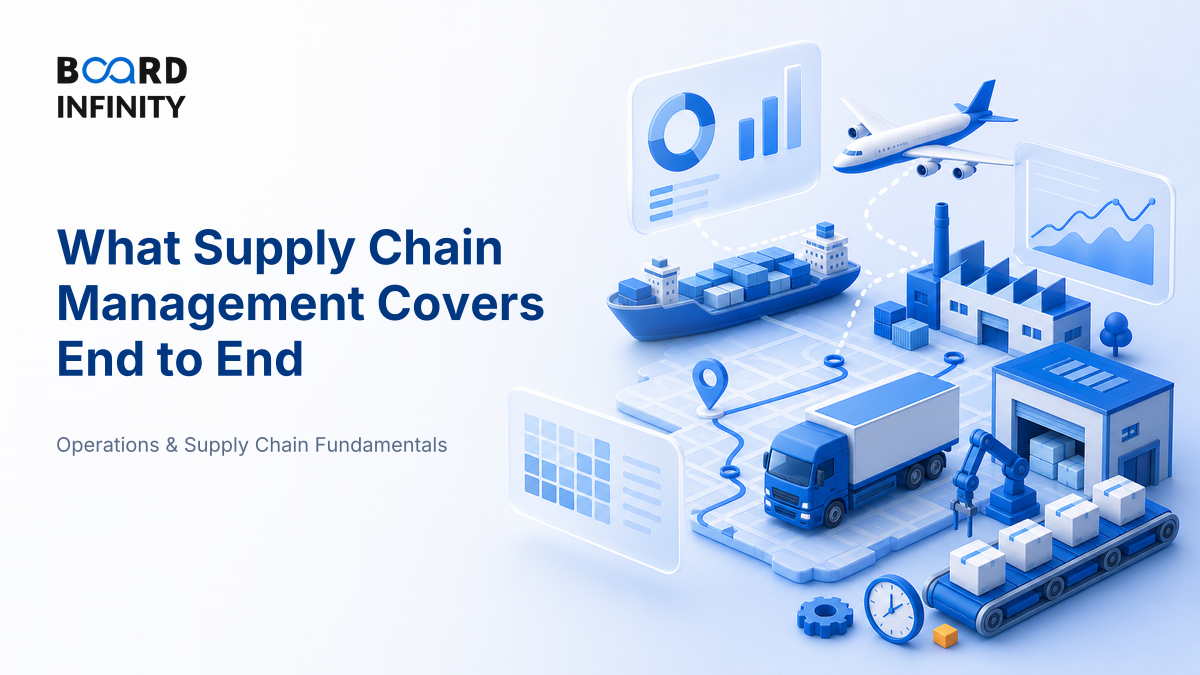
A retailer’s warehouse has stock, the website shows “available,” the customer has already paid - and still the order misses its promise date. The failure may not be in the truck, the warehouse, or the vendor alone; it is usually in the way the whole supply chain is designed to work together.
- Supply chain management covers the end-to-end flow of materials, products, information and money from suppliers to final customers.
- The clean interview structure is Plan - Source - Make - Deliver - Return, with enabling layers like technology, risk, sustainability and partner governance.
- Operations is usually inside the firm; supply chain spans the firm plus suppliers, logistics partners, distributors and customers.
- The core trade-off is cost vs service vs resilience: low inventory reduces cost but can hurt availability during demand or supply shocks.
- Key metrics include OTIF, perfect order rate, forecast accuracy, inventory turns, cash-to-cash cycle and supply chain cost as a percentage of sales.
- A strong answer never says “supply chain is logistics.” Logistics is one part; SCM is the coordinated system behind availability, cost and customer promise.
Big Picture - What SCM Actually Covers
Think of supply chain management as a layered system. At the bottom are physical flows, but the real managerial work sits above that: planning, coordination, risk decisions and trade-offs across multiple organisations.
A simple way to remember the scope is: SCM connects market demand to supply capability. It decides what to buy, where to make or store it, how much inventory to hold, how to move it, how to handle exceptions and how to learn from returns or disruptions.
Core Explanation - The End-to-End Scope
The most interview-safe way to explain supply chain management is through the five process families used in many supply chain reference models: Plan, Source, Make, Deliver and Return. If you want the formal process lens later, revise the standard reference model for supply chain processes.
The Five Building Blocks of SCM
Notice the scope: SCM is not a department that begins after manufacturing. It begins before procurement, when demand is estimated and supply is planned. It continues after delivery, when returns, warranty claims or recycling flows reveal what the system must fix.
Goods, Money and Information Move Together
A good supply chain answer should mention three simultaneous flows. Products move forward, money usually moves backward, and information moves both ways. If any one flow is weak, the physical chain looks inefficient even when individual teams are working hard. The next natural lesson is the supply chain as a flow of goods, money and information.
What SCM Includes - And What It Does Not
Supply chain management overlaps with operations, procurement, logistics, finance and sales, but it is not identical to any one of them. This distinction is where many interview answers become either too narrow or too vague.
If you are comparing SCM with operations, keep this line ready: operations optimises the work system; supply chain optimises the network that feeds and is fed by that work system. For the full distinction, revise how operations and supply chain differ and overlap.
Key Metrics - How SCM Performance Is Measured
Supply chain managers do not track “efficiency” as a feeling. They translate it into service, cost, inventory, speed and cash metrics. Benchmarks vary sharply by industry, so in interviews, state the formula first and then say that “good” means meeting the business’s promised service level at the lowest sustainable total cost.
The trap is to maximise one metric blindly. For example, pushing inventory turns too high may improve working capital but create stockouts. That is why supply chain is fundamentally a trade-off system, similar to the broader cost, service and operations trade-off.
Definitions You Can Say in One Breath
According to CSCMP’s Supply Chain Management definition, SCM covers “planning and management of all activities involved in sourcing and procurement, conversion, and all logistics management activities.”
Interview definition: Supply chain management is the coordinated planning and execution of sourcing, making, moving and returning goods to fulfil demand profitably.
Logistics: Logistics is the storage and movement part of SCM - important, but narrower than the full supply chain.
Reverse logistics: Reverse logistics manages product flows from customer back to seller, repair centre, recycler or disposal channel.
Case Study - Decathlon India and the End-to-End Supply Chain
Decathlon India shows SCM as an integrated system: product range, sourcing, store replenishment, online fulfilment and returns all support a value-for-money sports retail promise.
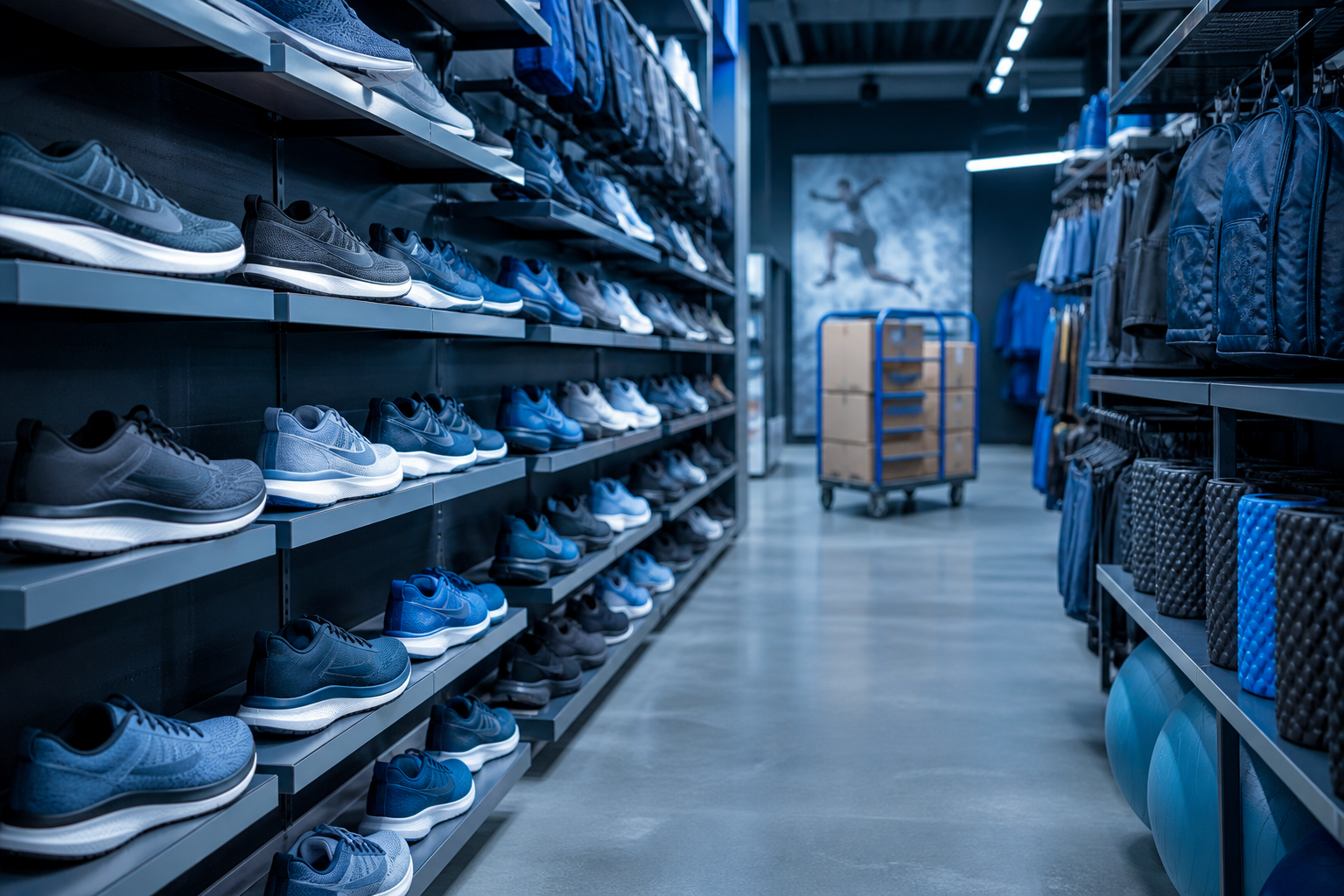
Situation: Sports retail is operationally difficult because demand is fragmented. A badminton racket, a cycling helmet, a yoga mat and a trekking jacket do not behave like one simple product category. Each has different seasonality, sizes, suppliers, storage needs and demand uncertainty.
The move: Decathlon’s supply chain works because the customer promise is clear: broad sports access at affordable prices. The primary driver is integration between product design, sourcing and retail replenishment. Supporting drivers include private-label control, standardised store formats, category-level planning, omnichannel fulfilment and disciplined inventory placement across stores and online channels.
The lesson: The company is not just “good at logistics.” Its supply chain advantage comes from aligning product range, supplier choices, inventory depth, store operations and customer experience around one promise. That is exactly what end-to-end SCM means.
So what: A shallow answer says Decathlon sells affordable sports goods. A strong SCM answer says affordability is made possible by an end-to-end supply chain design, not by one isolated cost lever.
How AI Changes Supply Chain Management
AI is changing SCM most where uncertainty is high and decisions repeat frequently. The useful point for interviews is not “AI automates supply chains,” but AI improves sensing, prediction and exception handling.
Student workflow: Before a company interview, load the company’s annual report, investor presentation and recent operations news into NotebookLM. Ask: “Map this company’s supply chain into Plan, Source, Make, Deliver, Return. Identify likely bottlenecks, KPIs and interview questions.” Then verify the answer against the company’s actual business model.
Interview Relevance
“Walk me through what supply chain management covers end to end. How is it different from logistics?”
If you get stuck, draw the chain verbally: “supplier - factory - warehouse - distributor - customer - returns.” Then add information and money flows. That instantly makes your answer broader than logistics.
Common Mistake
Mistake: Saying “supply chain means logistics and delivery.” This costs candidates because it ignores planning, sourcing, production, inventory, partner coordination, working capital and returns. Fix: answer with Plan - Source - Make - Deliver - Return, then say logistics is only the Deliver part.
What to Revise Next
You now know the end-to-end map. Next, sharpen the boundary between internal operations and external supply chain networks, because interviewers often test that distinction immediately after this topic. Revise How Operations and Supply Chain Differ and Overlap