
Indian Market Nuances in Telecom & Digital Infrastructure
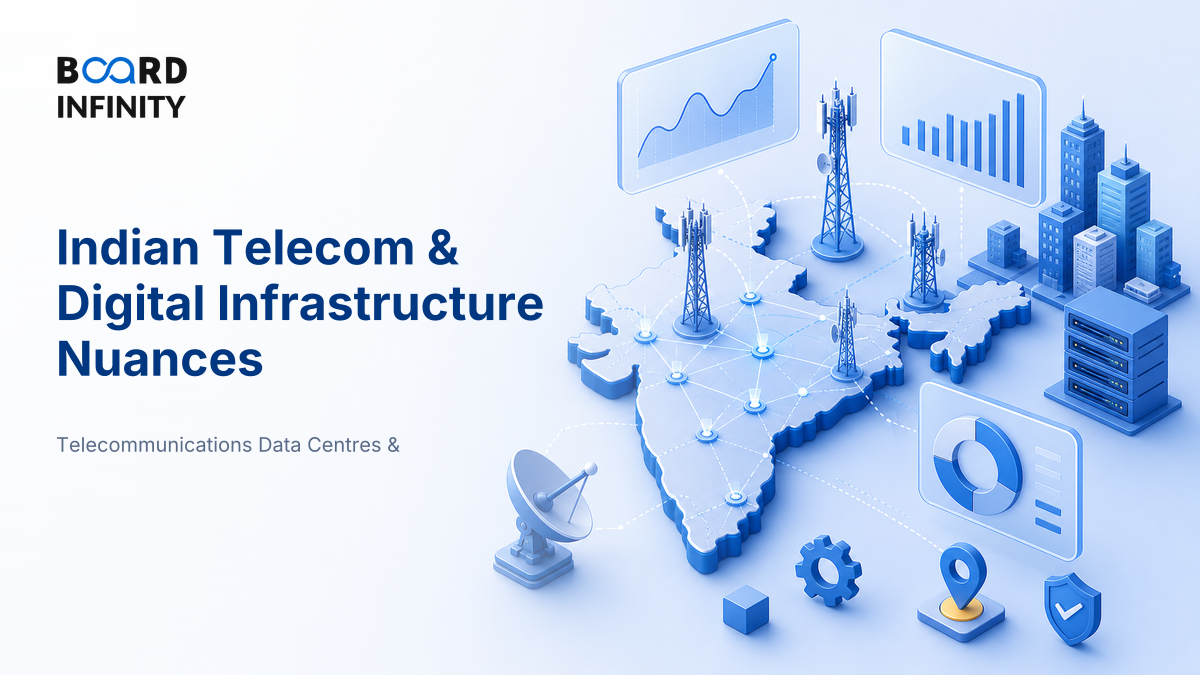
India’s telecom market is often reduced to one lazy phrase: “cheap data, huge population.” That misses the real drama - a fibre route blocked by right-of-way approvals, a rural tower fighting power reliability, a city cell site overloaded during a cricket final, and a data-centre rack waiting for dependable power and cooling.
- India is not one telecom market - metros, tier-2 cities, rural belts and remote regions have different ARPU, rollout cost and service expectations.
- The core tension is affordability versus capex - consumers expect low prices, while operators and infra players must keep investing in spectrum, fibre, towers, data centres and power systems.
- Digital infrastructure has layers - access networks, towers, fibre backbone, data centres, cloud connectivity, edge nodes and internet exchanges.
- Regulation is not background noise - spectrum, licensing, right of way, quality of service, data governance and security rules directly shape business models.
- The best mental model is a reinvestment loop - better coverage improves quality, quality drives usage, usage supports cash flow, cash flow funds more infrastructure.
- In interviews, avoid subscriber-count answers - analyse demand, asset layer, regulation, unit economics and execution risk.
Big Picture - India Runs on a Telecom Reinvestment Loop
Telecom and digital infrastructure are not separate stories. Mobile data demand creates the need for fibre, towers, cloud connectivity and data centres; those assets improve user experience; better experience pushes more usage. The catch in India is that this loop must work at very low consumer price points and across highly uneven geographies.
Core Explanation - The Five Nuances That Make India Different
The Indian market is attractive because demand is massive and digital adoption is deep. It is difficult because monetisation per user is low, geography is complex, and infrastructure rollout depends on local execution.
1. Demand Is Huge, but Willingness to Pay Is Uneven
India has heavy everyday dependence on mobile internet - payments, entertainment, education, work, government services and commerce. But the user base is price-sensitive. That creates a paradox: high traffic does not automatically mean high profitability.
For a student, the key is to separate usage intensity from revenue intensity. A market can consume enormous data but still force operators to manage costs tightly if average revenue per user remains constrained.
2. Infrastructure Is the Real Battleground
Telecom is not only a SIM card or tariff plan. It is a chain of physical and digital assets: spectrum, radio access equipment, towers, fibre, data centres, cloud interconnects, submarine cable landing points and edge nodes.
3. Regulation Shapes the Economics
Telecom is a regulated sector because it uses scarce spectrum, critical national infrastructure and consumer data. In India, a good answer should mention spectrum allocation, licensing, quality-of-service norms, right-of-way permissions, security conditions and data governance. If you need a clean way to map who controls what in a regulated sector, revise the regulator-control map.
The Telecom Regulatory Authority of India also publishes telecom performance indicator reports covering sector-level operating indicators such as subscriber base, usage and service performance (TRAI Performance Indicator Reports).
4. Geography Changes the Business Case
A metro rollout and a remote-area rollout are different businesses. Dense urban areas offer traffic concentration but face site-acquisition difficulty, spectrum congestion and indoor coverage issues. Rural and remote areas may need more backhaul effort, power backup and lower-cost operating models.
5. Infrastructure Sharing Is Not Optional
Because telecom assets are capital-heavy, India’s market relies heavily on sharing: tower sharing, fibre leasing, neutral-host models, data-centre colocation and cloud interconnect partnerships. The strategic point is simple: shared utilisation improves asset economics.
Do not memorise one “perfect” number for these KPIs. In interviews, compare trend, peer position and business model. A tower company, mobile operator, broadband provider and data-centre player will not have the same benchmark.
Definitions You Should Be Able to Say Cleanly
- Telecom: The transmission of voice, data or signals through wire, radio, optical or electromagnetic systems.
- Digital infrastructure: The physical and network assets that enable digital services - fibre, towers, data centres, cloud links and edge nodes.
- ARPU: Average revenue per user, calculated as service revenue divided by average subscribers in a period.
- Right of way: Permission to lay fibre, install equipment or access land and public infrastructure for telecom rollout.
- Backhaul: The network link that carries traffic from access sites to the core network or internet backbone.
Case Study - RailTel: India’s Railway Fibre Advantage
RailTel shows a uniquely Indian digital-infrastructure advantage: using railway-linked rights of way and public-sector reach to build connectivity beyond the usual metro-first logic.

Situation: India’s digital infrastructure problem is not only demand; it is reach. Fibre must pass through cities, towns and long corridors, and right-of-way access can make or break rollout speed. RailTel’s own profile describes it as a public sector enterprise under the Ministry of Railways with telecom infrastructure associated with the railway network (RailTel company profile).
The move: RailTel built its role around a backbone advantage - railway-linked fibre routes, enterprise connectivity, broadband services and network services for government and institutional customers. Its primary driver is access to a distributed national railway footprint. Supporting drivers include public-sector trust, enterprise relationships, network operations capability and the ability to serve corridors that private players may not prioritise first.
The lesson: In Indian digital infrastructure, the winning asset is not always the flashiest consumer brand. Sometimes the advantage is structural access - rights of way, corridor presence, institutional demand and reliable operations.
The strategic takeaway: when analysing Indian telecom, ask, “Who controls the scarce bottleneck?” It may be spectrum, towers, fibre routes, power reliability, data-centre capacity, or customer distribution.
How AI Changes Indian Market Nuances in Telecom & Digital Infrastructure
AI does not remove India’s telecom constraints. It helps operators and infrastructure players manage them better.
Practical student workflow: Load a telecom company annual report, a TRAI performance indicator report and your sector notes into NotebookLM. Ask it to extract: “five India-specific market nuances, three KPIs, two risks, and one likely interview question.” Then verify every number from the original document. For a safer research process, revise using AI to research a sector without importing its errors.
Interview Relevance
“India already has low-cost mobile data and large user demand. Where is the real opportunity in telecom and digital infrastructure now?”
If you name a company, connect it to an asset layer. For example, RailTel links to fibre and right of way; a tower company links to passive infrastructure and tenancy; a mobile operator links to spectrum, subscribers and ARPU.
Common Mistake
The mistake: treating India as one giant “cheap data” market. That answer sounds shallow because it ignores geography, regulation, infrastructure layers and unit economics. Fix: always split the answer by demand segment, asset layer, regulatory constraint and KPI.