
Indian Marketing Landscape in 2026: Trends, Opportunities and Interview Framework
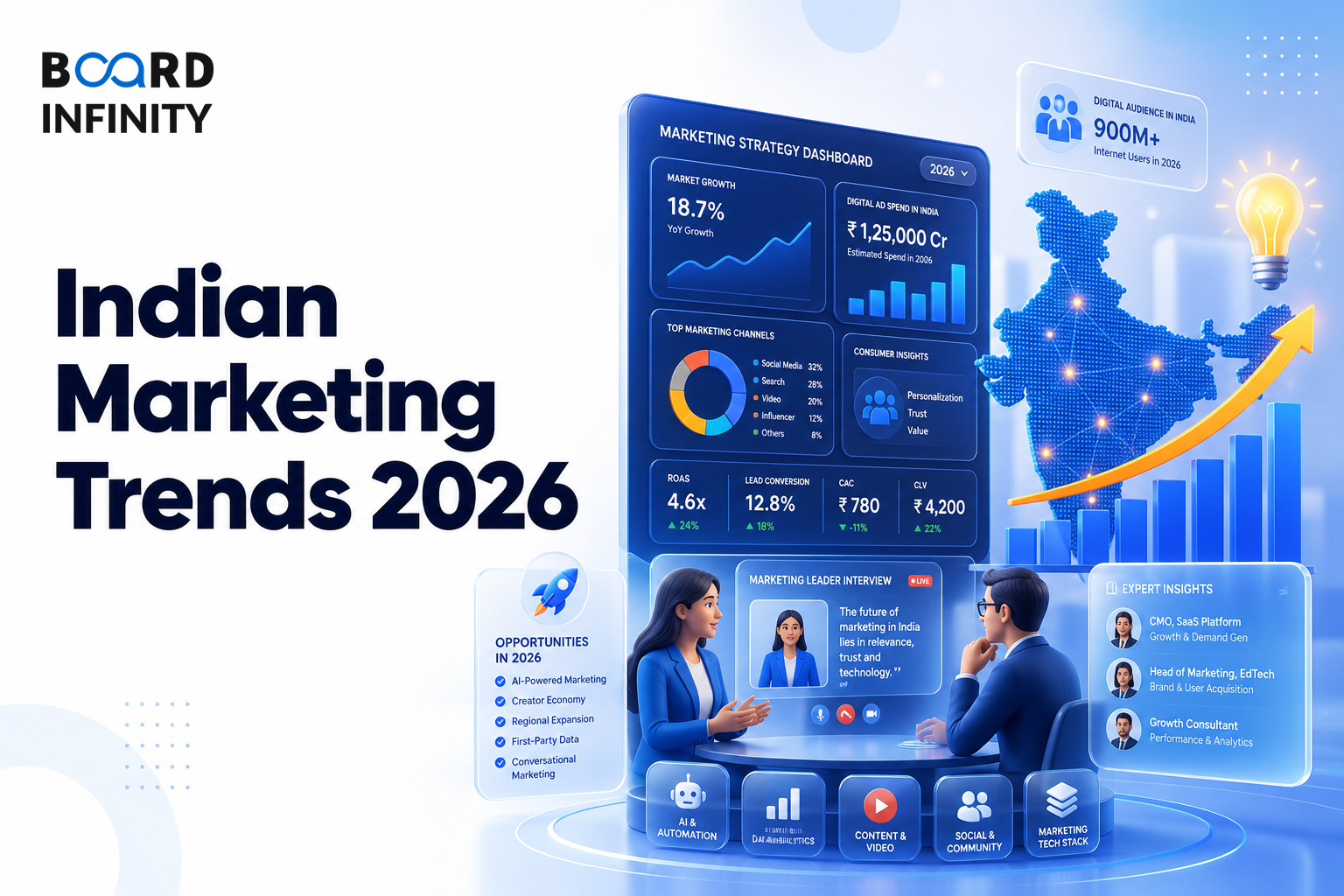
Ten years ago, an Indian marketer could still win by buying a big TV spot, painting a few walls near kirana stores, and waiting for distribution to do the rest. In 2026, the same consumer may discover a product on Instagram, compare it on Google or an AI answer engine, order it on quick commerce, complain on X, and expect the brand to remember them next month.
- India’s 2026 marketing landscape is not simply “more digital” - it is digital discovery plus physical availability plus data-led retention.
- The biggest shifts are omnichannel commerce, creator-led influence, vernacular and Bharat growth, quick-commerce retail media, premiumization with value sensitivity, privacy-led first-party data, and AI-led execution.
- The core interview frame: explain trends through consumer, channel, content and capability - not as a random list.
- Winning brands connect the funnel: awareness, consideration, conversion, repeat and advocacy.
- India remains a “many Indias” market - metro premium buyers, Tier 2 digital adopters, rural aspirers and price-sensitive mass consumers behave differently.
- Marketing opportunities sit where large demand, measurable channels, strong unit economics and trust meet.
- The common trap is naming buzzwords like AI, influencers and quick commerce without explaining how they change customer behavior or business economics.
Big Picture: India Has Moved From Mass Reach to Measurable Relationships
The simplest way to understand Indian marketing in 2026 is this: the old playbook optimized for reach and recall; the new playbook optimizes for reach, relevance, conversion and retention. TV, print and outdoor still matter, but they now work inside a larger system where data, marketplaces, creators, apps and stores all shape the customer journey.
Core Explanation: The 2026 Indian Marketing Landscape in Four Lenses
Use four lenses to make sense of the market: consumer, channel, content and capability. This keeps your answer structured and prevents it from becoming a list of fashionable words.
1. Consumer: India Is Not One Market
The largest mistake is treating India as a single homogeneous consumer base. In 2026, marketers must segment by income, city tier, language, digital comfort, trust level, category maturity and purchase occasion.
Two realities coexist. One consumer is premiumizing - buying better skincare, eyewear, electronics, travel and food experiences. Another consumer remains sharply value-conscious - comparing prices, waiting for offers and choosing sachets, entry packs or EMIs. Strong Indian marketers design for both aspiration and affordability.
2. Channel: Omnichannel Has Become the Default
Indian consumers do not think in “online versus offline” terms. They move across YouTube, Instagram, marketplaces, quick-commerce apps, brand websites, WhatsApp, call centres, modern trade and physical stores. The marketing opportunity is to reduce friction across this path.
Example - Quick commerce as media: Zepto, Blinkit and Swiggy Instamart are not only delivery channels for FMCG brands. Their app shelves, search placements and sponsored listings have become high-intent media moments because the customer is close to purchase. The primary driver is transaction intent; supporting drivers are fast fulfilment, localized availability and measurable campaign data. So what: media and distribution are merging.
3. Content: Influence Is Fragmented, Regional and Creator-Led
Mass celebrities still build fame, but trust increasingly comes from creators, communities, experts and peers. A beauty brand may need dermatology explainers, regional reels, marketplace reviews and WhatsApp repeat nudges - not just one glossy film.
This is why vernacular marketing matters. Language is not just translation; it changes humour, proof points, cultural cues and trust. A Hindi, Tamil or Bengali campaign that feels native often performs better than a national English-first message adapted later.
4. Capability: Data, AI and Trust Are Now Marketing Infrastructure
The marketer’s toolkit now includes customer data platforms, CRM journeys, marketing automation, AI creative testing, marketplace dashboards, social listening and privacy governance. The shift is from intuition-only marketing to test, learn, personalize and protect.
India’s Digital Personal Data Protection Act, 2023 makes consent, purpose limitation and responsible data use more important. For marketers, trust is no longer only a brand value - it is an operating requirement.
The 7 Trends and the Opportunity They Create
Use this table as your interview-ready landscape map. It connects each trend to the actual marketing opportunity and the roles or skills companies hire for.
Where the Best Opportunities Sit: A 2x2 Market Map
Not every trend is equally attractive. A useful way to judge opportunity is to ask two questions: How often does the customer engage? and how close is the channel to revenue? High-frequency, high-transaction spaces are where marketing budgets are becoming more measurable.
Metrics That Prove a Marketing Opportunity Is Real
Good marketers do not stop at “this trend is growing.” They ask whether it creates profitable growth. Use these metrics to evaluate a campaign, channel or customer segment.
Definitions You Should Be Able to Say Cleanly
- Marketing: Kotler defines marketing as “meeting needs profitably.”
- Segmentation: Dividing a broad market into groups with similar needs, behaviors or response patterns.
- Targeting: Choosing which customer segments a company will serve and prioritize.
- Positioning: Kotler and Keller call positioning designing the offering and image to occupy a distinctive place in the target market’s mind.
- First-party data: Customer data a company collects directly through its own channels with appropriate consent.
- Retail media: Advertising bought on retailer or marketplace platforms close to the point of purchase.
Case Study: Lenskart and the Omnichannel Indian Consumer
Lenskart shows how an Indian brand can convert a traditionally offline, trust-heavy category into an omnichannel, technology-enabled customer journey.
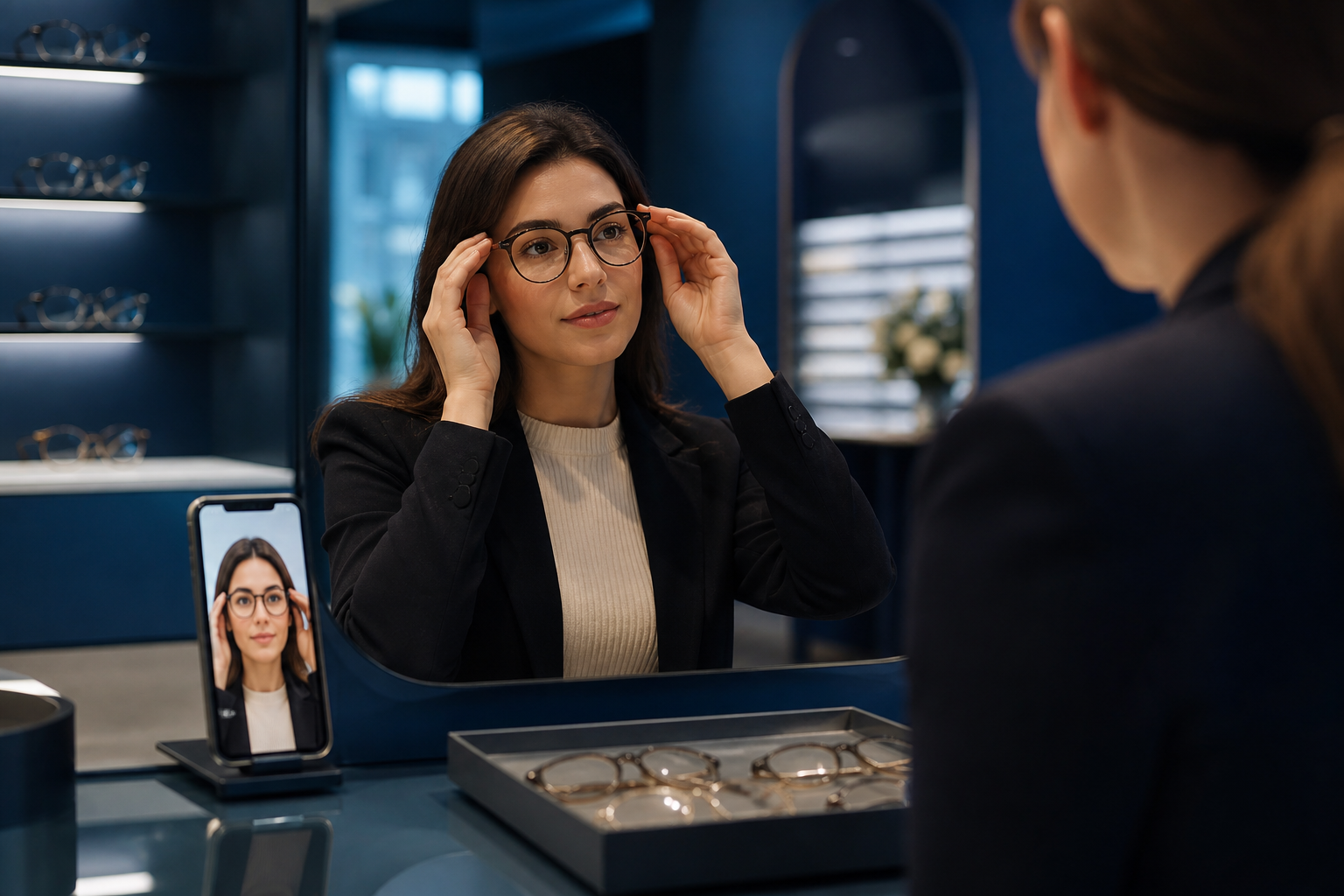
Situation: Eyewear in India was historically a local-optician category. The purchase involved eye testing, frame trial, prescription trust, fitting and after-sales service - all reasons why pure online selling had limits.
The move: Lenskart built an omnichannel model around the customer’s real friction points. Online channels helped with discovery, catalog browsing and virtual try-on. Physical stores and service points helped with eye tests, fit, trust and after-sales. Its private-label and supply-chain approach supported price ladders across value and premium needs.
The result and lesson: The primary driver was not “digital marketing” alone. It was friction removal in a trust-heavy category. Supporting drivers included store expansion, technology-led trial, controlled product economics, repeat purchases and brand-building around convenience. The lesson for 2026 India: the best marketing opportunities often come from redesigning the purchase journey, not merely increasing media spend.
How AI Changes the Indian Marketing Landscape in 2026
AI is not a separate trend sitting outside marketing. It is changing how marketers research consumers, create content, buy media, serve customers and measure outcomes.
Practical student workflow: Use Perplexity to gather recent articles on one Indian category, then load the links and a company annual report into NotebookLM. Ask: “Summarize the top 5 marketing opportunities, risks, customer segments and likely interview questions for this company in India in 2026.” Then use ChatGPT to convert that into a 90-second interview answer.
AI can accelerate research and ideation, but it can also hallucinate numbers, misread culture and create generic content. For interviews, verify facts through company reports, investor presentations, credible news and regulator sources.
Interview Relevance
“What are the major trends shaping the Indian marketing landscape in 2026, and where do you see the biggest opportunities for brands?”
If the interviewer pushes for depth, pick one sector - FMCG, beauty, fintech, fashion, auto or healthcare - and apply the four lenses to that sector. Specificity beats trend-listing.
Common Mistake
The biggest mistake is giving a buzzword answer: “AI, influencers, quick commerce, digital India.” It costs candidates because it shows awareness but not marketing judgment. The fix: for every trend, state what changed in consumer behavior, what the brand should do, and which metric proves success.
What to Revise Next
Now that you can explain the Indian marketing landscape, revise the vocabulary that interviewers expect you to use fluently. Go next to 60 Must-Know Marketing Terms, The Complete Interview Glossary so your trend answers include crisp terms like CAC, LTV, positioning, retail media, cohort, funnel and brand equity.