
Last-Mile Delivery Models Explained
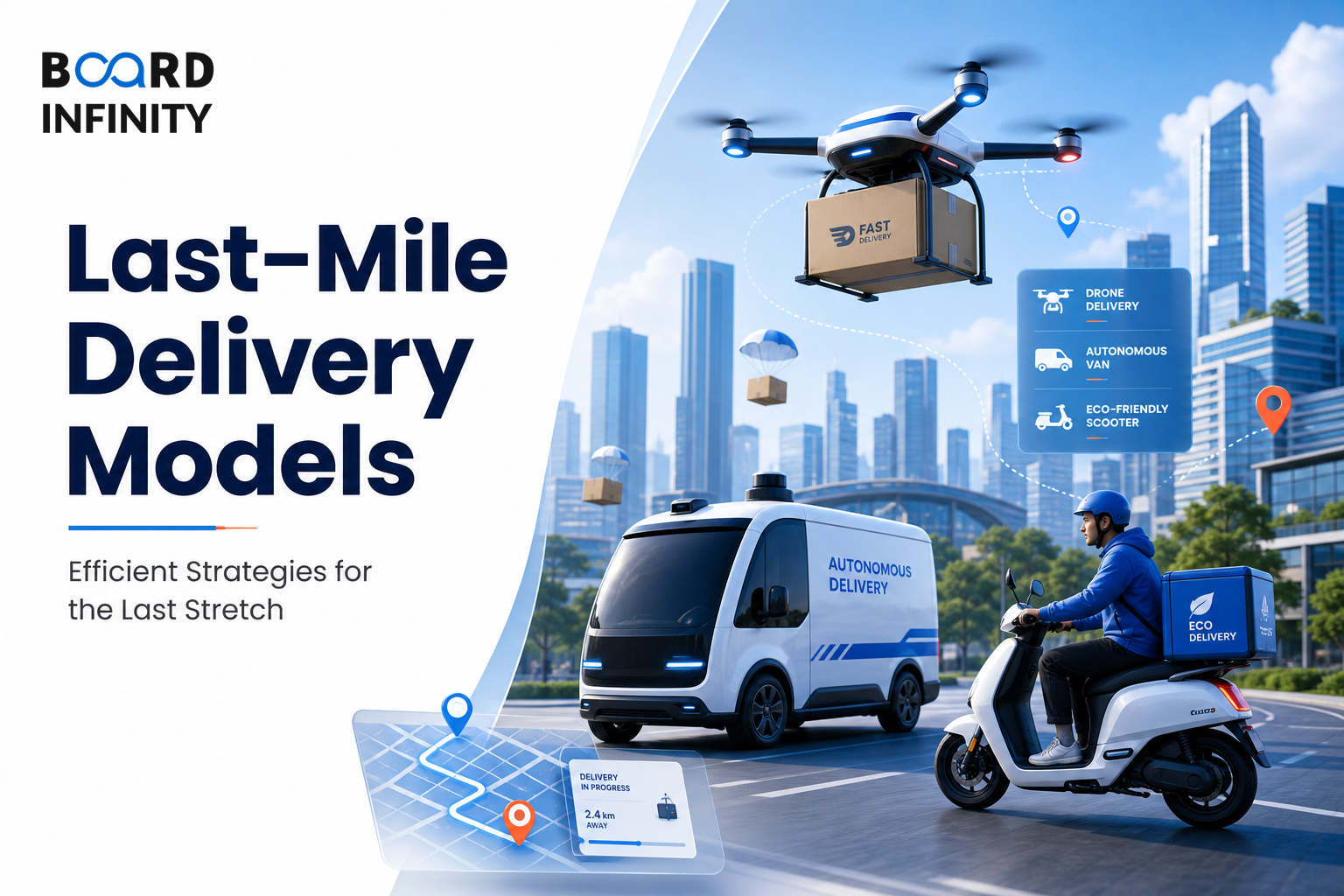
After Route Optimisation Concepts Explained, the next interview question is how the final customer delivery is actually executed. Last-mile delivery models matter because each model changes cost per order, speed, and control. In logistics and e-commerce interviews, the strongest answers compare models using Indian examples instead of treating delivery speed as the only goal.
- Own Fleet means the company operates delivery vehicles, with ₹40-60 cost per order and controlled speed, as seen in Ekart (Flipkart) and Amazon Logistics.
- 3PL Delivery is outsourced to logistics partner, with ₹30-50 cost per order and variable speed, as seen in Delhivery, DTDC, and Ecom Express.
- Crowd-Sourced delivery uses gig workers using personal vehicles, with ₹25-40 cost per order and fast speed, as seen in Shadowfax and Dunzo.
- Hyperlocal delivery is delivery from nearby store/dark store, with ₹20-35 cost per order and ultra-fast speed (<30 min), as seen in Swiggy Instamart and BigBasket.
- Quick Commerce is delivery from dark store in 10-15 min, with ₹35-55 cost per order and 10-15 min speed, as seen in Zepto and Blinkit.
- Locker/PUDO means customer picks up from designated point, with ₹15-25 cost per order and self-service speed, as seen in Amazon Locker and India Post.
Big Picture: Cost per Order, Speed and Control
Last-mile delivery models can be compared across how the model works, cost per order, speed, and Indian example. The trade-off is visible across models: Own Fleet gives controlled delivery, 3PL Delivery has variable speed, Crowd-Sourced and Hyperlocal models push speed, Quick Commerce targets 10-15 min delivery, and Locker/PUDO reduces cost through self-service.
Note: Cost per order figures are indicative estimates based on open-source data and vary by city, distance, and order value.
Own Fleet
Own Fleet is the model where the company operates delivery vehicles. Its cost per order is ₹40-60 and its speed is controlled. Indian examples include Ekart (Flipkart) and Amazon Logistics.
The interview relevance of Own Fleet is control. When a company operates delivery vehicles, the model is useful to discuss when the answer needs to show how delivery execution can be directly managed rather than outsourced.
3PL Delivery
3PL Delivery works when delivery is outsourced to logistics partner. Its cost per order is ₹30-50 and speed is variable. Indian examples include Delhivery, DTDC, and Ecom Express.
This model is useful in interview comparisons because it shows a different operating choice from Own Fleet: delivery execution is handled by a logistics partner, so the model should be evaluated against cost per order and variable speed.
Crowd-Sourced Delivery
Crowd-Sourced delivery uses gig workers using personal vehicles. Its cost per order is ₹25-40 and speed is fast. Indian examples include Shadowfax and Dunzo.
The model is often discussed when the case requires faster delivery without describing a company-owned vehicle network. The key interview point is to connect the model to its operating mechanism: gig workers using personal vehicles.
Hyperlocal Delivery
Hyperlocal delivery means delivery from nearby store/dark store. Its cost per order is ₹20-35 and speed is ultra-fast (<30 min). Indian examples include Swiggy Instamart and BigBasket.
Hyperlocal delivery is important because the delivery point starts near the customer. In a case answer, it should be linked to nearby store/dark store operations rather than described as a generic fast-delivery model.
Quick Commerce
Quick Commerce is delivery from dark store in 10-15 min. Its cost per order is ₹35-55 and speed is 10-15 min. Indian examples include Zepto and Blinkit.
Quick Commerce is a sharper version of the speed trade-off because the model explicitly targets 10-15 min delivery from a dark store. It is also directly connected to dark stores and ultrafast delivery in Indian operations examples.
Quick Commerce Operations Example
Zepto / Blinkit quick commerce operations can be understood through the Order-to-Delivery (OTD) cycle time breakdown. The sequence shows how 10-15 min delivery is split across app notification, dark store activity, AI matching, last-mile transit, and doorstep delivery.
Zepto and Blinkit show why Quick Commerce should be framed as an operations model, not only a delivery-speed claim. The OTD cycle connects the dark store, rider assignment, transit, and doorstep delivery into one operating system.
Locker/PUDO
Locker/PUDO works when the customer picks up from designated point. Its cost per order is ₹15-25 and speed is self-service. Indian examples include Amazon Locker and India Post.
This model is different from doorstep delivery because the customer completes the pickup at a designated point. In an interview, it is useful when discussing lower cost per order and self-service delivery design.
Structuring a Last Interview Answer
"Compare last-mile delivery models on cost per order, speed, and control using Indian examples."
The strongest answer does not rank one model as universally best. It frames the choice as a trade-off between cost per order, speed, and control, then supports it with Indian examples such as Ekart, Amazon Logistics, Delhivery, Shadowfax, Dunzo, Zepto, and Blinkit.
The most frequent error is comparing last-mile models only on speed. That costs points because cost per order figures are indicative estimates and vary by city, distance, and order value, so the better answer weighs speed against cost and control.
Conclusion
Last-mile delivery models are best understood as operating choices across cost per order, speed, and control. For interviews, compare the model, how it works, cost/order, speed, and Indian example, then make the trade-off explicit.