
Route Optimisation Concepts Explained: Direct Shipping, Milk Run, Hub-and-Spoke and Cross-Docking
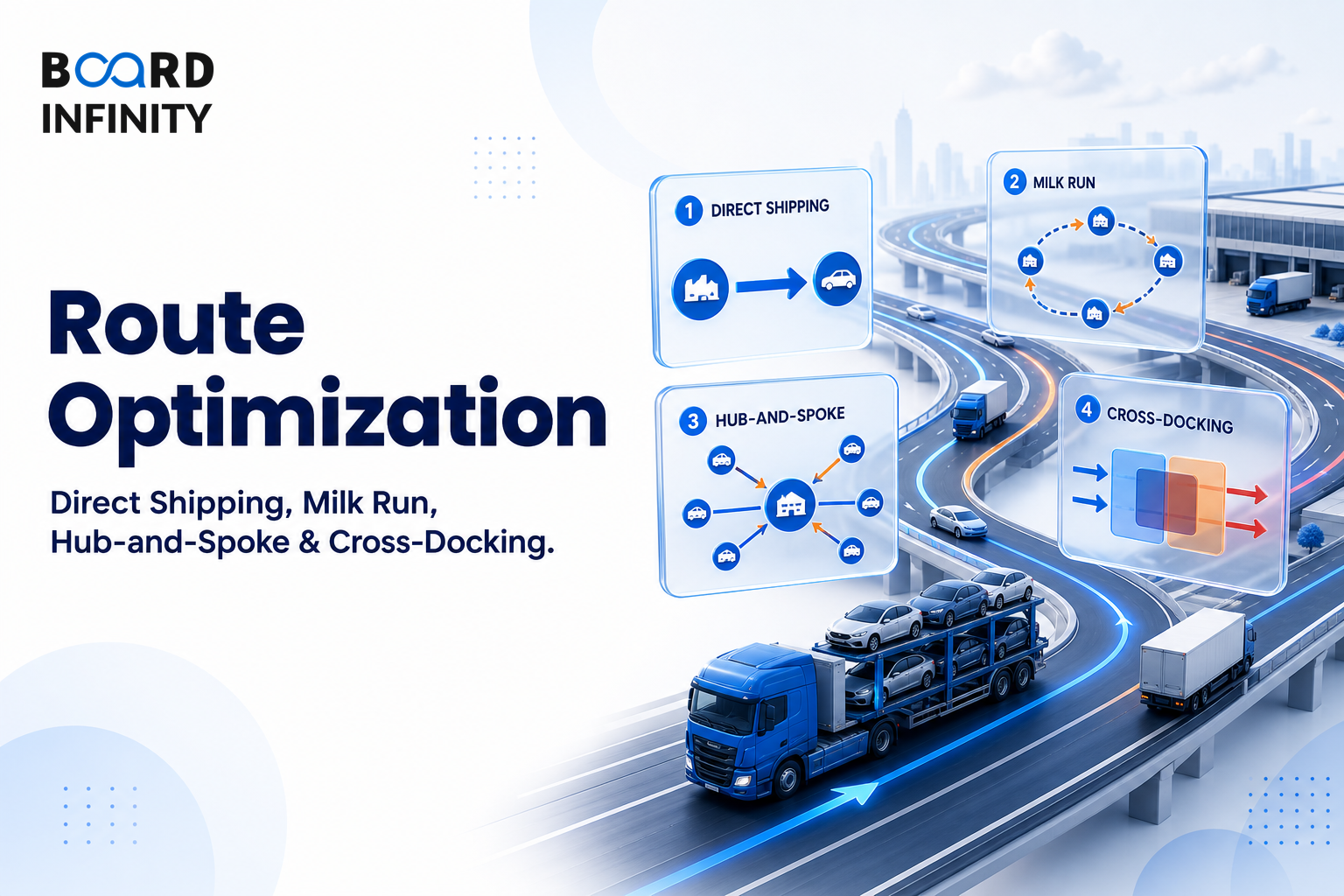
After choosing the mode of transportation in the India context, the next question is how freight should move across the network. Route optimisation concepts help compare Direct Shipping, Milk Run, Hub-and-Spoke, and Cross-Docking based on how the load moves, what it is best for, and where it appears in Indian logistics interviews.
- Direct Shipping works point-to-point from origin to destination and is best for high-value, FTL shipments.
- Milk Run means a vehicle visits multiple stops in a loop and is best for supplier collection and multi-drop delivery.
- Hub-and-Spoke consolidates at hub, distributes to spokes and is best for express delivery and LTL consolidation.
- Cross-Docking means goods pass through dock without storage and is best for high-velocity, sorted loads.
- Indian examples include steel plant to auto OEM, Maruti parts collection from Gurugram suppliers, Blue Dart hub in Mumbai with spokes to Tier 2 cities, and Amazon sortation centres.
- In interviews, the right answer is not just naming the model; it is matching the model to shipment value, load size, velocity, and network complexity.
Big Picture: Route Optimisation as a Movement Model Choice
Route optimisation compares movement models by asking how the shipment moves, what type of load it fits, and which Indian logistics example makes the model concrete. FTL refers to Full Truckload, LTL refers to Less-than-truckload, and OEM refers to Original Equipment Manufacturer.
Direct Shipping
Direct Shipping is point-to-point from origin to destination. It is best for high-value, FTL shipments, where the Indian example is a steel plant to auto OEM movement.
The interview logic is simple: use Direct Shipping when the movement is not built around multiple stops, hub consolidation, or dock-through sorting. The shipment moves directly from the origin to the destination.
Milk Run
Milk Run means the vehicle visits multiple stops in a loop. It is best for supplier collection and multi-drop delivery, with Maruti parts collection from Gurugram suppliers as the Indian example.
A fuller way to explain it is: pre-planned circular route collecting from multiple suppliers in one trip. Reduces transport cost, supports Just-in-Time (JIT). Visual: Hub - Supplier A - B - C - Hub.
Hub-and-Spoke
Hub-and-Spoke means consolidate at hub, distribute to spokes. It is best for express delivery and LTL consolidation.
The Indian example is Blue Dart hub in Mumbai, spokes to Tier 2 cities. In an interview answer, this model works well when the network needs consolidation at a central hub before distribution to multiple spoke locations.
Cross-Docking
Cross-Docking means goods pass through dock without storage. It is best for high-velocity, sorted loads.
The Indian example is Amazon sortation centres. A related definition is: goods move from inbound to outbound dock with minimal/no storage.
Worked Example: Maruti Milk Run Collection
Consider Maruti parts collection from Gurugram suppliers. The route model is Milk Run because the vehicle visits multiple stops in a loop and is used for supplier collection.
The practical logic is that vendors are co-located near plant, with dedicated delivery vehicles on milk run routes collecting from multiple suppliers in single trip. The learning for interviews is to connect the route model to the operating need: supplier collection and multi-drop delivery fit Milk Run better than Direct Shipping.
Choosing the Right Route Model
The route decision should be framed around the nature of the movement. High-value, FTL shipments fit Direct Shipping; supplier collection and multi-drop delivery fit Milk Run; express delivery and LTL consolidation fit Hub-and-Spoke; high-velocity, sorted loads fit Cross-Docking.
This keeps the answer practical because each model is tied to how it works, what it is best for, and an Indian example.
Structuring a Route Optimisation Concepts Explained Interview Answer
"How would you choose between direct shipping, milk run, hub-and-spoke, and cross-docking in an Indian logistics network?"
The strongest answers compare the models using the same dimensions: how it works, best fit, and Indian example. Do not stop at definitions.
The most frequent error is listing all four models without matching each one to what it is best for. That costs points because Direct Shipping, Milk Run, Hub-and-Spoke, and Cross-Docking are differentiated by shipment value, load size, consolidation need, and velocity.
Conclusion
Route optimisation is about choosing the right movement model: Direct Shipping for high-value FTL shipments, Milk Run for supplier collection, Hub-and-Spoke for express delivery and LTL consolidation, and Cross-Docking for high-velocity sorted loads. In interviews, anchor every route choice in how it works, what it is best for, and a concrete Indian example.