
10 Defining Trends in Indian Marketing: Amul's Topical Ads
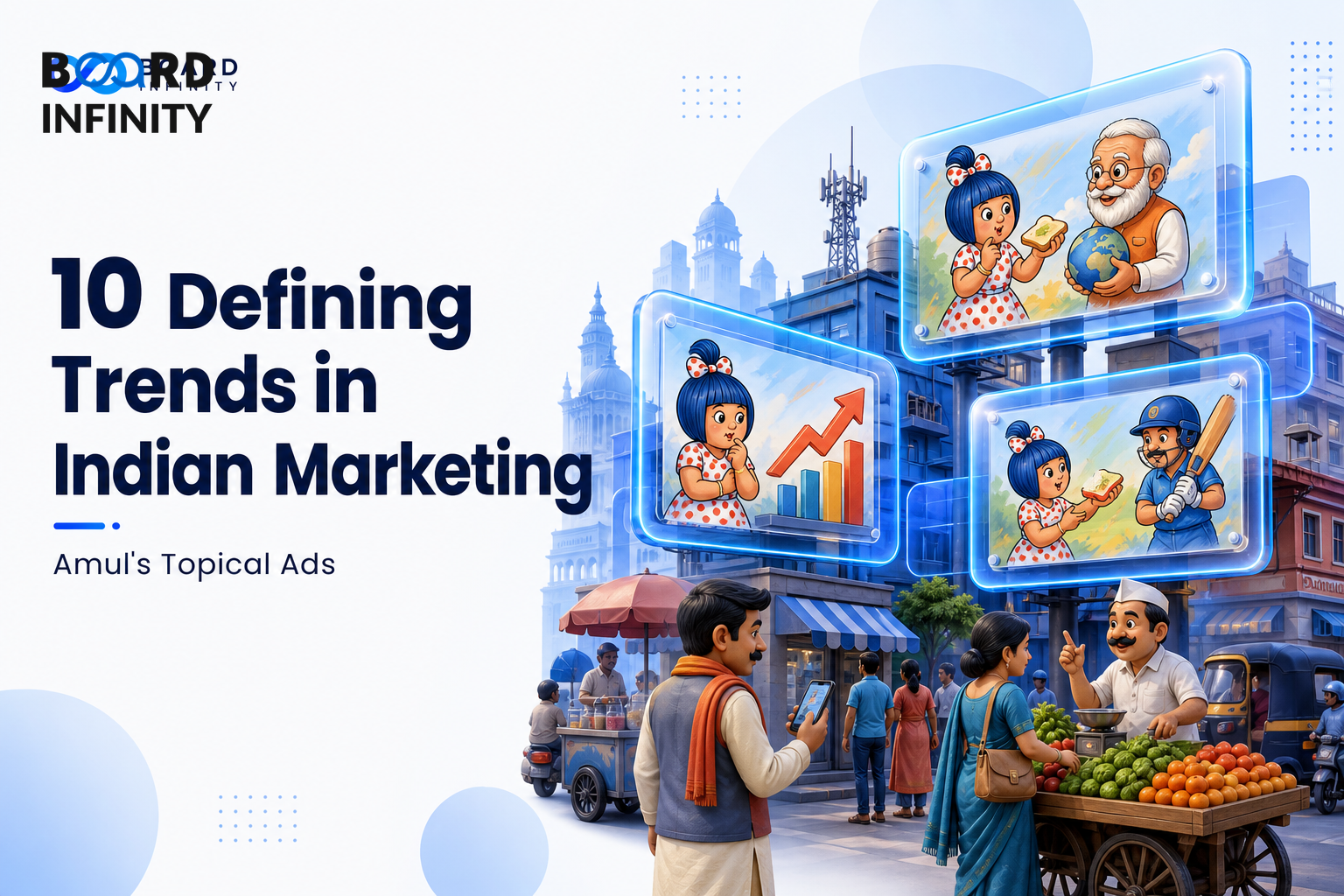
In the previous concept on key players by sector and India marketing market stats for FY26, the focus was on the scale of Indian markets and the companies competing within them. This lesson asks a sharper interview question: how does a brand stay culturally relevant for decades without relying on massive media spend? Amul's topical advertisement campaign, running since 1966, is the cleanest case because it connects brand consistency, cultural commentary, and earned media into one repeatable marketing system.
- Amul's topical advertisement campaign has been running since 1966, making it the longest-running ad campaign in Indian history.
- The campaign uses the same character, same format, and same tone every week, proving that brand building is typically a marathon, not a series of disconnected bursts.
- The Amul Girl comments on elections, cricket, Bollywood, space missions, and global events with puns, wit, and cultural relevance.
- The topical ads run with zero media spend and rely on earned media and social sharing.
- Each topical ad costs virtually nothing to produce because the core inputs are illustration and copywriting, while the earned media value is described as 100x the production cost.
- Amul is valued at $3.3-4.1B by Brand Finance 2024-25 and is described as the world's strongest food brand despite being a cooperative.
- The core lesson is that consistency plus authenticity can create a moat that even ₹100 Cr TV campaigns may not easily replicate.
The big picture is that Amul's topical campaign works because it is not just an advertising idea; it is a repeatable brand-building engine.
Why This Case Matters in Indian Marketing
Amul's topical advertisements are a useful case for understanding Indian marketing because they show how a brand can become part of public conversation without turning every communication into a direct sales message. The campaign has been running since 1966 and uses the Amul Girl to comment on current events through puns, wit, and cultural relevance.
For interviews, this case is valuable because it helps you move beyond a surface answer like "Amul makes funny ads." A stronger answer explains the underlying system: long-term consistency, cultural relevance, low production cost, earned media, universal appeal, and a clear brand personality.
Amul: The Full Framework in One Business
Amul demonstrates the full framework because the same campaign connects creative identity, topical timing, low-cost production, earned reach, and long-term brand equity. The campaign is not a one-off viral idea; it is a disciplined format repeated over 58+ years.
A shallow answer says Amul makes clever topical ads; a complete answer explains how the campaign converts consistency and cultural participation into brand equity.
A culture-led brand system is a repeatable communication format that lets a brand participate in current events consistently, stay top-of-mind without direct selling, and build emotional equity over time.
The Core Trend: Consistency Beats Constant Reinvention
The first defining trend visible in Amul's case is the power of consistency. Amul's topical campaign has continued every week for 58+ years, using the same character, same format, and same tone.
This matters because consistency compounds. In many organisations, marketing teams are tempted to refresh campaigns too frequently in search of novelty. Amul's case shows the opposite: when the brand asset is strong, repetition can deepen recognition rather than cause fatigue.
The interview lesson is clear: do not treat consistency as lack of creativity. Amul proves that the creative surface can change with every topical event while the underlying brand codes stay stable. The character, tone, and format remain familiar, while the subject changes with culture.
Cultural Relevance Keeps the Brand in Conversation
Cultural relevance means connecting brand communication to what people are already discussing. Amul does this by commenting on elections, cricket, Bollywood, space missions, and global events.
The campaign works because it does not need to manufacture attention from scratch. It joins conversations that already exist and adds a witty, brand-safe point of view through the Amul Girl. This keeps the brand top-of-mind without constantly "selling" the product.
The nuance is that cultural relevance is not the same as chasing every trend. Amul's relevance works because it is filtered through a consistent tone: witty, warm, patriotic, and optimistic. Without that filter, topical marketing can feel opportunistic or disconnected.
Low Cost, High Impact Through Earned Media
Earned media means visibility that a brand receives through organic sharing, discussion, and coverage rather than paid placement. In Amul's case, the source states that topical ads have zero media spend and run entirely on earned media and social sharing.
The production model is also lean. Each topical ad costs virtually nothing to produce because it relies on illustration and copywriting. The source describes the earned media value as 100x the production cost.
This is an important placement-prep point because candidates often assume brand building requires only large paid campaigns. Amul's case shows that a strong creative asset, repeated with cultural timing, can produce reach without large media buying. The key is not low cost alone; it is low cost combined with memorability and shareability.
Universal Appeal Without Becoming Generic
Universal appeal means communication that works across different audience groups. The source highlights that Amul's topical ads can be enjoyed by both a college student and a 60-year-old.
This is difficult because broad campaigns often become generic. Amul avoids that trap through wit. The puns and topical references create a shared cultural moment, while the familiar Amul Girl keeps the communication accessible.
In an interview, this is a useful way to explain mass-market brand building in India. A brand can be broad without being bland if it has a distinctive personality and a repeatable creative format.
Brand Personality Creates Emotional Equity
Brand personality means the human-like traits people associate with a brand. In Amul's case, the campaign makes the brand feel witty, warm, patriotic, and optimistic.
This matters because awareness alone is not the same as affection. The source makes an important distinction: people feel "fond" of Amul, not just aware of it. That emotional connection is part of the brand's moat.
The business outcomes give the case weight. Amul is valued at $3.3-4.1B by Brand Finance 2024-25 and is described as the world's strongest food brand despite being a cooperative. GCMMF (Amul) crossed ₹59,545 Cr turnover in FY24, and group brand turnover is ~₹80,000 Cr, making it India's largest food brand according to the source.
Worked Example: How Amul Converts a Topical Moment Into Brand Equity
The campaign can be understood as a complete marketing process: start with a public event, respond in the Amul voice, trigger sharing, and reinforce long-term brand memory.
The key learning is that Amul's topical ads are not merely clever creatives; they are a repeatable operating model for low-cost, high-impact brand building.
How to Use This Case in Marketing Interviews
When asked about defining trends in Indian marketing, use Amul as proof that cultural relevance and long-term brand assets can matter as much as media budgets. The answer should not overclaim that every brand can copy Amul exactly, because the model depends on tone, timing, consistency, and audience trust built over decades.
A strong candidate links the case to business outcomes. Mention the 1966 start, the 58+ years of weekly consistency, zero media spend on topical ads, 100x earned media value versus production cost, Brand Finance 2024-25 valuation of $3.3-4.1B, and FY24 turnover figures from the source.
Structuring a 10 Defining Trends in Indian Marketing Interview Answer
"Amul has been running topical ads since 1966. What does this case teach us about Indian marketing and long-term brand building?"
The #1 way candidates get this wrong is by treating Amul as only a creative campaign. Frame it as a brand system that compounds over time through consistency, cultural timing, emotional personality, and earned media.
Conclusion
Amul's topical advertisements show that Indian marketing is not only about bigger budgets; it is also about sharper brand assets, cultural participation, and consistency that compounds over decades. The final takeaway is simple: when a brand is authentic, recognisable, and culturally fluent, even a simple illustration with a clever pun can build extraordinary equity.
The most frequent error is saying "Amul succeeds because its ads are funny" and stopping there. That answer misses the real engine: 58+ years of consistent format, cultural relevance, zero media spend on topical ads, earned sharing, and a warm brand personality that makes people feel fond of Amul.