
Amul: The Original Content Marketing Machine
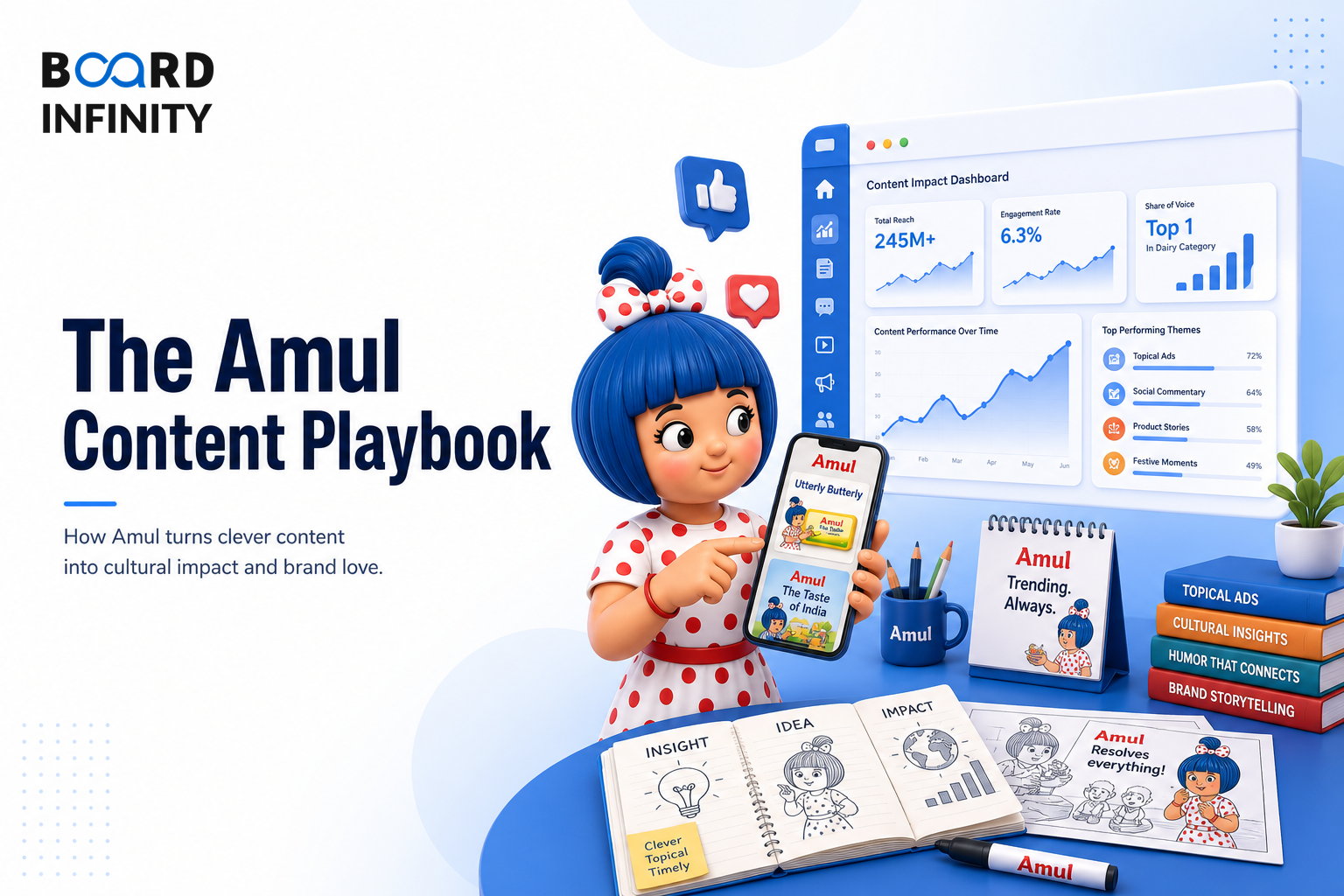
In the Zomato brand voice case, the strategic moat came from sounding unmistakably like one brand across moments. Amul takes that idea further: since 1966, the Amul Girl has turned current events into witty, culturally relevant topical ads, making the campaign the longest-running ad campaign in Indian history. For interviews, this case matters because it shows how brand equity can be built through consistency and earned media, not only through large paid media budgets.
- Amul's topical advertisement campaign has been running since 1966, making it the longest-running ad campaign in Indian history.
- The campaign works because the same character, format, and tone have been used every week for 58+ years.
- Amul stays culturally relevant by commenting on elections, cricket, Bollywood, space missions, and global events with puns and wit.
- The topical ads have zero media spend and cost virtually nothing to produce because the core inputs are illustration and copywriting.
- Earned media and organic social sharing create impact that is 100x the production cost.
- Amul's brand personality is witty, warm, patriotic, and optimistic, which makes people feel fond of the brand, not just aware of it.
- The business signal is strong: Amul is valued at $3.3-4.1B by Brand Finance 2024-25, GCMMF crossed ₹59,545 Cr turnover in FY24, and group brand turnover is ~₹80,000 Cr.
The Big Picture: Amul's Content Moat
Amul's topical ads are not just advertisements. They are a repeatable content system built on a simple loop: observe culture, respond quickly, stay on-brand, and let audiences spread the message. The table below shows how the case fits together before we break down each part.
Content moat = consistency over time + cultural relevance + a distinctive brand personality + earned media. Amul shows that a simple illustration with a clever pun can build more brand equity than ₹100 Cr TV campaigns when the system is authentic and repeated for decades.
Company Context
Amul's topical advertisement campaign began in 1966 and has continued for 58+ years. Its central device is the Amul Girl, who comments on current events through puns, wit, and cultural relevance.
The campaign is powerful because it does not behave like a typical product advertisement. It rarely needs to hard-sell butter, milk, or any specific product; instead, it makes Amul part of the cultural conversation. That distinction is important in case interviews because it separates brand building from short-term sales promotion.
Why Consistency Is the Core Asset
Consistency means repeating recognisable brand assets over time so that audiences can identify the brand quickly. In Amul's case, the recognisable assets are the same character, same format, and same tone used every week for 58+ years.
This matters because brand building is a marathon. A brand that changes its character, tone, or format too often may stay fresh for a moment, but it risks losing accumulated memory. Amul's lesson is that consistency is more valuable than frequent reinvention when the core creative device is still culturally useful.
The interview use is straightforward: when asked why a long-running campaign continues to work, do not only say "nostalgia." A stronger answer is that Amul has compounded recognition over decades. Each topical ad adds one more cultural touchpoint while preserving the same brand code.
Cultural Relevance: Selling Without Selling
Cultural relevance means connecting the brand to what people are already discussing. Amul does this by commenting on elections, cricket, Bollywood, space missions, and global events.
The strategic value is that Amul remains top-of-mind without sounding like it is constantly pushing a product. When people see the Amul Girl respond to a national or global moment, the brand feels present, alert, and culturally fluent. That presence creates awareness and affection without requiring a hard sales message.
The nuance is that cultural relevance is not the same as chasing every trend. Amul's topicality works because the response is filtered through a consistent voice: puns, wit, warmth, patriotism, and optimism. Without that filter, trend-based content can become generic and forgettable.
Low Cost, High Impact: The Earned Media Engine
Earned media means unpaid visibility generated when people, publishers, or social platforms spread a brand's content organically. Amul's topical ads run with zero media spend and rely on earned media and social sharing.
The production model is deliberately simple: illustration plus copywriting. The source states that each topical ad costs virtually nothing to produce, yet the earned media value is 100x the production cost. That makes the campaign an unusually efficient brand-building machine.
For interview answers, this is the biggest commercial insight. Amul proves that a brand does not always need massive media spend to create massive brand equity. If the creative asset is consistent, culturally relevant, and shareable, audiences can become the distribution channel.
Universal Appeal Without Becoming Generic
One of the most difficult brand challenges is appealing to many demographics without losing distinctiveness. Amul's topical ads work across demographics: a college student and a 60-year-old can both enjoy the same witty take on a current event.
The reason is not that the campaign is bland. The reason is that the wit makes the content shareable across age groups. In many campaigns, broad appeal leads to safe and generic communication; Amul avoids that by keeping its tone recognisable and its humour rooted in real cultural moments.
In a case interview, this is a strong point to make when discussing mass-market brands. The campaign shows that broad appeal and distinctiveness can coexist when a brand has a stable creative code.
Brand Personality: From Awareness to Fondness
Brand personality is the set of human traits people associate with a brand. Amul's personality is witty, warm, patriotic, and optimistic.
This matters because awareness alone is not always enough. People may know a brand but still feel neutral toward it. Amul's topical ads create emotional connection; the source describes the effect as people feeling fond of Amul, not just aware of it.
The nuance is that personality is built through repeated behaviour, not through one slogan. Amul has demonstrated the same personality across 58+ years of cultural moments. That repeated tone is what turns a creative device into a brand asset.
Worked Example: How Amul Turns Culture Into Brand Equity
The key decision was not to reinvent the campaign every few years. Amul kept the character, format, and tone stable while changing the cultural reference every week. That balance between consistency and relevance is the heart of the case.
Business Results and What They Prove
The campaign's results show why it is a serious business case, not just a creative advertising example. Amul is valued at $3.3-4.1B by Brand Finance 2024-25 and is described as the world's strongest food brand despite being a cooperative.
The source also states that GCMMF, Amul, crossed ₹59,545 Cr turnover in FY24, while group brand turnover is ~₹80,000 Cr, making it India's largest food brand. These numbers do not mean the topical ads alone created all the business outcomes. A fair interview answer should say that the campaign is a major brand-equity engine within a larger business system.
That nuance matters. Strong candidates avoid over-claiming attribution. The correct takeaway is that Amul's topical ads helped build a distinctive, emotionally liked, and frequently discussed brand at near-zero media cost.
Reusable Case Framework: The Amul Lens
Use this framework when analysing any brand that relies on content, topicality, or earned media. It helps you move beyond "the campaign went viral" and explain why the system is defensible.
Structuring a Case Study Interview Answer
"How has Amul built massive brand equity through its topical advertising campaign without massive media spend?"
The strongest answers treat Amul as a content system, not as a collection of funny ads. Explain the repeatable engine: same asset, current cultural trigger, witty execution, organic sharing, and long-term brand equity.
Conclusion
Amul's topical campaign shows that massive brand equity can come from a disciplined creative system: consistent assets, cultural relevance, low-cost production, earned media, and a warm brand personality. The final takeaway for interviews is simple: the most defensible content strategies are not always the loudest or most expensive; they are the ones that compound over time.
The most frequent error is calling Amul successful only because its ads are funny. That misses the real strategy: 58+ years of consistency, cultural relevance, zero media spend on topical ads, and earned media impact worth 100x the production cost. Humour is the execution; consistency plus authenticity is the moat.