
Affiliate, Influencer & Programmatic in the Digital Mix - Interview-Ready Framework
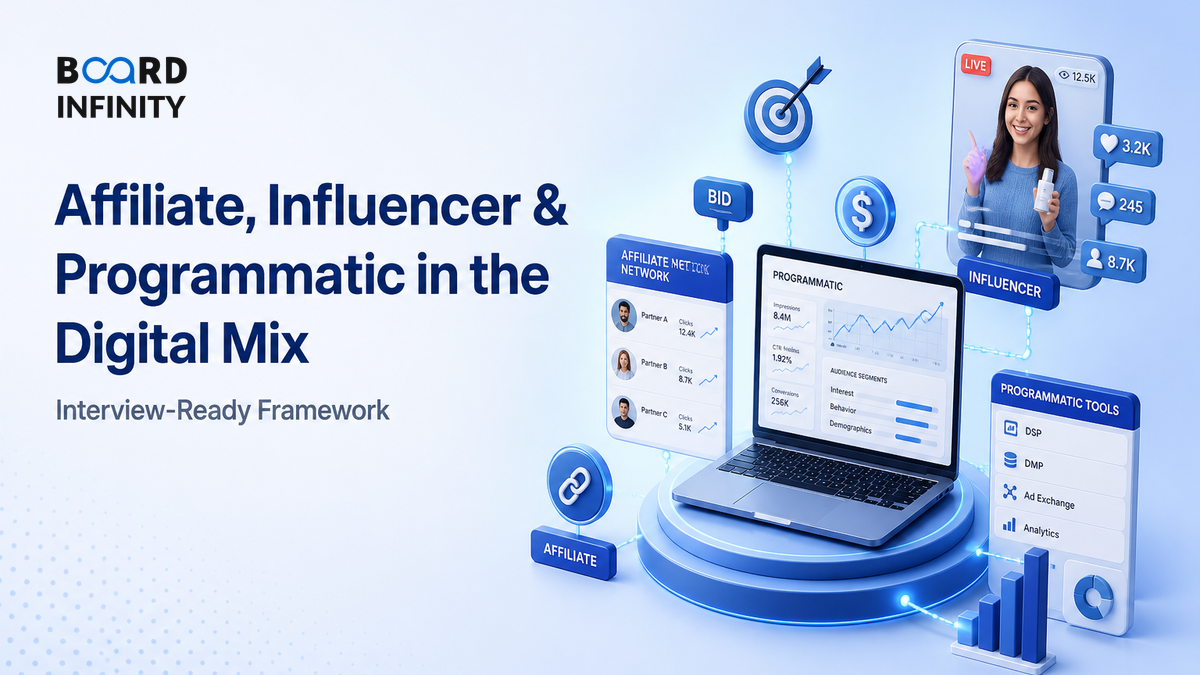
A fashion shopper watches a creator style a jacket at lunch, sees the same jacket in a display ad that evening, and finally buys it through a coupon publisher on payday. The sale looks like one click, but the marketing work was split across three very different engines: trust, automation and commission.
- Influencer marketing creates trust and consideration through people the audience already follows.
- Programmatic advertising buys digital ad impressions automatically, using data and bidding rules to reach or retarget users.
- Affiliate marketing pays partners only when a tracked action happens, usually a lead, app install or sale.
- The best digital mix does not ask, “Which channel is best?” It asks, “What job should each channel do in the funnel?”
- Influencer is strongest for attention and credibility, programmatic for scalable targeting, affiliate for conversion and distribution through publishers.
- Measure each channel by its role: engagement and lift for influencers, CPM/CTR/viewability/ROAS for programmatic, CPA/EPC/validated sales for affiliate.
- The interview-winning answer always links channel choice to funnel stage, KPI, attribution and incrementality.
Big Picture: Three Engines, One Customer Journey
Affiliate, influencer and programmatic are not interchangeable “digital options.” They are three different mechanisms in the digital mix: influence demand, algorithmically find demand, and reward partners for converting demand.
Core Explanation: What Each Channel Really Does
Affiliate marketing is a performance-led partner model. A brand gives publishers, bloggers, coupon sites, comparison platforms, creators or communities a trackable link or code. The partner earns commission only when the agreed action happens.
Influencer marketing is a trust-led content model. The brand borrows a creator’s audience relationship to make a product more visible, more credible or more desirable. It can be paid, gifted, co-created, performance-linked or long-term ambassador-led.
Programmatic advertising is an automation-led media buying model. Instead of manually negotiating each placement, a platform uses audience signals, bids and rules to buy impressions across websites, apps, video and connected TV.
Amazon Associates is a clear affiliate example: publishers and creators can share tracked links and earn referral income when qualifying purchases occur. The strategic “so what” is simple: Amazon extends product discovery across thousands of external content surfaces, while paying primarily for measurable outcomes rather than only exposure.
The confusion starts because all three can appear in the same customer path. A YouTube creator may also use an affiliate link. A programmatic display ad may retarget someone who first came from an influencer reel. A coupon publisher may claim the last click even though the creator created the original desire. That is why marketers separate channel role from attribution credit.
Where Each Fits in the Funnel
A strong digital plan assigns channels by funnel stage, not by trendiness.
How to Choose the Right Channel Mix
Use this five-step approach when designing a campaign:
Key Metrics to Track
Do not quote one universal benchmark for digital channels. Category, price point, seasonality and platform matter. In interviews, say what you will measure, give the formula, and define “strong” as profitable or better than the brand’s own baseline.
Definitions You Can Say in One Breath
- Affiliate marketing: A performance model where partners earn commission for tracked actions they help generate, usually clicks, leads or sales.
- Influencer marketing: A brand collaboration with creators whose audience trust can shape awareness, consideration or purchase.
- Programmatic advertising: Automated buying of digital ad impressions using data, algorithms and real-time rules.
- Digital mix: The deliberate allocation of channels to distinct funnel jobs, KPIs and budget rules.
Case Study: Myntra’s Fashion-Sale Digital Mix
Myntra shows how a marketplace can combine creators, automated media and affiliate-like deal distribution to turn fashion discovery into app traffic and purchases.
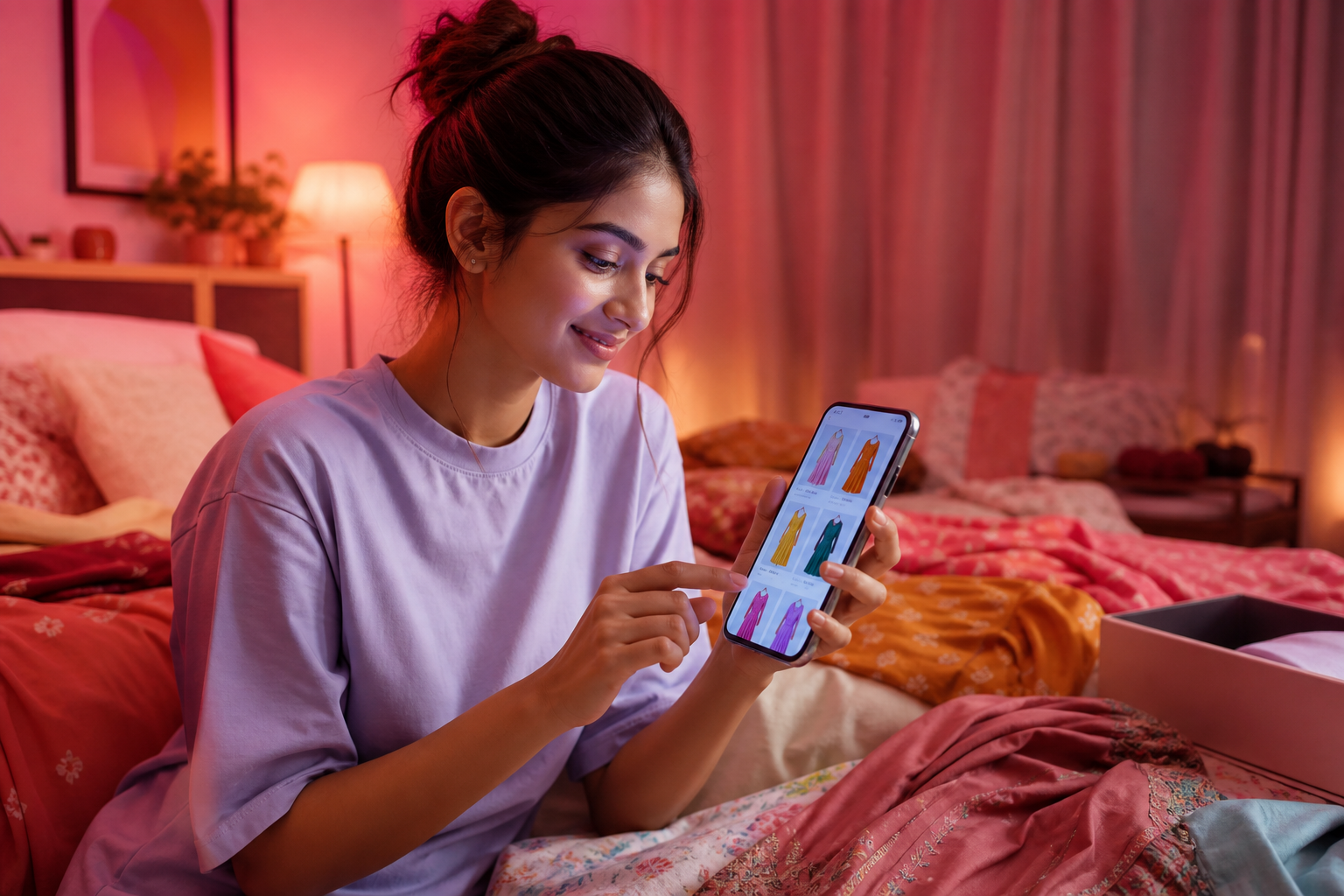
Situation: Online fashion is crowded, seasonal and promotion-heavy. During major sale events such as Myntra’s End of Reason Sale, the brand has to solve three problems at once: create excitement, bring shoppers back to the app, and convert deal-seeking traffic before attention shifts elsewhere.
The move: Myntra’s digital mix typically works across three layers. Fashion creators and social content create styling inspiration and cultural relevance. Programmatic and platform media help reach lookalike audiences and retarget browsers with category-led messages. Affiliate-style publishers, deal platforms and tracked partner links help capture high-intent shoppers comparing offers.
Outcome or lesson: The win is not “Myntra uses influencers” or “Myntra uses discounts.” The stronger explanation is that a fashion marketplace needs demand creation, demand recapture and demand conversion to work together. Its primary driver is role clarity across channels, supported by catalogue depth, app experience, promotional relevance, creator fit and data-led remarketing.
How AI Changes Affiliate, Influencer & Programmatic in 2026
AI is making the digital mix more automated, but also more accountable. Three changes matter most:
- Influencer discovery is becoming data-led: Brands can screen creators for audience overlap, content themes, engagement quality, fake followers and brand-safety risks. The caution: AI can shortlist creators, but humans still judge authenticity and cultural fit.
- Programmatic is moving toward predictive and creative automation: Algorithms can predict which audience, placement and creative variant is likely to perform. Dynamic creative optimisation can change copy, product, offer or format based on user signals.
- Affiliate optimisation is becoming smarter: AI can identify coupon poaching, suspicious traffic patterns, duplicate attribution and partners that drive real incremental sales rather than only last-click claims.
Use Perplexity or ChatGPT to build a pre-interview channel map: enter the company, product category and campaign objective, then ask for “likely affiliate, influencer and programmatic roles, KPIs, attribution risks and one improvement idea.” Cross-check any company-specific claim before using it.
Interview Relevance
“You are launching a new D2C skincare brand in India. How would you use affiliate, influencer and programmatic marketing in the digital mix?”
Say “channel role before channel spend.” It signals that you understand marketing strategy, not just digital-media vocabulary.
The biggest mistake is treating affiliate, influencer and programmatic as substitutes and then choosing one “best” channel. That costs candidates because it ignores funnel role, attribution and incrementality. One-line fix: define the customer journey first, then assign each channel a job, KPI and budget rule.
What to Revise Next
Now move from channel mix to execution. Revise App Marketing & ASO Basics to understand installs, retention and app-store visibility, then study Building an Integrated Digital Marketing Plan to connect objectives, audiences, channels, budgets and measurement into one interview-ready plan.
Social Media Marketing Interview Guide: Meta, Instagram, LinkedIn & YouTube