
Digital Marketing Ecosystem: Channels, Funnels and How to Answer in Interviews
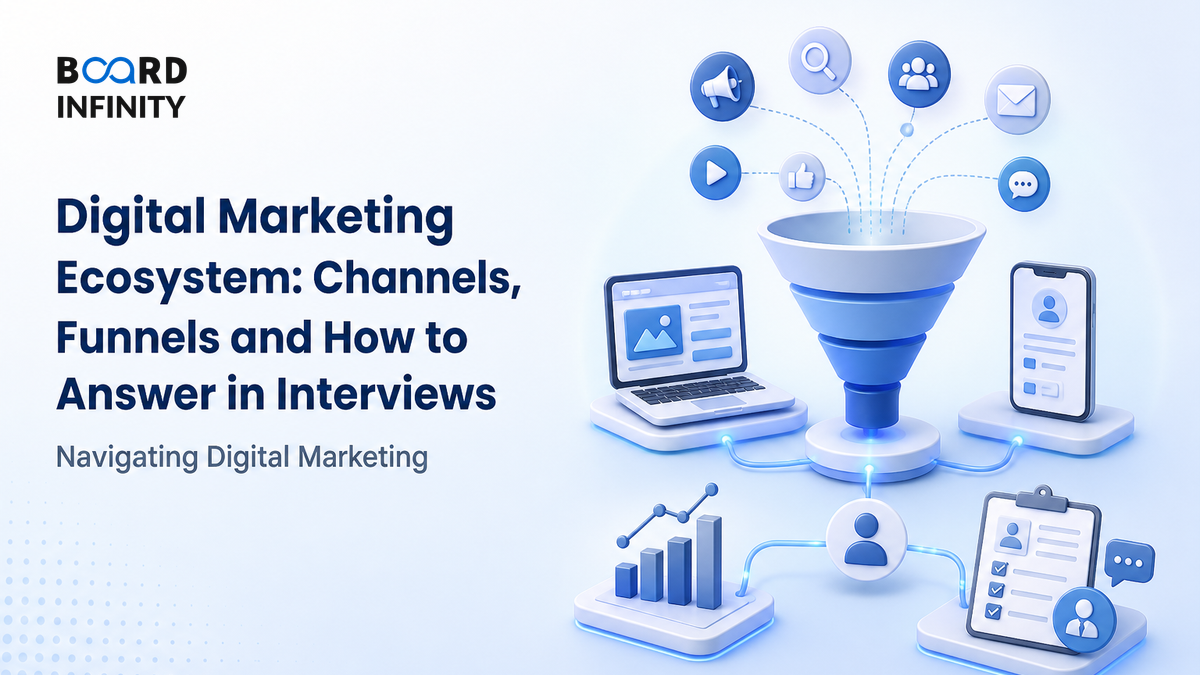
Digital marketing is often mistaken for a louder version of advertising - more posts, more reels, more ad spend. But a customer buying eyewear in India may discover a frame on Instagram, compare prices on Google, try it virtually in an app, visit a store for fit, and return through WhatsApp - that journey is the ecosystem.
- Digital marketing ecosystem means the connected set of digital channels, content, data, technology and measurement that moves customers from awareness to loyalty.
- Think in roles, not channel names: reach, intent capture, conversion, retention and learning.
- The funnel is useful, but incomplete unless you add the retention loop: repeat customers and referrals reduce dependence on paid acquisition.
- Channels fall into paid, owned and earned media; strong brands blend all three instead of overusing one.
- Core metrics: CTR, conversion rate, CAC, ROAS, MER and repeat purchase rate - always connect metrics to profitability, not vanity.
- AI is shifting digital marketing from keyword-only discovery to AI answer visibility, automated creative testing and first-party-data personalisation.
- Interview-safe answer: define the ecosystem, map funnel stages, choose channels by objective, name metrics, then give one integrated example.
Big Picture - Digital Marketing Is a Customer Journey System
The simplest mental model: digital marketing is not a list of platforms. It is a loop where channels attract customers, experiences convert them, retention systems bring them back, and data improves the next campaign.
Core Explanation - Channels, Funnels and How They Fit
The big idea: each digital channel has a job. Instagram may create discovery, Google Search may capture intent, a product page may convert, and WhatsApp or email may retain. A good digital marketer designs the handoffs between these jobs.
1. The Four Building Blocks of the Ecosystem
2. The Funnel Shows Customer Movement
The funnel is a practical map of how a stranger becomes a customer. Do not treat it as a rigid pipe; customers jump stages, compare alternatives, ask friends and return later. Still, the funnel helps you assign the right channel to the right task.
3. The Three Media Types
Every digital channel usually belongs to one of three media types. The best answer in an interview compares them by control, cost, trust and scalability.
4. Choose Channels by Customer Intent and Relationship Ownership
A common beginner mistake is to ask, “Which channel is best?” The better question is, “What customer state am I trying to influence?” High-intent channels are powerful near purchase; owned channels are powerful after you have permission to keep engaging.
5. Metrics That Tell You Whether the Ecosystem Is Working
Digital marketing metrics are useful only when they connect to business economics. A high click-through rate is not success if the clicks do not convert profitably; a low CAC is not success if it brings poor-quality customers.
If a metric cannot answer “Did we acquire, convert or retain profitably?”, treat it as a diagnostic metric, not the final success metric.
Definitions - Say These Clearly
AMA: “Marketing is the activity, set of institutions, and processes for creating, communicating, delivering, and exchanging offerings that have value for customers, clients, partners, and society at large.”
Lenskart: A Full Digital Ecosystem in an Indian Category
Lenskart shows how a digital-first brand can use channels, data and offline experience together to reduce friction in a high-consideration purchase.
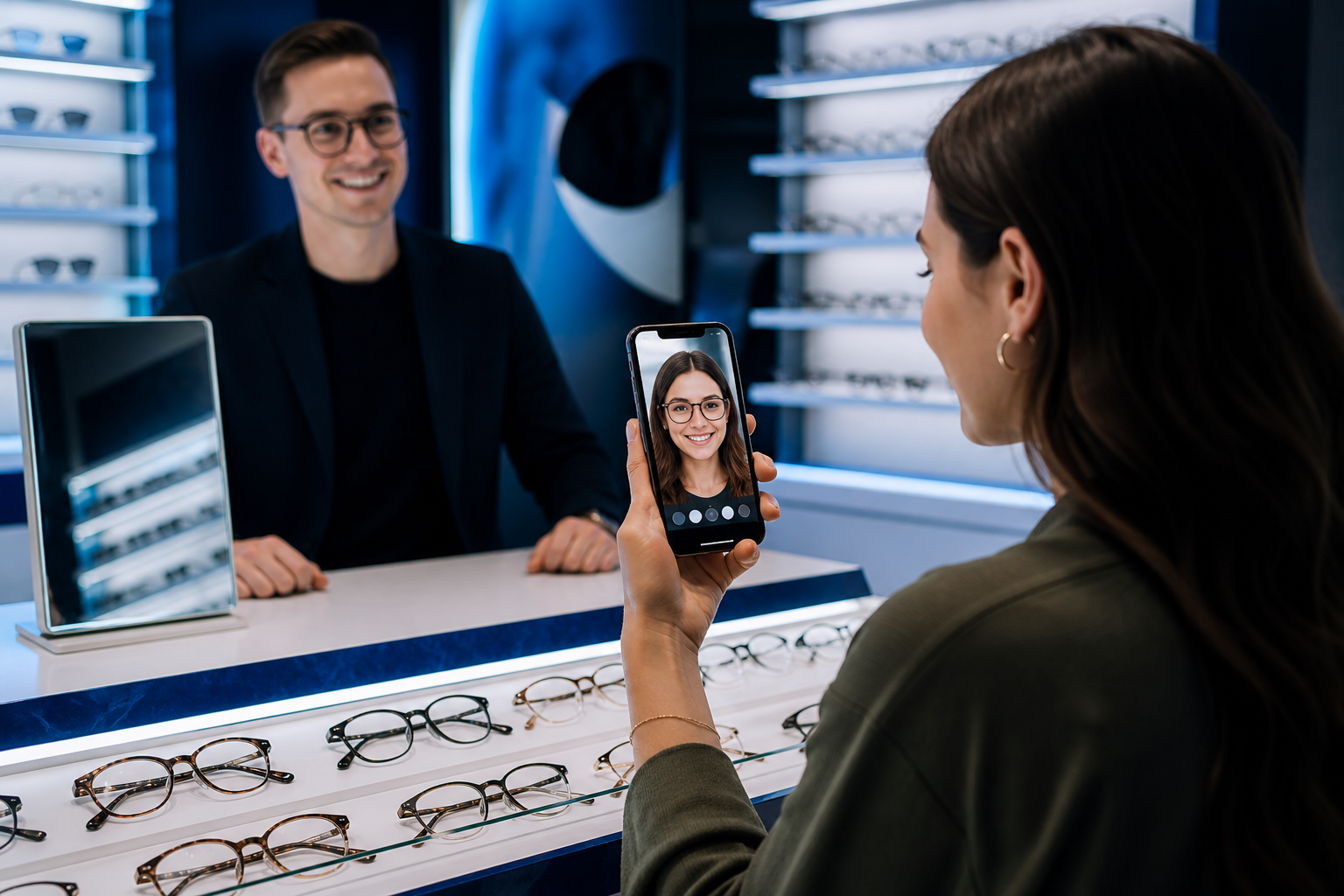
Situation: Eyewear is not a simple impulse purchase. Indian customers often need prescription accuracy, frame fit, trust in lenses, price comparison and after-sales comfort. A pure ad-led model would create awareness, but it would not fully solve the customer’s anxiety about fit and quality.
The move: Lenskart built a connected ecosystem: search and social to create demand, app and website journeys for browsing and virtual try-on, CRM nudges for repeat purchase, and physical stores or eye-test touchpoints to close the trust gap. The primary driver was reducing purchase friction in a high-touch category. Supporting drivers included performance marketing, product variety, omnichannel fulfilment, data-backed remarketing and store-level reassurance.
Outcome or lesson: The strategic point is not “Lenskart used digital marketing.” It used digital marketing as an integrated journey system, where paid media created demand, owned platforms captured data, and offline touchpoints increased trust. That is the difference between a campaign and an ecosystem.
How AI Changes the Digital Marketing Ecosystem
AI is not just making ads faster. It is changing where customers discover brands, how campaigns are optimised, and how personalisation is delivered under privacy constraints.
AI can optimise bad strategy very efficiently. If segmentation, positioning or unit economics are wrong, automation only scales the mistake.
Interview Relevance
“Explain the digital marketing ecosystem for a D2C brand. Which channels would you use at each funnel stage, and how would you measure success?”
Use the sentence: “I would not choose channels first; I would choose the funnel objective first, then select channels and metrics.” This instantly makes your answer sound managerial.
Common Mistake
The biggest mistake is giving a platform list - “Instagram, Google, YouTube, email” - without explaining each channel’s role in the journey. It costs candidates because it sounds operational, not strategic. One-line fix: start with the funnel objective, then map the channel, content and metric.
What to Revise Next
Now that you can see the full ecosystem, go one layer deeper into discovery. First revise Search Engine Optimization (SEO) Fundamentals to understand how brands capture high-intent demand, then study GEO and AEO: How to Rank in AI Answers to see how discovery is changing in ChatGPT, Perplexity and AI Overviews.
Social Media Marketing Interview Guide: Meta, Instagram, LinkedIn & YouTube