
What Is a Brand? Brand vs Product vs Company
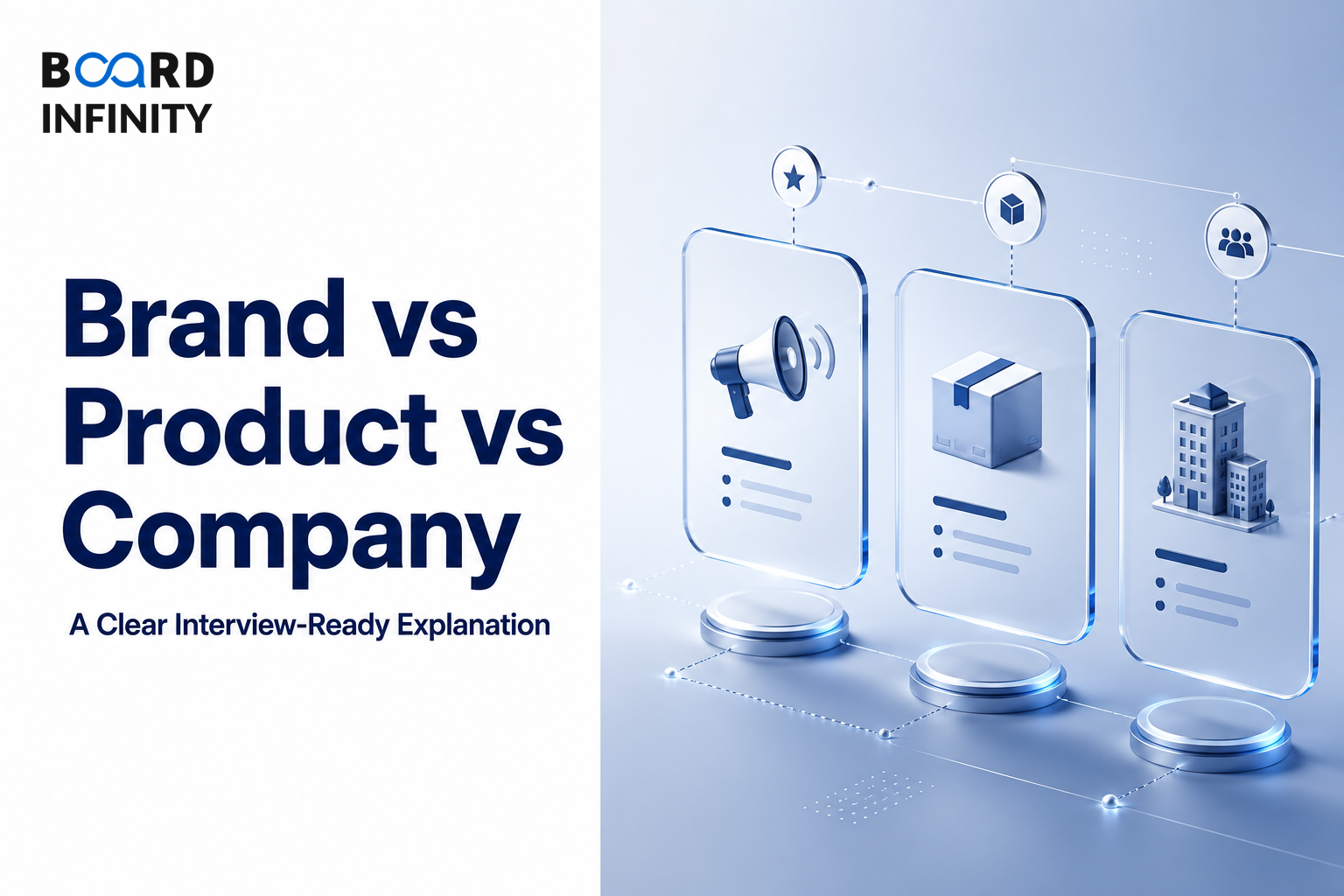
A shopper may pick up a plain mango drink, but smile when the pack reminds them of summer holidays, train journeys and childhood. The liquid is the product; the memory in the buyer's mind is the brand; the organisation producing and distributing it is the company.
- Product = what is offered to satisfy a need: a phone, drink, app, shoe or service.
- Brand = the name, symbols, associations and expectations that make that offer distinct in the customer’s mind.
- Company = the legal and operating entity that owns assets, hires people, makes decisions and may own many brands.
- A product is made in a factory or built by a team; a brand is built through repeated customer experiences and memories.
- The company controls many brand inputs - design, pricing, service, communication - but the final brand meaning lives in the customer’s mind.
- Example: tea is the product category, Tata Tea is a brand, and Tata Consumer Products is the company behind it.
- The interview trap: saying “brand means logo.” A logo is only one cue; the brand is the full set of associations and expectations.
Big Picture: A Brand Is the Meaning Layer Around an Offer
Think of branding as a conversion engine: a company creates a product, wraps it in identity cues, delivers consistent experiences, and customers gradually store a meaning in memory. That stored meaning affects choice, loyalty and willingness to pay.
Core Explanation: Product, Brand and Company Are Three Different Answers
The cleanest way to separate the three is to ask three questions:
- Product: What is being sold?
- Brand: Why is this version recognised, trusted or preferred?
- Company: Who legally owns, funds, operates and is accountable for it?
A company may own one brand or many brands. A brand may cover one product or a product portfolio. A product may be branded strongly, weakly or not at all.
Definitions You Can Say in One Breath
Brand - American Marketing Association: “A name, term, design, symbol, or any other feature that identifies one seller’s good or service as distinct from those of other sellers.”
Product - Philip Kotler: “Anything that can be offered to a market to satisfy a want or need.”
Company: A legal and operating entity that owns resources, employs people, creates offerings and is accountable for business decisions.
Notice the difference: a product satisfies a need, a brand creates distinct recognition and preference, and a company organises resources to compete.
The Brand Is Built at Every Touchpoint
A brand is not created only by advertising. Advertising may create awareness, but the brand is strengthened or damaged by every touchpoint: product performance, packaging, delivery, employee behaviour, pricing, complaint resolution, influencer content, store experience and post-purchase service.
How to Measure Whether a Brand Is Working
Brand strength is partly emotional, but it is not unmeasurable. In interviews, use a balanced view: combine memory metrics, preference metrics and behaviour metrics.
Worked mini-example: Suppose 1,000 target customers are surveyed, and 420 say they would consider Brand A. Consideration rate = 420 / 1,000 = 42%. If only 180 choose it as first preference, preference share = 18%. That tells you the brand is known enough to enter the shortlist, but competitors are winning at the final choice stage.
Real Example: Apple Is a Company, iPhone Is a Product Line, Apple Is Also a Brand
Apple is useful because the same word operates at two levels. Apple Inc. is the company. iPhone is a product line. Apple is also the master brand that signals design, ecosystem integration, privacy positioning and premium status.
The primary driver of Apple’s brand strength is not only advertising; it is the tight integration of hardware, software, services and retail experience. Supporting drivers include consistent design language, strong product launches, controlled distribution and a clear premium positioning. So what? A strong brand lets a company reduce perceived risk and defend preference even in crowded product categories.
Case Study: Paper Boat - Traditional Drinks Became a Memory Brand
Paper Boat turned Indian traditional beverages into a nostalgia-led brand, showing how a simple product can become emotionally distinctive.

Situation: Traditional Indian drinks like aam panna, jaljeera and kokum had strong household memories but were not always available as modern packaged beverages. The product opportunity was clear: convenient ready-to-drink Indian flavours.
The move: Paper Boat, from Hector Beverages, did not position itself merely as another soft drink. It built a brand around nostalgia, Indian childhood memories, distinctive pouch-like packaging, gentle storytelling and flavours associated with home and regional familiarity.
Outcome and lesson: The brand became memorable because the primary driver was emotional distinctiveness - it gave consumers a reason to remember and talk about the drink beyond taste. Supporting drivers included differentiated product flavours, recognisable packaging, modern retail availability and consistent storytelling. The lesson: the product was a beverage, but the brand was the feeling of remembered India.
How AI Changes Brand vs Product vs Company
AI does not remove the difference between brand, product and company; it makes the difference more important because customers now encounter brands across more automated, personalised and synthetic touchpoints.
- AI accelerates customer insight: Brands can analyse reviews, social posts, support tickets and search queries to detect what customers associate with the brand versus the product. The risk is over-reading noisy data without human judgement.
- AI multiplies brand touchpoints: Generative AI can create many ad variants, emails, product descriptions and chatbot responses. This helps scale communication, but weak brand governance can make the brand sound inconsistent.
- AI changes discovery: Customers increasingly ask AI assistants for recommendations. Brands need clear, credible digital signals - reviews, product information, expert mentions and consistent positioning - so they are understood correctly by AI-mediated search.
Use NotebookLM: upload a company website page, product page, annual report excerpt and 20-30 public customer reviews. Ask: “Separate what belongs to the product, brand and company. What are the strongest customer associations? What interview questions could be asked?”
Interview Relevance
“What is a brand? How is it different from a product and a company? Explain with an Indian example.”
If you are stuck, use the three-question shortcut: product = what, brand = why prefer, company = who owns. Then attach one example immediately.
Common Mistake
The mistake: Saying “a brand is a logo or name.” This costs candidates because it sounds superficial and ignores customer perception, trust and experience. Fix: say “a logo is a brand cue; the brand is the set of associations and expectations customers hold about the offer.”
What to Revise Next
Now that the basic distinction is clear, move from “what a brand is” to “how brand strength is created and managed.” Revise these next: