
Case Study: Building Iconic Brands - Amul, Tata, Nike & Apple
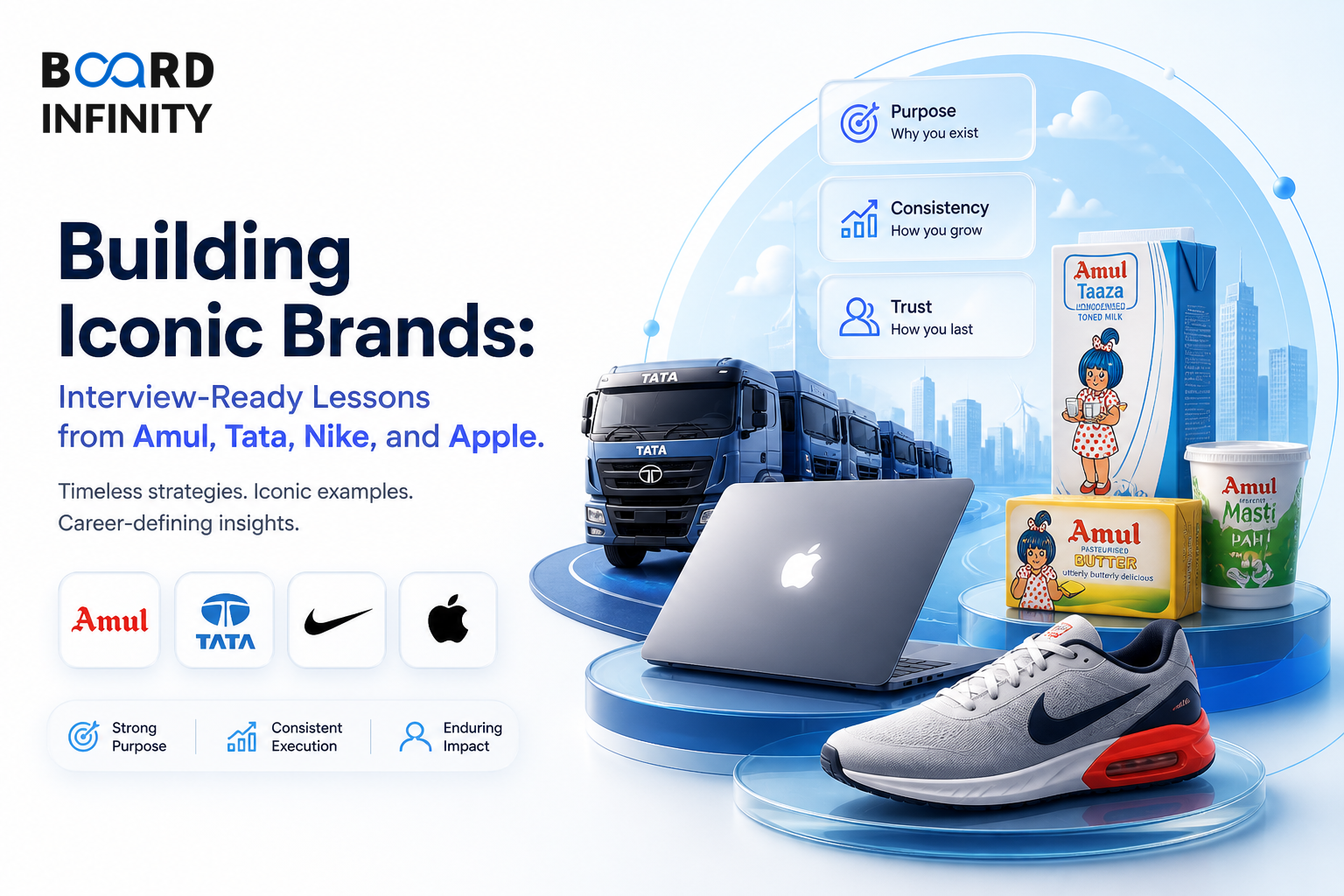
The biggest myth about iconic brands is that they are born from brilliant advertising. A customer buying Tata Salt, an Amul butter pack, a pair of Nike shoes or an iPhone is not just choosing a logo - they are choosing a memory, a promise and a repeated experience that has rarely failed them.
- An iconic brand is built when distinctive memory + consistent experience + cultural meaning compound over time.
- Advertising creates salience, but product proof protects the brand promise.
- Amul stands for cooperative trust and everyday Indian relevance; Tata stands for institutional trust; Nike stands for human aspiration; Apple stands for integrated premium experience.
- Use Keller's lens: strong brands win because brand knowledge changes how customers respond to marketing.
- The best interview answer links brand building to business outcomes: lower acquisition cost, higher repeat, price premium, distribution pull and resilience in crisis.
- The most common mistake is calling a brand iconic only because it has memorable ads - iconic brands are built by the whole operating system.
Big Picture: Iconic Brands Are Compounding Systems
A brand becomes iconic when it moves from being a seller identifier to a mental shortcut. Customers do not re-evaluate every purchase from zero; they remember what the brand means, trust what it will deliver, and carry that meaning into the next purchase.
Core Explanation: What Makes a Brand Iconic?
The big idea: an iconic brand is a brand that has entered culture without losing commercial discipline. People recognise it quickly, attach a meaning to it, trust its delivery, and are willing to choose it repeatedly even when alternatives exist.
Four elements usually work together:
How Amul, Tata, Nike and Apple Build Iconicity Differently
Do not force every iconic brand into the same formula. Their common outcome is similar - memory, trust and preference - but the route differs.
The Brand-Building Metrics Interviewers Expect
Brand strength is not a vibe. In an interview, show that you can connect brand building to measurable business outcomes. Benchmarks vary by category, so the strongest answer compares trends over time and performance against key competitors.
Worked example: Suppose a premium sneaker brand sells at ₹6,000 while the category reference price is ₹5,000. Price premium = (6,000 - 5,000) / 5,000 = 20%. If repeat purchase and consideration remain stable, that 20% premium suggests real brand equity; if repeat collapses, the brand may only be overpricing.
Definitions You Can Say Clearly
AMA: A brand is any distinctive feature like a name, term, design, or symbol that identifies goods or services.
Keller: Customer-based brand equity is the differential effect that brand knowledge has on consumer response to the marketing of that brand.
In simple interview language: a brand is what customers remember and expect before they buy. Brand equity is the commercial advantage created when that memory changes their behaviour.
Case Study: Tata - Turning Trust into a Multi-Category Brand Asset
Tata shows how an Indian masterbrand can carry trust across unrelated categories, from salt and tea to software, cars, hotels and airlines.
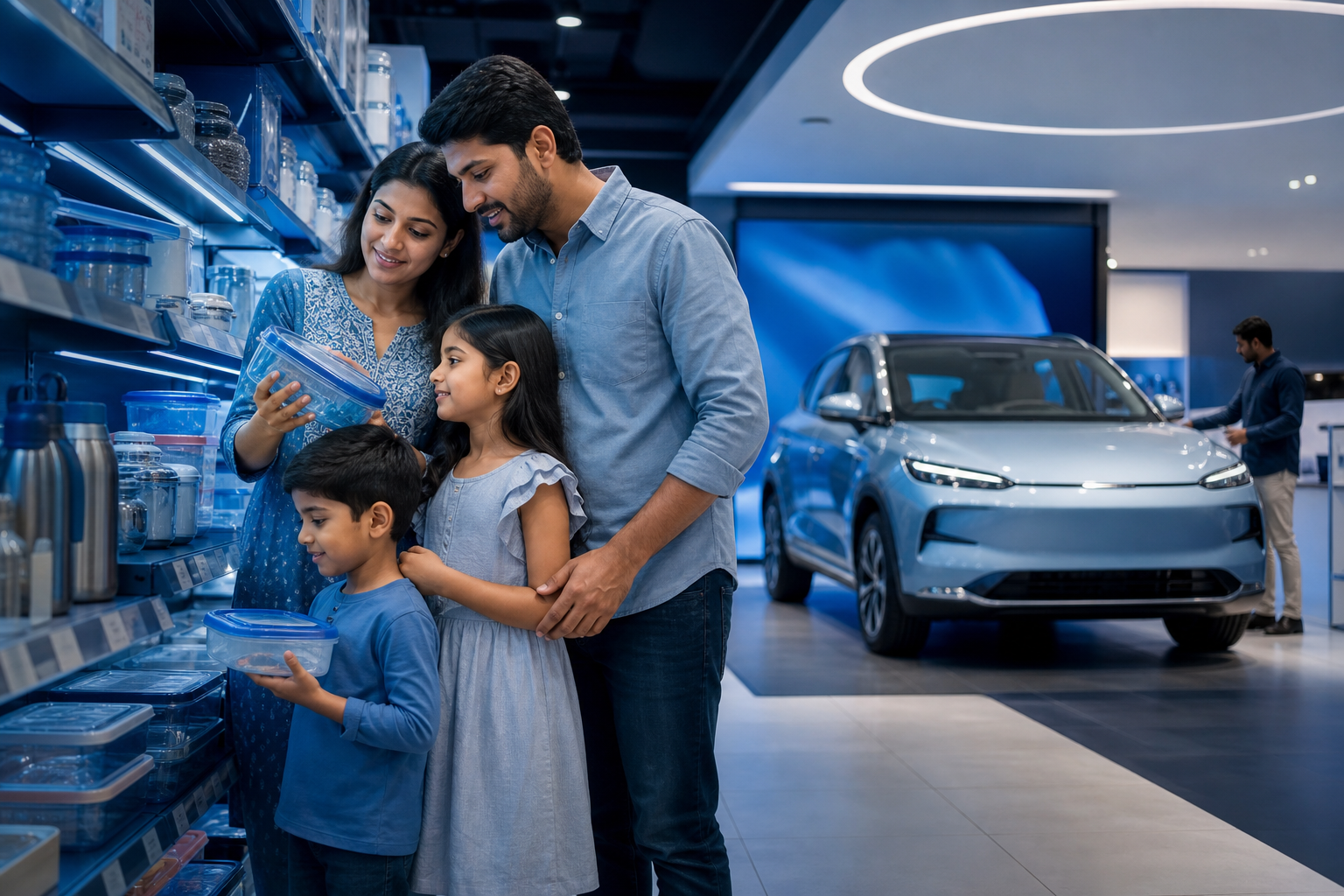
Situation: Tata is not a single-product brand. It operates across categories with very different purchase cycles and risk levels: daily essentials, enterprise technology, jewellery, automobiles, hospitality and aviation. That breadth creates a brand challenge - if the name is stretched too casually, it can lose meaning.
The move: Tata built its brand around a deep, transferable promise: trust. But the trust is not just a slogan. It is reinforced by governance reputation, long-term institution-building, product quality improvements, employee identity, philanthropic associations and visible participation in India's economic story.
The result or lesson: The Tata name often lowers perceived risk when customers enter unfamiliar or high-involvement categories. For example, Tata Motors' electric vehicle push did not depend only on the Tata name; the primary driver was early category commitment, supported by charging ecosystem partnerships, product availability, government policy tailwinds and the trust halo of the group. The lesson is powerful: a masterbrand works only when the operating companies keep proving the promise.
How AI Changes Building Iconic Brands
AI does not replace brand strategy; it changes the speed and precision with which brands listen, create and protect consistency.
Practical student workflow: Use Perplexity to gather recent public examples of Amul, Tata, Nike and Apple campaigns, then load the notes into NotebookLM and ask: “Compare these brands on positioning, distinctive assets, proof points, cultural meaning and business outcomes. Generate five interview questions with model answers.”
Interview Relevance
“Compare how Amul, Tata, Nike and Apple became iconic brands. What common principles can a new-age Indian brand learn from them?”
Use one line that sounds senior: “Iconic brands are not merely famous; they are commercially useful memories.” That instantly separates a brand answer from a campaign answer.
Mistake: Explaining iconic brands only through advertising, slogans or logos. Why it costs you: it ignores product delivery, distribution, experience, trust and business model - the real reasons the brand promise survives. One-line fix: always say, “The communication made the promise memorable, but the operating system made it believable.”
What to Revise Next
This is the final lesson in the course, so your best next move is a capstone review. Pick any three brands from different categories and analyse each using the same five lenses: positioning, distinctive assets, experience proof, cultural meaning and metrics. If you can do that aloud in two minutes per brand, you are placement-ready for brand strategy questions.