
Consumer Goods & Retail Interview Questions With Model Answers
A ₹10 snack pack is not just a small product - it is a full business model compressed into a price point, a shelf, a distributor margin, and a repeat habit. In consumer goods and retail interviews, candidates often talk about advertising; strong candidates talk about availability, assortment, margins, velocity, and repeat purchase.
- Consumer goods companies win by building demand and distribution; retailers win by curating assortment and converting store or app traffic.
- A strong answer usually follows this chain: consumer need - category - channel - unit economics - execution metric - risk.
- For FMCG, remember the core levers: penetration, frequency, basket, availability, price-pack architecture, and trade terms.
- For retail, remember the core levers: footfall or traffic, conversion, average transaction value, inventory turns, gross margin, and repeat visits.
- Use one Indian example in every answer: quick commerce, kirana distribution, modern trade, value fashion, D2C, or premiumisation.
- The safest model answer structure is: define the issue, split it into demand and supply, name 2-3 levers, pick metrics, and close with a risk.
- The biggest mistake is giving a marketing-only answer to a business-model question.
The Big Picture: What These Interviews Are Really Testing
Consumer goods and retail interviews are not memory tests. They test whether you can see how a product moves from a consumer insight to a shelf, cart, margin line, and repeat purchase. If you need the industry map first, revise consumer goods and retail size, growth, and structure before practising answers.
Core Concepts You Must Be Able to Say Clearly
Before model answers, get the vocabulary right. Interviewers forgive incomplete industry knowledge more easily than confused basics.
- Consumer good: A product bought by end consumers for personal use, not for further production.
- FMCG: Low-unit-price goods bought frequently, consumed quickly, and distributed widely.
- Retail: Selling goods or services directly to final consumers for personal use.
- Modern trade: Organised retail formats such as supermarkets, hypermarkets, and chain stores.
- General trade: Traditional retail channels such as kiranas, wholesalers, distributors, and local stores.
- Private label: A retailer-owned brand sold through the retailer’s own channels.
The Interview Answer Framework: Demand, Supply, Economics
Most consumer goods and retail questions can be answered using one master framework. It keeps you from jumping straight to promotions or pricing without diagnosing the business problem.
Six Metrics That Make Your Answers Sound Commercial
Use metrics to move from “I think” to “I would measure.” Exact benchmarks vary by category, format, geography, and price segment, so compare against peers, the company’s own history, and channel economics.
Model Answers to Common Consumer Goods & Retail Interview Questions
Do not memorise these word for word. Memorise the spine: definition, drivers, example, metric, risk.
Weak answer: “I will increase sales through social media campaigns.” Strong answer: “I will first check whether the issue is low footfall, poor conversion, low basket value, or stock-outs, then choose the right lever.”
The Shopper Funnel You Should Use in Retail Answers
Retail is not only about selling products. It is about moving a shopper from awareness to visit, from visit to basket, and from basket to repeat. This is especially useful for questions on store performance, e-commerce, D2C, and quick commerce.
How to Handle Mini-Cases in This Sector
If the interviewer gives you a business situation - “sales are flat,” “margins are falling,” “a new entrant is growing,” “should we enter quick commerce?” - do not panic. Use the same five-step diagnostic.
For deeper understanding of the movement from manufacturer to shelf, revise how the consumer goods and retail value chain works.
Case Study: Trent’s Zudio and the Value Fashion Playbook
Zudio shows how a retailer can scale a value proposition through sharp price architecture, fast assortment refresh, simple stores, and disciplined execution.
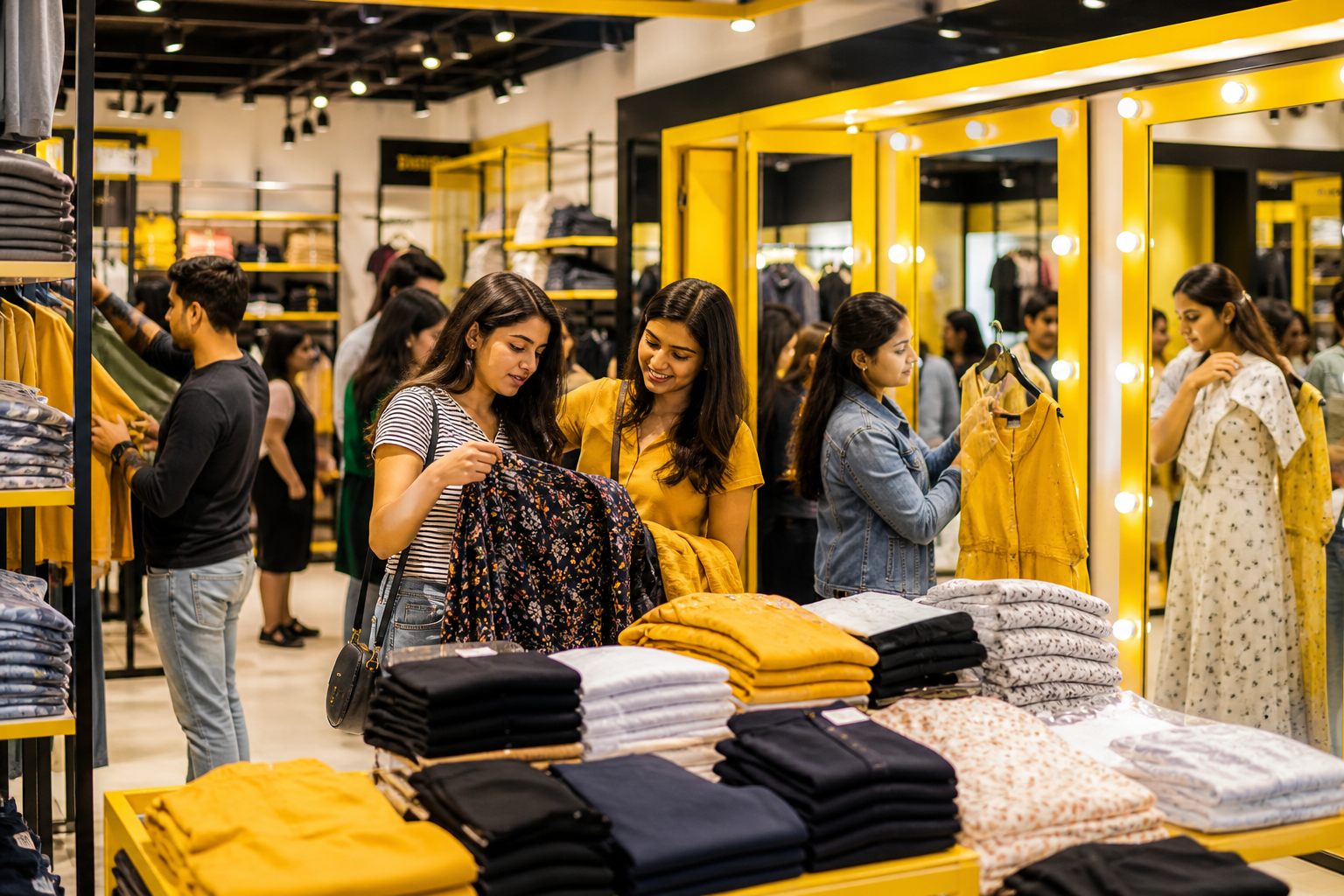
In Indian apparel retail, many shoppers want trend-led fashion at accessible prices, but unorganised retail can be inconsistent and premium branded apparel can feel expensive. Zudio, Trent’s value fashion format, built its appeal around a simple promise: fresh fashion, accessible price points, and a store experience that feels organised without looking premium-heavy.
The primary driver is value-fashion positioning executed through a repeatable retail model. The supporting drivers are just as important: tight assortment, frequent refresh, controlled store experience, clear price architecture, and supply discipline. This is why the case is useful for interviews - the answer is not “low price” alone. Low price works only when assortment, sourcing, inventory, and store economics support it.
The lesson: in consumer goods and retail, strategy becomes real only when it shows up in the shelf, store, app, pack, price point, and replenishment rhythm.
How AI Changes Consumer Goods & Retail Interview Questions
AI is changing both the sector and how you should prepare for interviews. The best candidates now connect AI to specific commercial use cases, not vague “digital transformation.”
Use AI as a preparation assistant, not as an authority. For sector research, follow the discipline in using AI to research a sector without importing its errors.
Interview Relevance
“Pick any consumer goods or retail company you follow. Explain how it makes money, what its growth levers are, and what risks you would watch.”
Carry one FMCG example and one retail example into every interview. For FMCG, practise a brand with general trade and quick commerce relevance. For retail, practise a store-led format such as value fashion, grocery, electronics, or beauty.
Common Mistake
The common mistake is treating every answer like a branding question. Candidates talk about campaigns, influencers, and awareness, but ignore distribution, margins, stock-outs, trade schemes, inventory turns, and channel conflict. Fix: before recommending marketing, diagnose the business system - demand, supply, economics, and execution.