
Consumer Goods & Retail at a Glance: Size, Growth & Structure
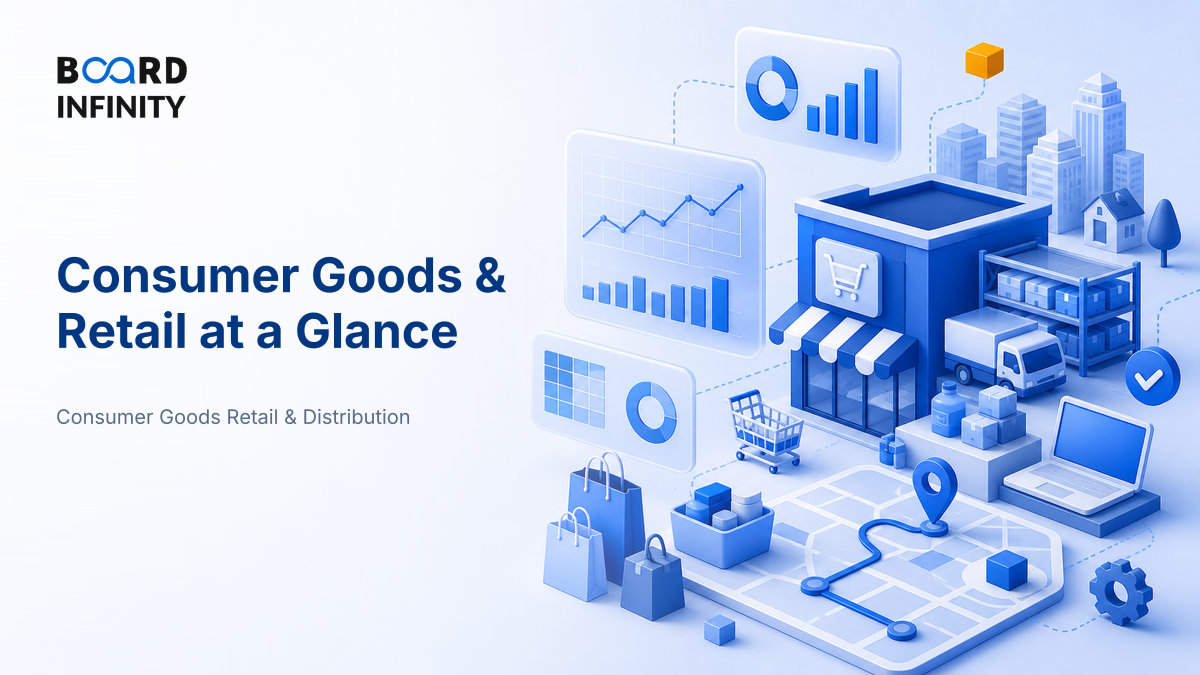
A shampoo sachet in a kirana, a private-label T-shirt in a value-fashion store, and a toothpaste delivered in ten minutes are not three separate stories. They are the same sector seen through three lenses - consumer demand, brand economics, and retail access.
The trap is to say “FMCG is growing” or “retail is huge” and stop there. A strong answer shows what is being consumed, who owns the brand, who controls the shelf, and where growth is coming from.
- Consumer goods are products bought by individuals for personal use; retail is the sale of those products to final consumers.
- The sector has two linked profit pools: brand owners earn through product margins and brand pull; retailers earn through traffic, assortment, margin and inventory turns.
- Size the sector by splitting it into categories, channels and consumer occasions - not by quoting one stale market number.
- Main growth drivers are income growth, urbanisation, premiumisation, rural penetration, organised retail, e-commerce and quick commerce.
- Structure depends on category economics: staples, beauty, fashion, grocery and durables behave very differently.
- Best interview metric set: category growth, penetration, average selling price, gross margin, inventory turns and same-store sales growth.
- Common mistake: treating FMCG and retail as the same business. They overlap, but their economics are different.
Big Picture: The Sector Is a Demand Funnel, Not a Single Number
When someone asks for the “size” of consumer goods and retail, they are really asking how household demand becomes category spending, then brand choice, then channel revenue. Think of it as a funnel: each layer narrows the market and changes the economics.
That is why a good sector answer does not begin with a random estimate. It begins with segmentation: what category, which consumer, which channel, and what purchase frequency. If no clean number exists, triangulate the market using top-down and bottom-up logic from sizing a sector when no number exists.
Core Explanation: Size, Growth and Structure in One Mental Model
The consumer goods and retail sector is easier once you separate the product business from the access business.
A consumer goods company asks: “What product will consumers prefer, how do we price it, and how do we create repeat purchase?” A retailer asks: “Which assortment brings traffic, how fast can I sell inventory, and how much margin can I retain?”
The Sector Structure: Six Building Blocks You Must Be Able to Name
Use this structure whenever you need to explain the sector at a glance. It prevents vague answers and helps you compare companies cleanly.
In India, this structure has a special feature: traditional trade and organised retail coexist. A large FMCG brand may need reach into kiranas, presence in modern trade, visibility on marketplaces, and availability on quick-commerce apps. That makes route-to-market complexity a core sector skill.
How to Talk About Market Size Without Guessing
Market size can mean different things. Clarify the boundary before giving any view. Are you talking about FMCG only, total retail, grocery retail, apparel retail, online retail, or a single category like hair care?
For current numbers, use trusted sources rather than memory. A practical starting set is government and regulator data, company annual reports, investor presentations, and sector repositories such as IBEF's FMCG industry page and IBEF's retail industry page. For a fuller source checklist, revise where to find current sector data and which sources to trust.
Growth Drivers: Where the Sector Actually Expands
Consumer goods and retail growth usually comes from one of four levers: more buyers, more occasions, higher price per unit, or better access. A candidate who can separate these sounds far sharper than one who says “rising demand”.
Category Economics: Why Grocery, Beauty, Fashion and Durables Behave Differently
Do not analyse all consumer categories with one lens. A detergent brand, a lipstick brand, a refrigerator brand and a fashion retailer have different margins, repeat cycles, inventory risk and advertising needs.
Key Metrics: Six Numbers That Make Your Answer Business-Like
Use metrics to move from storytelling to business analysis. Because benchmark levels differ sharply by category, the safest interview habit is to compare a company against its own history and direct peers.
If you are analysing a listed company, pull these from its annual report and investor presentation. A fast way to practise is by reading one company using the method in reading an annual report for sector insight.
Definitions You Can Say in One Breath
- Consumer goods: Products bought by individuals or households for personal use, not for further production or resale.
- Retail: The sale of goods or services directly to final consumers for personal, non-business use.
- FMCG: Fast-moving consumer goods are frequently purchased, low-ticket products with quick repeat cycles.
- Modern trade: Organised retail formats such as supermarkets, hypermarkets and chain stores with structured merchandising and procurement.
- Private label: A product owned by a retailer and sold under the retailer's own brand or store brand.
Regulation: The India-Specific Layer Candidates Often Forget
Consumer goods and retail are not regulation-free businesses. In India, food products interact with FSSAI, product standards may involve BIS, indirect tax flows through GST, and packaging, weights and declarations are shaped by legal metrology rules under the Department of Consumer Affairs.
The interview implication is simple: distribution, pricing, labelling, claims, returns and customer data are not just operational choices. They sit inside a compliance environment.
Case Study: Trent's Zudio and the Rise of Value Fashion in India
Zudio shows how a retailer can build scale by combining value pricing, fast-changing fashion, controlled assortment and disciplined store expansion.
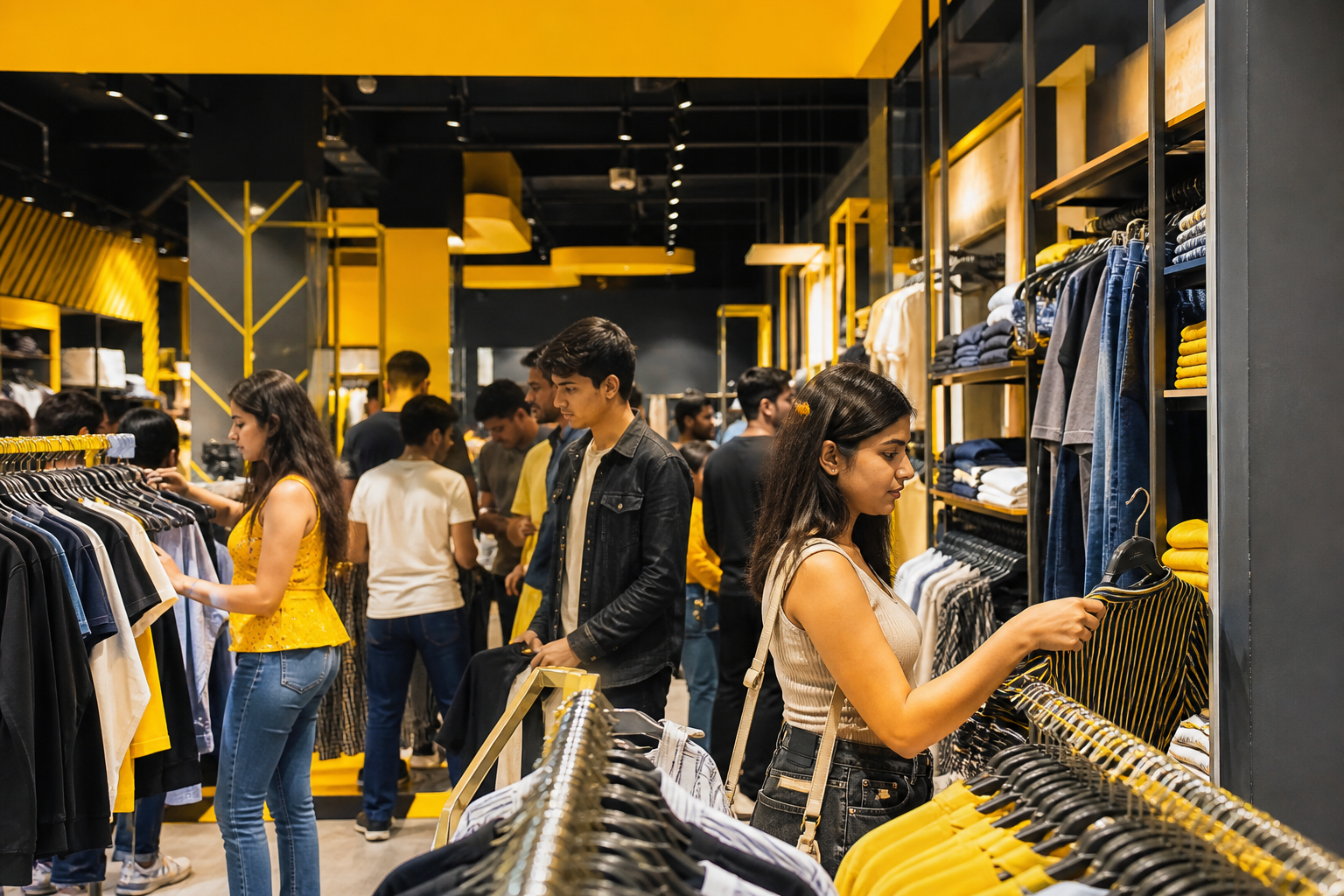
Situation: India's apparel market has a large value-conscious consumer base. Shoppers want freshness and style, but many are unwilling to pay premium fashion prices frequently. This creates space for a retailer that can make fashion feel current without making it feel expensive.
The move: Trent positioned Zudio as a value-fashion concept, visible through its public brand presence at Zudio's official site. The strategic engine is not just “low price”. The primary driver is a tight value-fashion proposition: frequent assortment refresh, affordable price points and a simple store experience. Supporting drivers include private-label control, store rollout, local catchment selection and supply-chain discipline.
The lesson: Zudio is a retail structure case, not only a branding case. It shows how category choice, store economics, assortment, price architecture and consumer traffic combine. In interview terms, the answer is stronger when you say: “Zudio is scaling because it aligns India's value-fashion demand with a controlled retail operating model,” rather than “Zudio is cheap.”
How AI Changes Consumer Goods & Retail
AI is changing this sector in practical, operating-level ways. It is not just better advertising copy.
Student workflow: Use NotebookLM or Perplexity to build a two-page sector brief. Load one company annual report, one investor presentation, and one credible sector page. Ask: “Split growth into penetration, frequency, premiumisation and access. What evidence supports each?” Then manually verify every number before using it. For guardrails, revise using AI to research a sector without importing its errors.
Interview Relevance
“Give me a quick overview of the consumer goods and retail sector in India. What are its growth drivers and how would you analyse a company in this space?”
If the interviewer asks for size and you do not know the latest number, do not bluff. Say: “I would size it by category and channel, then validate using government data, company filings and industry reports.” That sounds more mature than a wrong number.
Common Mistake
The biggest mistake is treating FMCG, consumer goods and retail as interchangeable. It costs candidates because they mix up brand economics with store economics. The one-line fix: first state whether you are analysing the brand owner, the retailer, or the entire route from manufacturer to consumer.