
Emerging Trends Reshaping Consumer Goods & Retail
A category manager walks into Monday review with a problem that did not exist a decade ago: the same shampoo pack is fighting for attention on a supermarket shelf, a quick-commerce app, an influencer reel, and a retail-media ad slot. The stakes are real - one weak read of the trend and the brand either overbuilds the wrong channel or misses where the next purchase is actually happening.
- Consumer goods and retail are being reshaped by demand fragmentation: customers now split purchases across modern trade, kiranas, marketplaces, D2C sites, quick commerce, and social commerce.
- The biggest trends are omnichannel, quick commerce, premiumisation, private labels, retail media, sustainability, and AI-led decisioning.
- Do not treat trends as buzzwords. For each trend, explain what changes in consumer behaviour, channel economics, supply chain, and margin model.
- Quick commerce is not only faster delivery. It changes pack sizes, assortment, impulse buying, dark-store replenishment, and brand visibility.
- Premiumisation and value-seeking can grow together. Indian consumers may trade up in beauty or food experiences while hunting value in apparel or staples.
- The best interview answer uses a trend stack: consumer shift - channel shift - operating model shift - profit pool shift.
- AI is now practical in retail: demand sensing, assortment planning, dynamic pricing guardrails, personalisation, and generative content workflows.
Big Picture: The Trend Stack You Should See First
Emerging trends in consumer goods and retail are not separate headlines. They sit in layers. A visible trend such as quick commerce or retail media usually rests on deeper changes in consumer behaviour, digital data, supply-chain speed, and margin pressure. If you can explain the layers, your answer sounds strategic instead of newspaper-like.
If you need to revise the sector foundation first, start with consumer goods and retail size, growth, and structure, then return to this trend lens.
Core Explanation: The Seven Trends Reshaping Consumer Goods and Retail
The easiest way to remember the sector is to ask one question: where is the consumer shifting, and what must the company rebuild to serve that shift profitably?
1. Omnichannel Becomes the Default Operating Model
Retail used to be channel-led: general trade, modern trade, e-commerce, or D2C. Now the consumer does not care about these internal boxes. They may discover on Instagram, compare on a marketplace, buy from a store, reorder on quick commerce, and complain on WhatsApp.
For companies, omnichannel means integrating four things: inventory visibility, pricing discipline, customer data, and fulfilment logic. A weak omnichannel model gives the customer choice but creates chaos inside the company.
2. Quick Commerce Changes the Shape of Demand
Quick commerce is one of the clearest India-specific retail shifts. Its impact goes beyond speed. It changes the buying mission. A monthly planned basket becomes a set of top-up, emergency, impulse, and convenience purchases.
That forces FMCG and retail teams to rethink assortment. The winning SKU on a quick-commerce app may not be the same as the winning pack in a supermarket. Visibility also changes: the digital shelf becomes as important as the physical shelf.
3. Premiumisation and Value-Seeking Coexist
A common mistake is to say, “Indian consumers are premiumising,” as if all categories move together. The better view is more nuanced. Consumers may trade up in beauty, health foods, coffee, pet care, and experiences while still seeking value in groceries, apparel, and household essentials.
This creates a barbell market: affordable value propositions at one end, differentiated premium propositions at the other, and pressure on weak middle brands.
4. Private Labels Gain Strategic Importance
Private labels are retailer-owned brands sold through the retailer’s own channel. They help retailers improve margin, control assortment, and build customer loyalty. For national brands, private labels create a sharper competitive threat because the retailer controls shelf space, app ranking, and shopper data.
Private label success usually needs three supporting drivers: trusted retail traffic, quality control, and price-value clarity. A cheap product without trust is not a private-label strategy; it is only a discount product.
5. Retail Media Becomes a New Profit Pool
Retail media means advertising sold by retailers on their own digital or physical properties. Marketplaces, grocery apps, beauty platforms, and quick-commerce players can monetise shopper attention because they sit close to the transaction.
This matters because brand budgets begin shifting from only mass media to measurable commerce media. The retailer is no longer just a route to market; it becomes a media owner.
6. Supply Chains Move from Efficiency to Resilience and Speed
Traditional consumer goods supply chains were optimised for scale and cost. New retail models demand a harder balance: high availability, smaller replenishment cycles, localised assortment, and faster response to demand signals. To understand why this is difficult, revise how the consumer goods and retail value chain works.
The shift is from “ship full truckloads efficiently” to “sense demand early and replenish the right node quickly.” That requires better forecasting, warehousing, vendor collaboration, and last-mile economics.
7. Sustainability Moves from CSR to Operating Constraint
Sustainability is now tied to packaging choices, sourcing, waste, energy use, and consumer trust. In consumer goods, this can mean recyclable packaging, refill formats, lower-waste logistics, or cleaner ingredient claims. In retail, it can mean energy-efficient stores, reverse logistics, and reduced overstock waste.
The interview point: sustainability only becomes strategic when it affects cost, compliance, brand preference, or risk. Otherwise, it remains a communication layer.
The Trend Impact Matrix
When you are asked which trend matters most, do not answer by popularity. Answer by consumer impact and business model impact. This 2x2 gives you a clean way to prioritise.
Metrics: How to Track Whether a Trend Is Working
Trends are only useful if they show up in numbers. In interviews, name the metric, formula, and what a strong signal looks like. Because retail benchmarks vary sharply by category, format, and price point, treat “good” as improving versus the company’s baseline and superior to comparable peers, not as one universal magic number.
Definitions You Can Say in One Breath
- Consumer goods: products bought by final consumers for personal or household use.
- Retail: selling goods or services directly to end consumers through physical or digital channels.
- Omnichannel: an integrated model where discovery, purchase, fulfilment, and service work across channels.
- Private label: a retailer-owned brand sold through that retailer’s own channels.
- Retail media: advertising sold by retailers using their shopper traffic, data, and purchase context.
Case Study: Zudio and the Value-Fashion Trend
Zudio shows how an Indian retail format can ride value-seeking, fast fashion, store-led discovery, and private-label control at the same time.
Zudio is a useful case because it is not just “cheap fashion.” The concept sits at the intersection of three trends: consumers want frequent fashion refreshes, affordability remains critical, and store experience still matters in Indian apparel retail.
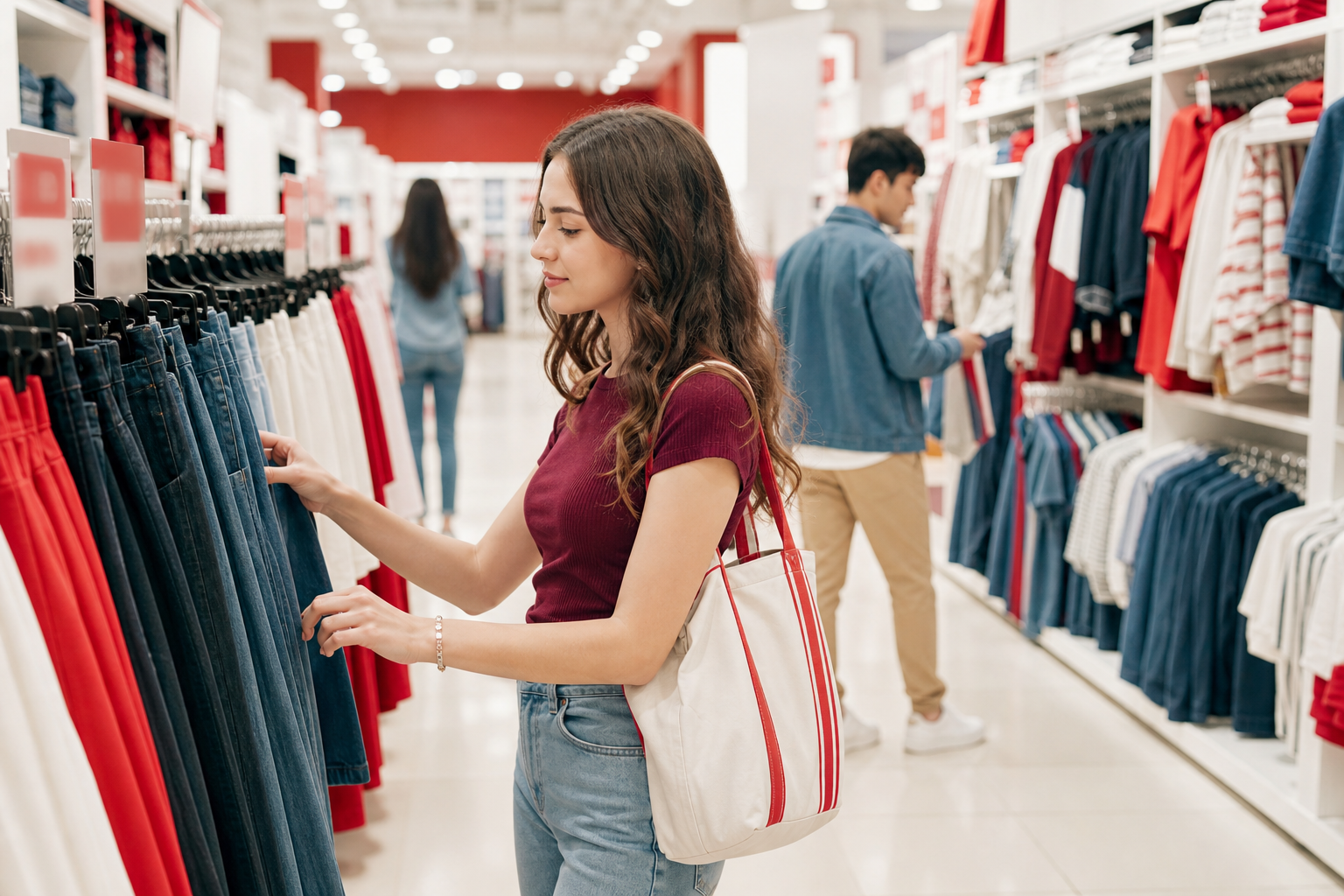
Situation: Indian apparel buyers are fragmented. Some trade up to premium lifestyle brands, but a large segment wants fashionable, frequently refreshed products at accessible prices. At the same time, online discovery has raised style awareness even among price-sensitive shoppers.
The move: Zudio focused on value-fashion retail with a controlled assortment, quick refresh cycles, simple store experience, and strong price-value clarity. The primary driver is a sharp value proposition. Supporting drivers include private-label-like control over merchandise, high store visibility, disciplined assortment, and a format that is easy for shoppers to understand quickly.
The lesson: A trend works when the operating model matches the consumer promise. If a brand promises affordable fashion but has slow sourcing, confusing assortment, or weak store execution, the trend will not convert into repeat purchases.
So what: Zudio is a reminder that “emerging trend” does not always mean only digital. In India, a physical-store format can be highly modern if it captures a current consumer shift with the right economics.
How AI Changes Emerging Trends in Consumer Goods and Retail
AI is not a separate trend sitting outside retail. It is becoming the decision engine inside several retail trends.
The risk is equally important: AI can amplify bad data, biased targeting, fake demand signals, or over-discounting. Strong companies use AI with guardrails - clean master data, human override, test cells, and margin checks.
Use NotebookLM or ChatGPT to build a trend brief: upload a company annual report, paste this lesson, and ask, “Map each consumer goods trend to this company’s strategy, risks, and interview questions.” Then verify every factual claim using the original report. For a safer method, revise using AI to research a sector without importing its errors.
Interview Relevance
“What are the top emerging trends reshaping consumer goods and retail in India, and how would you evaluate which one matters most for a company?”
If the interviewer names a company, do not give a generic trend list. Choose the two trends that affect that company’s revenue model, cost structure, or customer access most directly.
Common Mistake
The mistake: candidates list buzzwords - quick commerce, AI, sustainability, premiumisation - without explaining the operating model change. Why it costs them: it sounds like news consumption, not business thinking. One-line fix: for every trend, say what changes in consumer behaviour, channel economics, supply chain, and margin.