
Key Players and the Competitive Map in Consumer Goods & Retail
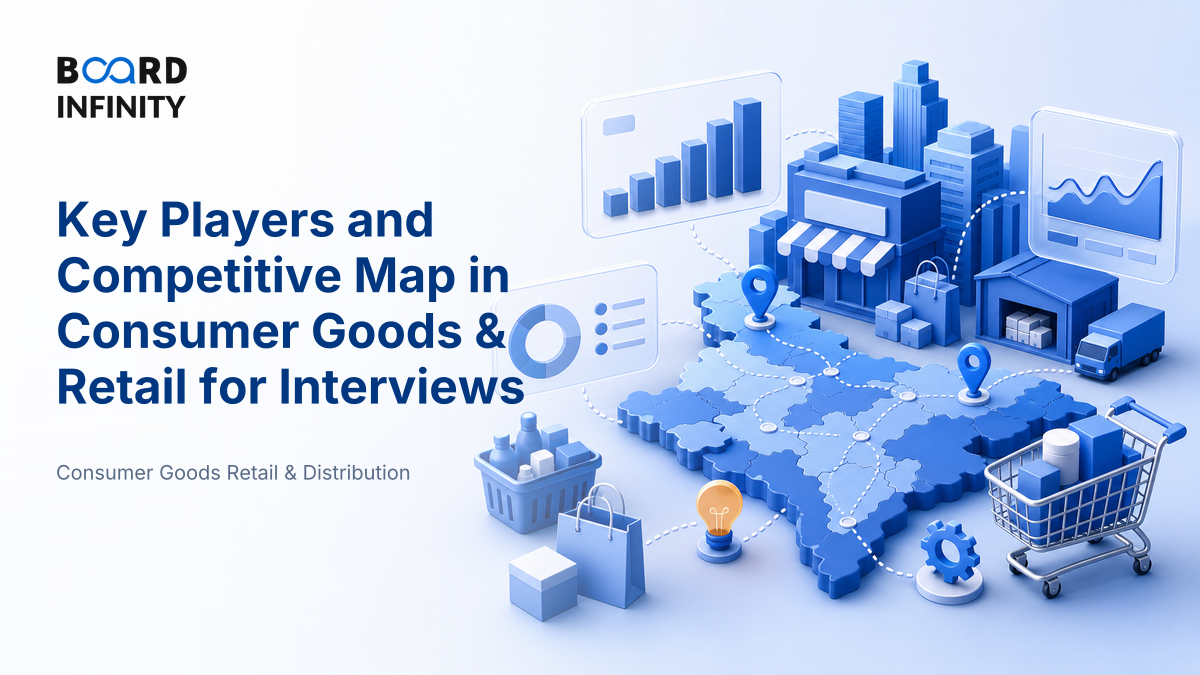
Ten years ago, the fight for a shampoo sale was mostly won on the supermarket shelf - brand visibility, distributor reach, trade schemes and TV advertising. Today, the same fight may happen on a quick-commerce app, inside a retailer's private-label aisle, through an influencer-led D2C brand, or through a kirana owner deciding which SKU gets the eye-level slot.
That is why a weak answer says, “The key players are HUL, Nestle, Reliance Retail and Amazon.” A strong answer shows the competitive map - who competes with whom, where the battle happens, and what advantage each player is defending.
- Consumer goods players make and market products; retail players control consumer access, assortment, pricing and last-mile experience.
- The map has four big groups: branded FMCG companies, modern retailers, digital marketplaces or quick-commerce platforms, and D2C or private-label challengers.
- Competition is not only company versus company - it is also brand versus private label, offline versus online, and national scale versus local relevance.
- Use three lenses in interviews: category, channel, and price tier. Without these, the map becomes a list of names.
- Track players through revenue growth, market share, gross margin, same-store sales growth, inventory turns and customer retention.
- The biggest 2026 shift: AI is making assortment, pricing, demand forecasting and personalised promotions faster and more local.
- Best answer structure: define the sector, split the players, place them on a map, compare advantage sources, then discuss one live disruption.
The Big Picture: Consumer Goods and Retail Are Two Sides of the Same Shelf
Consumer goods and retail sit in the same value chain but earn power differently. A packaged-goods company wants consumer pull for its brand; a retailer wants control over the shopping mission. If you need a sector refresher before this map, revise Consumer Goods & Retail at a Glance: Size, Growth & Structure first.
Think of the sector as a shelf with four forces pulling at it: brand manufacturers want preference, retailers want margin and traffic, digital platforms want data-led frequency, and challengers want a wedge into a narrow consumer need.
The Competitive Map: The Four Player Types You Must Know
A competitive map is a structured view of rivals by role, category, channel, price tier and source of advantage. In consumer goods and retail, the cleanest map starts with player type.
1. Branded FMCG and consumer goods companies
These companies manufacture or market products across categories such as foods, beverages, personal care, home care, apparel, electronics or beauty. Their strength usually comes from brand equity, distribution reach, product innovation, advertising capability and supplier scale.
Examples include Hindustan Unilever, Nestle India, ITC, Britannia, Dabur, Marico, P&G, Mondelez, PepsiCo and Colgate-Palmolive. In interviews, do not simply name them - say which categories they dominate and what channel mix they rely on.
2. Modern retail chains and organised retailers
Retailers compete by deciding what the consumer sees, at what price, in which location, and with what shopping experience. They include supermarkets, hypermarkets, fashion chains, electronics stores, pharmacy chains and speciality retailers.
Examples in India include Reliance Retail, DMart, Trent, Shoppers Stop, Lifestyle, Croma and Nykaa's offline beauty retail. Their advantage may come from store network density, procurement terms, private labels, inventory discipline and format clarity.
3. Marketplaces, e-commerce and quick-commerce platforms
These players compete on search, assortment, convenience, delivery speed, payment experience and customer data. Amazon, Flipkart, Myntra, Blinkit, Zepto, Swiggy Instamart and BigBasket do not merely “sell online”; they can influence which products are discovered, compared, discounted and reordered.
Blinkit, Zepto and Swiggy Instamart are not only delivery channels for FMCG brands. They are becoming high-frequency demand platforms where placement, availability, pack size, speed and app-led promotions shape consumer choice. The primary driver is convenience-led frequency, supported by local assortment, dark-store operations and app data. The so what: a brand's competitor may now be another brand, the platform's recommendation logic, or the platform's own private label.
4. D2C brands and private-label challengers
D2C brands use digital discovery, focused communities and sharp propositions to attack specific needs - beauty routines, healthy snacking, athleisure, pet care, baby care or premium home products. Private labels, on the other hand, are retailer-owned brands that use shelf control and price-value positioning to challenge national brands.
Examples include boAt in electronics accessories, Mamaearth in personal care, The Whole Truth in food, and retailer private labels across grocery, fashion and household categories. Their edge is not always lower price; often it is sharper targeting, faster feedback loops and category focus.
The Two Axes That Make the Map Interview-Ready
To move from a name list to a competitive map, place players on two axes: who controls demand and who controls fulfilment. This immediately reveals where power is shifting.
Here is how to read the matrix:
- Strong brands: FMCG majors with high brand recall may not own the final shelf, but consumers actively ask for them.
- Integrated retailers: Retailers with private labels and strong store or app presence can influence both demand and fulfilment.
- Niche D2C brands: These brands may own a specific consumer tribe but often depend on platforms, logistics partners or selective offline expansion.
- Marketplaces and quick-commerce platforms: They may not manufacture most products, but they control discovery, search ranking, delivery promise and repeat purchase nudges.
How to Compare Key Players: The Six Measures That Matter
A good competitive map must connect structure to performance. Use these metrics to compare players fairly, but always compare within the same category and format. A value-fashion retailer, a grocery retailer and a premium beauty marketplace should not be judged on the same margin expectations.
For company-specific comparisons, read the management discussion, segment notes and risk section in annual reports. If that feels intimidating, use Reading an Annual Report for Sector Insight as your step-by-step method.
Definitions You Can Say Cleanly
- Consumer goods: Products bought by individuals for personal use rather than for further production or resale.
- Retailing: Activities involved in selling goods or services directly to final consumers for personal, non-business use.
- Competitive map: A visual classification of rivals by role, channel, category, price tier and advantage source.
- Private label: A retailer-owned brand sold through the retailer's own stores, app or distribution network.
- D2C brand: A brand that sells directly to consumers and uses first-party data to shape product, pricing and communication.
Case Study: Trent's Zudio and the Value-Fashion Competitive Map
Zudio shows how a retailer can compete not by shouting louder than brands, but by designing a focused format around affordability, speed, assortment discipline and store expansion.
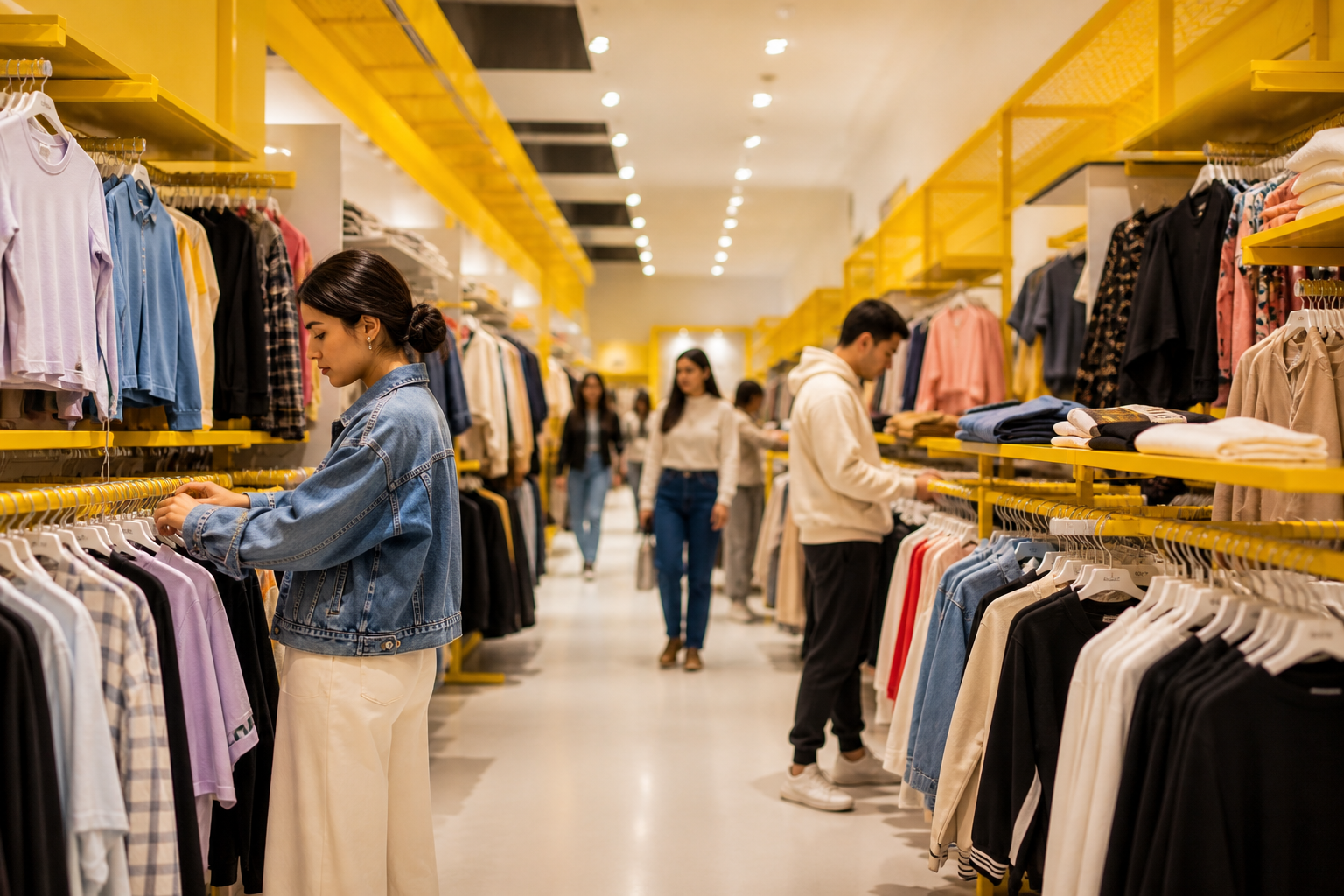
Situation: Indian fashion retail is crowded. At one end are national and international fashion brands with strong identity; at the other are local markets and unorganised retailers offering low prices and variety. The gap was for an organised value-fashion format that could feel current, accessible and repeatable across locations.
The strategic move: Trent built Zudio as a sharply positioned value-fashion format. The primary driver is format clarity - the shopper understands the promise quickly. Supporting drivers include private-label control, frequent assortment refresh, disciplined store presentation, affordable pricing architecture and expansion through locations where value fashion has broad demand.
The outcome or lesson: The case proves that in retail, the “key player” is not always the company with the most famous brand advertising. A retailer can win by owning the shopping mission: “I need trendy, affordable fashion now.” The competitive battle is therefore against fashion brands, local markets, other value retailers and online discount-led discovery at the same time.
How AI Changes Key Players and the Competitive Map in Consumer Goods & Retail
AI is not just a back-office tool here. It changes how players sense demand, choose assortment, set prices and personalise the shopping journey.
- AI-led assortment and localisation: Retailers can analyse local demand signals, weather, events, search behaviour and sales velocity to decide what each store or dark store should carry.
- Dynamic pricing and promotion intelligence: Platforms can test discounts, bundles and sponsored placements faster, while brands monitor competitor pricing and availability across channels.
- Personalised discovery: E-commerce and quick-commerce apps use recommendation systems to decide which brand appears first, which pack size is suggested, and which offer is shown to which customer.
Use NotebookLM or ChatGPT to build a player map, but control the inputs. Upload two annual reports, one retailer presentation and one category article, then ask: “Create a competitive map by category, channel, price tier, advantage source and risks. Flag claims that need verification.” For safe AI research habits, revise Using AI to Research a Sector Without Importing Its Errors.
Interview Relevance
“Map the key players in India's consumer goods and retail sector. Who is gaining power - brands, retailers, marketplaces or D2C challengers?”
Use one sentence like this: “In grocery, platforms are gaining influence over discovery and frequency, but national FMCG brands still retain pull where trust, habit and quality perception matter.” That shows nuance.
Common Mistake
The biggest mistake is turning the answer into a company-name dump: “HUL, Nestle, Reliance, Amazon, Flipkart, DMart.” It costs candidates because it shows memory, not sector understanding. The fix: always classify each player by category, channel, price tier and source of advantage before discussing who is winning.