
Differentiation and building a defensible USP.
A customer opens an app to buy an electric scooter, a protein bar, or a credit card - and every brand claims the same thing: faster, healthier, smarter, better value. In that crowded moment, the brand with the clearest, most believable difference gets remembered; the brand with a vague claim gets compared only on price.
- Differentiation means designing meaningful differences that make a brand preferable to a defined customer segment.
- A USP is not a tagline; it is the one sharp reason a customer should choose you over alternatives.
- A defensible USP sits at the overlap of three tests: customers value it, competitors cannot easily copy it, and the company can deliver it consistently.
- Strong differentiation moves the battle away from price and towards value, trust, experience, ecosystem, speed, design or expertise.
- The best USPs are built as systems - product, service, distribution, brand proof and operating model - not as isolated claims.
- Measure differentiation through willingness to pay, awareness, conversion, repeat purchase, churn and brand preference - not just campaign likes.
- The common trap is confusing “different” with “valuable”; novelty without customer value is positioning theatre.
Think of differentiation as a ladder. At the bottom, a brand is merely different. At the top, the difference is valuable, proven, repeatable and hard to attack. A defensible USP is the top rung - a customer-facing promise backed by operating reality.
Core Explanation: From Difference to Defensible USP
Differentiation is the strategic act of choosing what your brand will be known for in the customer’s mind. It answers: “Why should this segment choose us?”
USP - unique selling proposition - is the sharpest expression of that differentiation. It should be specific enough for a salesperson to say, credible enough for a customer to believe, and operationally true enough for the company to deliver.
A defensible USP has three layers:
The Five-Step Process to Build a Defensible USP
Notice the order. Many weak answers start with “our USP is premium quality.” A strong answer starts with the segment, proves the unmet gap, then shows why the company can own it better than competitors.
Types of Differentiation You Can Use in Answers
Differentiation does not have to be only product-based. In fact, the most defensible brands usually combine multiple types.
Paper Boat did not merely sell packaged drinks; it built differentiation around Indian nostalgia - aam panna, jaljeera and childhood memory. The primary driver was a distinct emotional positioning in a category dominated by cola and juice cues, supported by regional flavours, storytelling-led packaging and modern retail availability. The strategic so what: emotional differentiation works when the product and brand codes consistently reinforce the same memory.
USP vs Positioning vs Tagline
These three are often mixed up. Keep them separate and your answer sounds much sharper.
How to Measure Whether Differentiation Is Working
If differentiation is real, it should show up in behaviour - customers notice, prefer, pay, return and recommend. Use these metrics to avoid a fluffy answer.
Definitions You Can Say in One Breath
Kotler: “Differentiation is the act of designing a set of meaningful differences to distinguish the company’s offering from competitors’ offerings.”
USP: A USP is the specific, believable reason a target customer should choose one offering over competing alternatives.
Defensibility: Defensibility is the degree to which competitors find a position costly, slow or unattractive to copy.
Case Study: Ather Energy and the System Behind a Premium EV USP
Ather built differentiation in India’s electric scooter market by making the USP a full product-service ecosystem, not just a range or price claim.
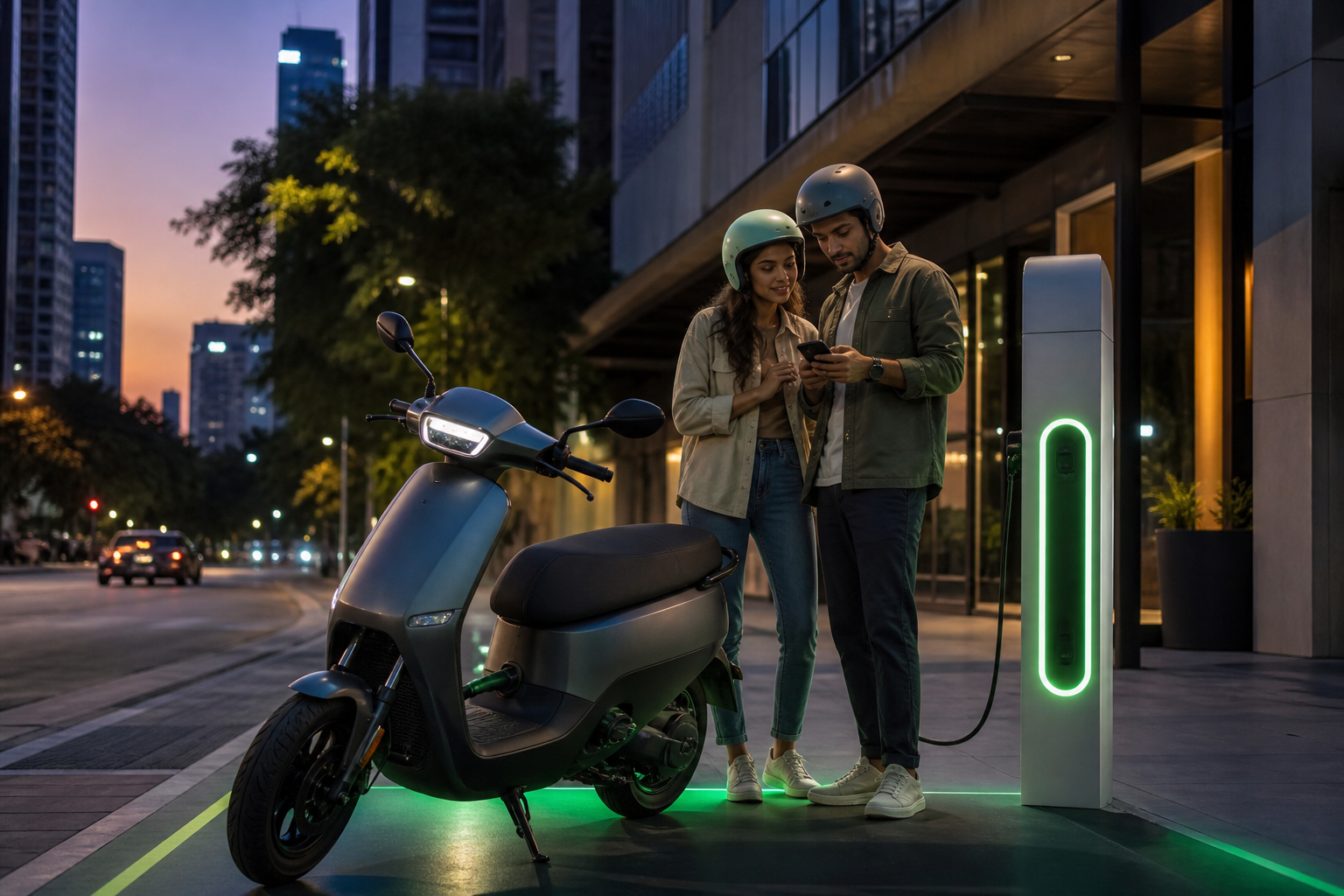
Situation: India’s scooter market has long been value-conscious and reliability-driven, with strong incumbents in petrol two-wheelers and rising competition in electric mobility. Many EV brands competed on price, subsidy benefit, claimed range and feature lists. That made differentiation difficult because a competitor could copy a feature or discount quickly.
The move: Ather chose a premium, technology-led electric scooter position. The primary driver was an integrated product experience - scooter engineering, connected dashboard, software experience and ride quality. Supporting drivers included company-owned experience centres, Ather Grid charging infrastructure, service capability, community-building and a brand voice that signalled modern urban mobility rather than only low running cost.
Outcome or lesson: Ather shows that a defensible USP is stronger when the promise is delivered by a system. “Smart premium electric scooter” is easier to believe when the scooter, software, charging access, sales experience and service network point in the same direction. The challenge is also instructive: defensibility must be maintained as larger players such as TVS, Bajaj and Ola Electric scale distribution, price points and product portfolios.
The interview takeaway: do not say “Ather differentiates through technology” and stop. Say the primary driver is an integrated premium EV experience, supported by software, charging, retail and service capabilities.
How AI Changes Differentiation & Building a Defensible USP
AI makes shallow differentiation easier to copy, but deep differentiation easier to discover and prove.
Practical student workflow: Use Perplexity to collect recent competitor claims in a category, then use ChatGPT to cluster them into common promises, whitespace opportunities and proof gaps. Your prompt can be: “Compare these five brands on target segment, USP, proof points and defensibility. Identify which USP is easiest to copy and why.”
Interview Relevance
“Pick any Indian consumer brand and explain its USP. Is that USP defensible, or can competitors copy it?”
Use this sentence template: “For [segment], [brand] is the [frame of reference] that delivers [specific benefit], proven by [proof points], and defended by [capabilities competitors struggle to copy].”
Common Mistake
The biggest mistake is calling any positive feature a USP - “good quality,” “affordable,” “customer-centric,” “innovative.” These are generic claims unless you show the target segment, competitor gap, proof and defensibility. One-line fix: convert every claimed USP into “valuable to whom, different from whom, proven how, and hard to copy why.”
What to Revise Next
Once you understand differentiation, revise the strategy tools that explain why some differences last longer than others. Move next to Competitive Moats: Network Effects, Brand & Switching Costs, then connect it with Competitive Analysis: SWOT, Porter’s Five Forces & the BCG Matrix. That journey takes you from “what makes us different” to “why competitors cannot easily attack us.”