
Driving Adoption After Go-Live
A retailer can have the best ordering app on his phone and still call the sales rep to place the order. That tiny moment - choosing the old habit over the new system - is where most go-live plans quietly fail.
Driving adoption after go-live is the discipline of converting a launched tool, process or platform into regular, correct, value-creating behaviour.
- Go-live is a technical milestone; adoption is a behavioural outcome. The system is live only when users actually use it correctly.
- Adoption needs four levers: activation, enablement, reinforcement and optimization.
- The best teams track behaviour, not just attendance: login rate, task completion, feature usage, error rate, tickets and time-to-proficiency.
- Low adoption is usually not laziness. It is often unclear value, poor workflow fit, manager indifference, weak training or unresolved friction.
- Champions matter because users trust peers more than project teams.
- Post-go-live management is a loop: listen to users, fix friction, communicate improvements and coach again.
- The biggest mistake is treating go-live as the finish line instead of the starting line for behaviour change.
Big Picture: Adoption Starts After the Ribbon-Cutting
A project team celebrates when a platform goes live. Users judge it later - when payroll needs a correction, a manager must approve leave, or a store owner must place an urgent order. Adoption is the bridge between installation and business value.
Core Explanation: The Adoption Flywheel
Driving adoption after go-live means managing the human side of a new system after launch so that users understand it, use it, trust it and keep using it.
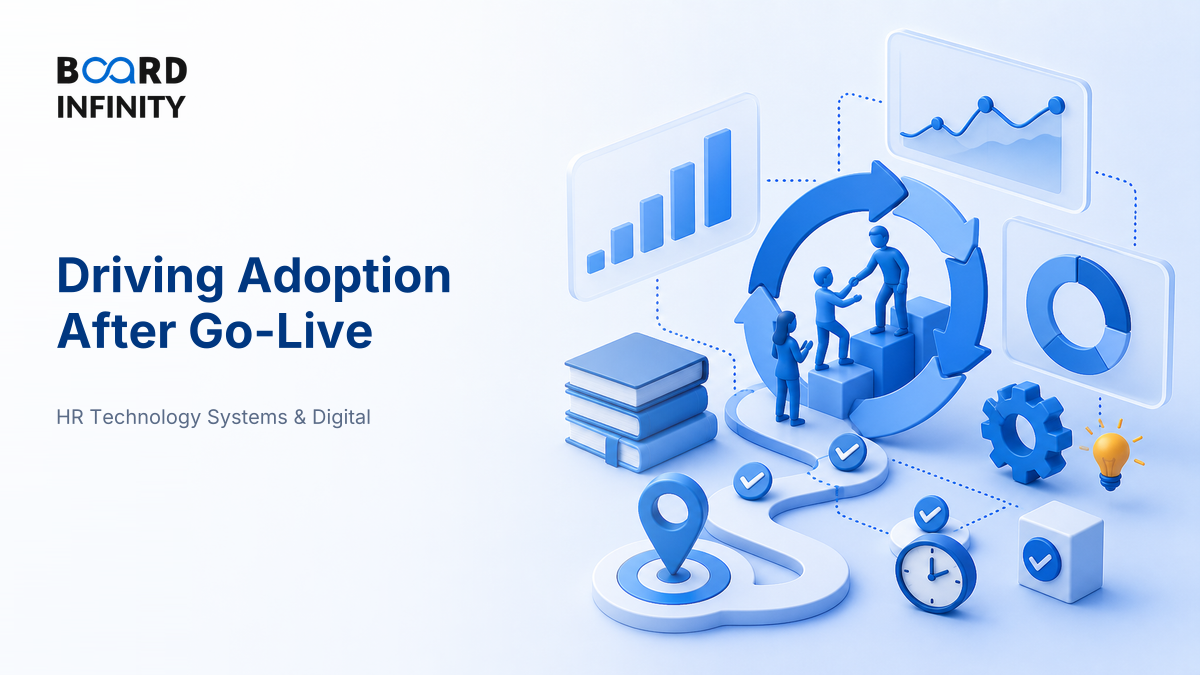
Think of adoption as a flywheel. At first, effort is high and momentum is low. Users forget passwords, skip workflows, complain that the old way was faster, or create Excel workarounds. The manager’s job is to reduce friction until usage becomes easier than avoidance.
The Four Levers of Post-Go-Live Adoption
Strong adoption plans do not rely on one email blast or one training session. They combine four levers that attack different reasons for non-use.
The key insight: adoption is not a communication problem alone. It is a workflow design, capability, motivation and accountability problem.
Diagnosing Low Adoption: Motivation vs Ability
When adoption is weak, do not say “users are resisting change” too quickly. First ask two questions: do they want to use it, and can they use it?
This matrix saves candidates from a common trap. If users are willing but unable, training helps. If users are able but unwilling, the answer is not more training - it is value communication, incentives, leadership signals and removal of old routes.
Metrics That Prove Adoption Is Actually Happening
Adoption must be measured through usage and outcomes, not launch activity. Attendance in training is useful, but it does not prove the new process is being followed.
Use these metrics together. A high login rate with low task completion means curiosity, not adoption. A high completion rate with many corrections means usage without quality.
In large Indian organizations, employee self-service HRMS modules often go live for leave, attendance, reimbursements and manager approvals. Adoption improves fastest when HR removes the old email route, trains managers first, sets helpdesk response norms and monitors pending approvals. The strategic so what: adoption rises when the new workflow becomes both easier and more legitimate than the old workaround.
Definitions You Can Say Cleanly
- User adoption: The extent to which intended users accept, use and realize value from a new system or process.
- Go-live: The point at which a system or process becomes available for real users in live operations.
- Diffusion, Everett Rogers: “the process by which an innovation is communicated through certain channels over time among the members of a social system.”
- Change reinforcement: Actions that sustain the new behaviour after launch through feedback, accountability, rewards and removal of old practices.
HUL Shikhar: Driving Retailer Adoption After the App Went Live
Hindustan Unilever built adoption of its Shikhar retailer ordering platform by combining digital convenience with field-force coaching and trade execution.
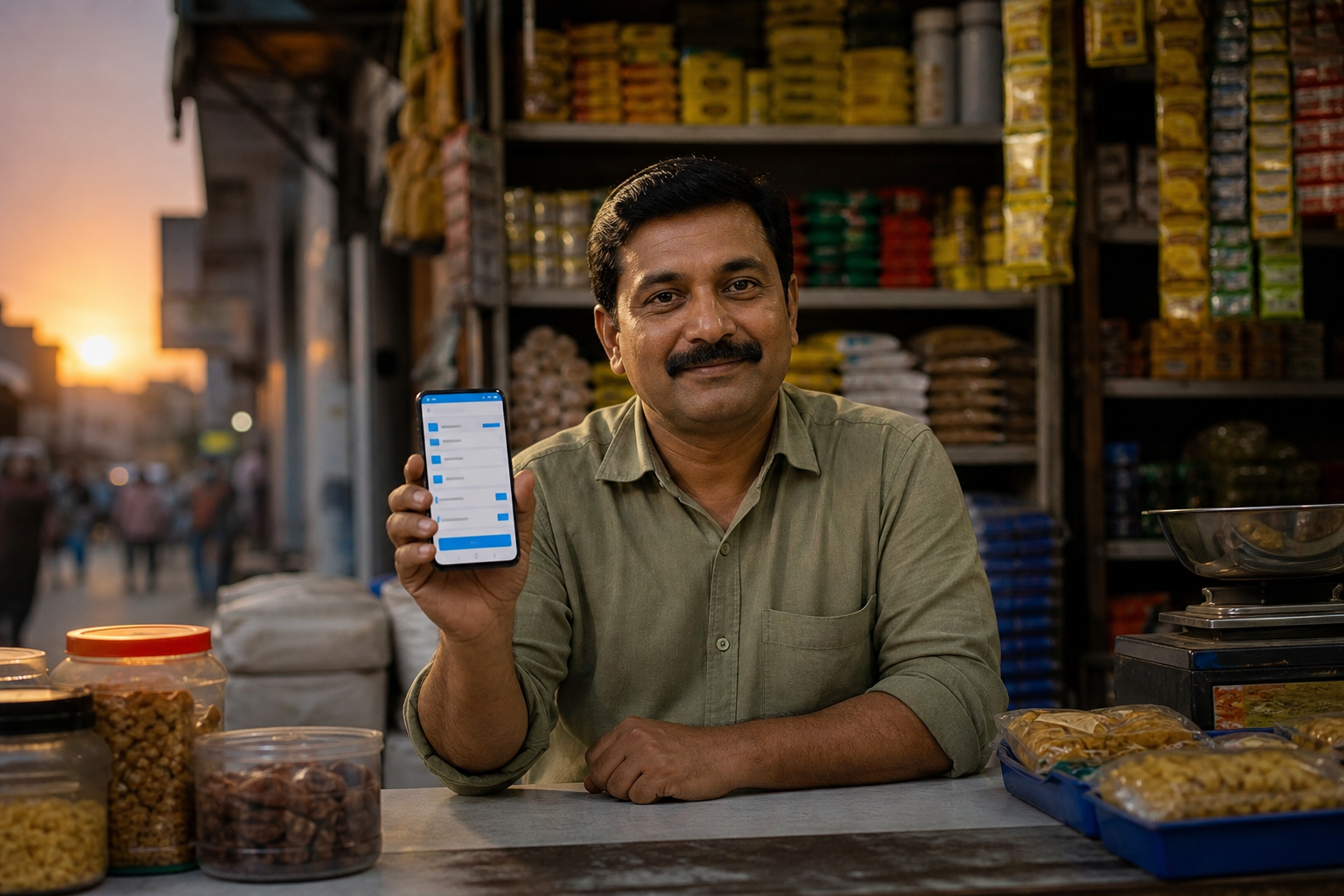
Situation: In India’s traditional trade network, kirana stores are relationship-driven, time-constrained and operationally practical. Even if a digital ordering platform goes live, the retailer may still prefer a familiar salesperson call, paper note or WhatsApp message if the app feels slow, confusing or risky.
The move: HUL’s Shikhar app did not depend only on the technology launch. The adoption push combined a clear retailer use case - ordering products digitally - with support from the existing sales ecosystem. Sales representatives could onboard retailers, explain benefits, resolve doubts and reinforce usage during regular market visits. The app also aligned with trade mechanics such as assortment visibility, order placement and distributor fulfilment.
The outcome or lesson: The lesson is not “apps drive adoption.” The primary driver was workflow fit: the app solved a real ordering job for retailers. Supporting drivers included field-force trust, repeated coaching, distributor linkage and a reason for retailers to return to the platform. That is exactly how post-go-live adoption works - digital tools succeed when behaviour, support and operating model move together.
Interview takeaway: A shallow answer says, “Train users after go-live.” A strong answer says, “Identify the user’s job-to-be-done, make first use easy, reinforce through trusted channels and use data to remove friction.”
How AI Changes Driving Adoption After Go-Live
AI is changing adoption management because it can detect friction earlier, personalize support and reduce the burden on central teams.
Practical student workflow: Use NotebookLM or ChatGPT to simulate a post-go-live review. Upload a sample HRMS rollout plan, training FAQs and anonymized ticket themes, then ask: “Create an adoption dashboard, identify the top five friction points and recommend interventions for employees, managers and HR operations.”
AI should support adoption decisions, not punish users blindly. Low usage may reflect process design problems, access issues, language barriers or manager bottlenecks - not employee resistance.
Interview Relevance
“Your company has implemented a new HRMS, but three months after go-live employees are still using email and Excel. How would you drive adoption?”
In an answer, use the phrase “behavioural outcome, not system availability”. It instantly separates go-live thinking from adoption thinking.
Common Mistake
The single biggest mistake is saying, “We will conduct training and send reminders.” That sounds activity-based, not outcome-based. It costs candidates because it ignores workflow friction, manager accountability, incentives, data quality and old workarounds. Fix: say, “I will track target behaviours, diagnose adoption barriers and run a reinforcement loop until the new process becomes the default.”