
Employee Service Platforms & HR Case Management
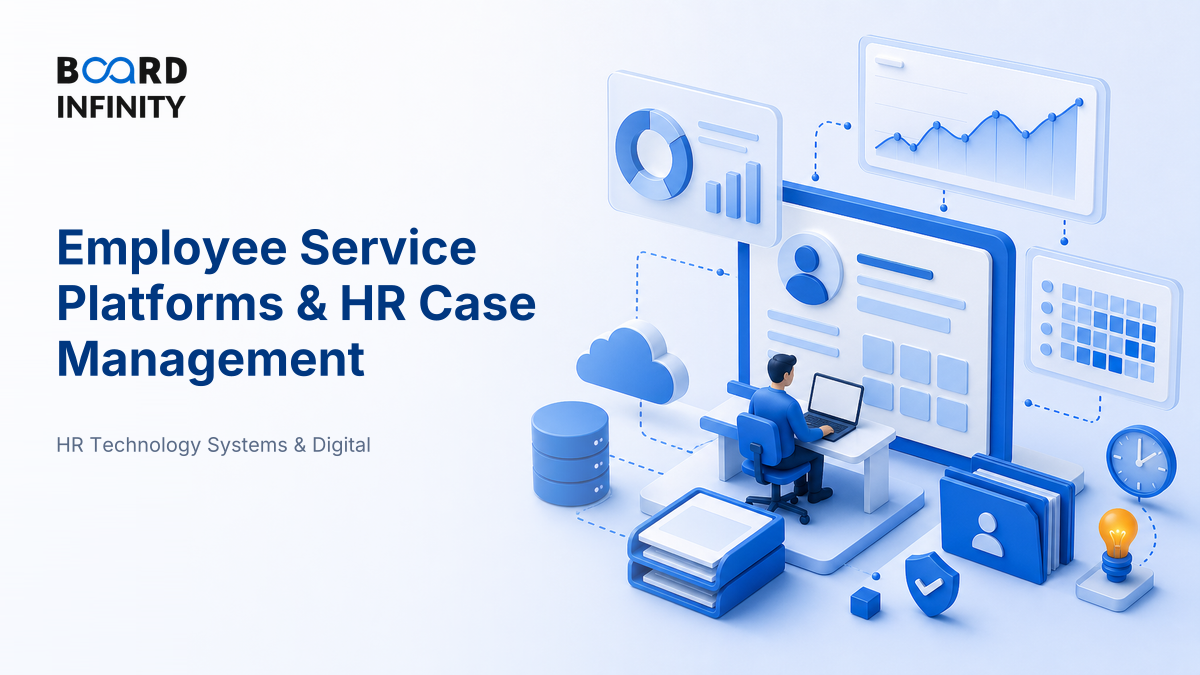
The biggest misconception about employee service platforms is that they are just “HR ticketing tools.” In reality, when an employee asks for a salary letter, maternity benefit clarification, laptop handover, or Form 16 correction, the platform decides whether HR feels invisible, slow, and bureaucratic - or simple, fast, and trusted.
- Employee service platforms centralise HR help, knowledge, workflows, and case tracking into one employee-facing service layer.
- HR case management is the controlled process of receiving, classifying, routing, resolving, and learning from employee requests.
- The best platforms combine four things: self-service knowledge, case workflow, SLA ownership, and analytics.
- Good HR case management protects confidentiality - payroll, grievance, health, and disciplinary cases need role-based access.
- The operating model usually follows tiers: employee self-service, HR shared services, specialists or COEs, and HR business partners for judgment-heavy issues.
- Key metrics include SLA attainment, first-contact resolution, self-service deflection, reopen rate, resolution time, and employee CSAT.
- The interview trap is treating this as software selection only; the stronger answer frames it as service design plus technology plus governance.
Big Picture - The HR Service Layer
An employee service platform sits between employees and the many HR systems behind the scenes. The employee sees one front door; HR sees a governed workflow that knows who owns the request, what SLA applies, what data is sensitive, and what learning should update the knowledge base.
Core Explanation - What the Platform Actually Does
Think of the platform as the service operating system for HR. It does not necessarily replace the core HRMS where employee master data, payroll, leave, or performance records live. Instead, it wraps those systems with a simpler employee experience and a disciplined service process.
A strong employee service platform usually has six capabilities:
The important distinction is this: an HRMS stores and processes employee data; an employee service platform helps employees get HR work done.
The HR Case Management Loop
Good case management is not “open ticket, close ticket.” It is a learning loop. Every request should either resolve one employee issue or teach HR how to reduce similar future issues.
The loop matters because employee service volume is often predictable. Payroll cut-off queries spike around salary days. Tax declaration issues rise before investment proof deadlines. Joining and background verification cases rise during campus onboarding. A platform helps HR move from reactive firefighting to planned service operations.
The Tiered HR Service Model
Most organisations design employee service around tiers. Routine questions should not go to senior HR business partners. Sensitive or judgment-heavy matters should not be handled by a generic helpdesk. The platform must separate volume work from expert work.
TCS’s Ultimatix is a well-known internal employee self-service portal used to centralise HR and administrative processes for a very large, distributed workforce across India and global locations. The strategic point is not the portal alone; scale works because standardised workflows, employee data discipline, and self-service reduce avoidable HR dependency.
Metrics That Prove HR Service Quality
In interviews, do not say “we will measure employee satisfaction” and stop there. Name operational measures that show speed, accuracy, deflection, and experience. Use category-wise dashboards because a payroll correction and a general policy FAQ should not have the same SLA.
Definitions
Employee service platform: A digital front door that lets employees find HR answers, submit requests, track cases, and receive service.
HR case management: The workflow discipline for capturing, classifying, assigning, resolving, and learning from employee HR requests.
Service level agreement: A measurable commitment defining how quickly and how well a service request must be handled.
Knowledge base: A governed library of HR policies, FAQs, and process guidance used for self-service and agent support.
Adobe: HR Service Delivery as an Employee Experience Layer
Adobe is a useful case because it shows how a creative, global workforce still needs disciplined HR service operations behind a simple employee experience.
Situation: In a global company like Adobe, employees need quick help on benefits, payroll, onboarding, internal moves, policy clarifications, and workplace processes. Without a service layer, those requests can scatter across email, intranet pages, HR inboxes, and individual relationships. That creates inconsistent answers, weak visibility, and repeated questions.
The move: Adobe has been publicly associated with modern employee workflow and service delivery approaches, including using digital employee-facing service channels to simplify support. The important management lesson is the design pattern: give employees one place to ask, connect that front door to knowledge and workflow, route cases based on category and sensitivity, and use data to improve the next interaction.
Outcome or lesson: The win is not caused by technology alone. The primary driver is standardised HR service design - clear categories, ownership, SLAs, and knowledge governance. Supporting drivers include a user-friendly front door, integration with HR systems, role-based access for confidential cases, and analytics that reveal repeat demand. This is exactly how a platform moves HR from “answering requests” to managing employee service at scale.
The takeaway: in a strong answer, say Adobe-style service delivery is not “installing a portal.” It is building an HR service system where employee experience, process accountability, and data-driven improvement reinforce each other.
How AI Changes Employee Service Platforms & HR Case Management
AI is making HR service platforms more proactive, but it also increases the need for governance. The best answer balances automation with privacy, fairness, and human escalation.
For India, add one governance line: employee data, health information, payroll details, and grievance records require strong access control and privacy-by-design thinking under India’s Digital Personal Data Protection Act context.
Use NotebookLM before an HR systems interview: upload this lesson, the company’s careers page, and any public HR tech case material; ask it to generate likely questions on employee service delivery, HR case metrics, and privacy risks. Then practise answering each question using the tiered model and metrics table above.
Interview Relevance
“Our employees complain that HR is slow and inconsistent. How would you design an employee service platform and HR case management process for a 10,000-employee organisation?”
If the interviewer pushes for vendor names, separate the answer into requirements first and vendor later. Say: “I would not start with ServiceNow, Workday, SAP SuccessFactors, Darwinbox, or Zoho People. I would first define service categories, integration needs, confidentiality, scale, and success metrics.”
Common Mistake
The most common mistake is calling this a “ticketing tool implementation.” That costs candidates because it ignores employee experience, HR operating model, confidentiality, knowledge governance, and service metrics. Fix: frame it as a service delivery system - front door, knowledge, workflow, tiering, integrations, metrics, and governance.